Online Reporter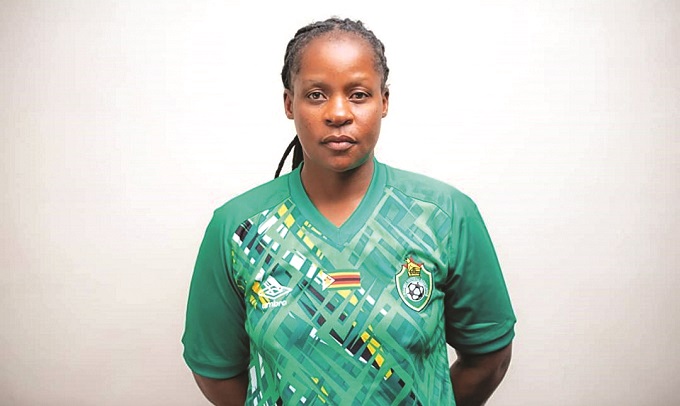
Zimpapers Sports Hub
IT has been a bruising five months for Zimbabwean women’s football, a period marked more by heartbreak than glory, but not without seeds of promise.
In the midst of this turbulence, one voice remains steady and hopeful: Sithethelelwe “Kwinji 15” Sibanda.
A pioneer, tactician and educator, Kwinji 15 has seen it all.
From the side lines of international tournaments to elite coaching classrooms in Africa’s football capitals, her perspective now carries the weight of both experience and vision.
“It’s been hectic, but also revealing,” says Sibanda, fresh from a pivotal coaching course in Addis Ababa. “Nothing comes from nothing.”
Between March and May, Zimbabwe’s national women’s teams, from senior to youth level, all exited their respective competitions early. The Mighty Warriors, Zimbabwe’s flagship side, bowed out of the Africa Women’s Cup of Nations qualifiers in March after a defeat to Malawi. The Under-20 team failed to progress in the FIFA World Cup qualifiers after falling to Rwanda. And earlier this month, the Under-17s managed a fourth-place finish at the COSAFA Championships in Namibia.
On the surface, it looks like a fruitless campaign across all levels, but Kwinji 15 sees things differently.
“There’s talent here, but what we’re lacking is structure and long-term development,” she says. “Countries that are reaping rewards are investing in long-term plans. Otherwise, there is not much difference between us and the so-called giants — Nigeria, Morocco, South Africa, Zambia.”
Sibanda recently represented Zimbabwe at a CAF Women Instructors Development Programme held in Ethiopia, a continental gathering of 24 selected coaches aimed at sharpening coach education techniques.
“The course actually started virtually in March and April. The on-site sessions in Ethiopia were meant to reinforce what we had learned, with both theoretical and practical assessments from technical experts,” she explained.
“It was very insightful, getting to know what other countries are doing, sharing best practices. What came to light was the importance of action and serious investment into the game.”
As a certified CAF “A” licence holder, one of the most elite coaching qualifications, and holder of a German DFB A certificate, Sibanda is uniquely positioned.
She also holds credentials in strength and conditioning, and is a regular technical analyst during COSAFA tournaments.
Despite these accolades, she believes the local game is stuck in the past.
“Everyone needs to move with time and not remain in the Stone Age. Everything is changing, and so should we as a football fraternity,” she asserts.
One of Sibanda’s key concerns is the chronic underestimation of women’s football, particularly in coaching.
“With the talent we have, we just need proper investment, sponsorship, yes, but also proper training methods. At times I feel people undermine women and think anyone can coach just because it’s women,” she laments.
Her call is clear: Coaching at the top level, regardless of gender, requires knowledge, method and modern tools.
“Now that we are back on the CAF conversion list and can host CAF courses, I hope we can train even more women in the game, equip them with modern game management. Furthermore, I want to share with our local coaches what I get to learn from these international courses,” she said.
While the Mighty Warriors face a lull in competitive fixtures, Sibanda is not letting the moment go to waste.
“I’m glad the junior Mighty Warriors teams at least got match exposure, but I want to see more of that,” she says. “The plan would be to have training camps, play friendlies and even integrate some interested players from outside Zimbabwe. We can build something good, if we get the opportunity.”
She is already in contact with a few players based in the diaspora and remains cautiously optimistic they will blend well with local talent. For now, Sibanda continues to straddle two worlds: one of missed opportunities and another of untapped potential.
But she is unwavering in her belief that Zimbabwe’s time will come, if the right investments are made, and if the game evolves beyond empty promises.
As she says, with quiet urgency, “Nothing comes from nothing.”



 Online Reporter