admin
admin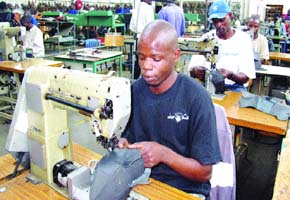
He said the sector was also affected by a shortage of raw materials such as raw hides.
“Capacity utilisation in the leather and travel goods sector is down. It has been affected largely by the influx of cheap imported products from the Far East, lack of funding for retooling as well as the exportation of raw hides by local abattoirs. Although capacity utilisation varies from company to company, the sector is operating at an average of 5 percent,” he said.
He said due to low capacity utilisation a number of tanneries in the country were lying idle.
“As a sector, we have continued lobbying the Government to impose a ban on the exportation of raw hides in order to minimise the challenges afflicting companies in the leather industry. The Government continues to tell us one thing that they are not issuing permits for the exportation of hides but we the hides are still being exported,” he said.
The Leather and Travel goods sector requires $50 million to operate at full capacity.
Mr Mpofu said companies in the sector had not been able to secure funding from financial institutions as well as from facilities such as the Distressed Industries and Marginalised Areas Fund (Dimaf).
“Local banks are reluctant to advance funding to companies in the leather industry. A number of companies in Bulawayo have also applied for funding under Dimaf and the applications have been turned down,” he said, adding that the resources were mostly needed for retooling as plant machinery was obsolete.
Most of the equipment in leather and travel goods industry is between 30 and 40 years old and no longer manufactured in Europe with spare parts also not in existence, making it imperative to replace the equipment with modern technology.
In 2003, Sadc Council of Ministers of Trade and Industry designated the leather industry as one of the eight strategic sectors for growth in Zimbabwe.
At its peak, more than 12 000 people were employed in the sector but the number has fallen to less than 3 000.



 derick.khumalo