admin
admin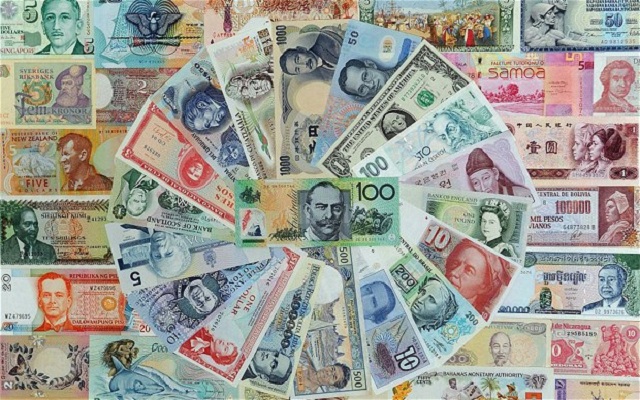

Economic Focus with Dr Bongani Ngwenya
WHEN Zimbabwe adopted the multi-currency system in 2009, in response to the citizens’ rejection of the domestic currency, the Zim-dollar, the positive result of that Government decision was the abrupt effect on the unsustainable ballooning hyper-inflation which dropped sharply to a single digit overnight.
Goods and commodities found their way back into the shelves in retail shops with stable prices that became affordable to the general populace of this country.
Our productive capacity utilisation in the economy still hasn’t recovered from the severe 2008 economic meltdown, evidenced by the huge imports bill, financed largely by diaspora remittances.
The imports bill has been draining the multi-currency reserves, and also mopping these currencies in circulation, exacerbating the liquidity problem from the time we adopted the multi-currencies, mainly the US dollar and the South African rand.
The truth of the matter is that as these currencies find their way back into their domestic economies, very few of those currencies find their way back into Zimbabwe’s economy for circulation. We haven’t been able to manage the supply side of these currencies for the reasons explained in the section below.
The lack of monetary policy sovereignty
In adopting the multi-currency regime Zimbabwe ceded control of its monetary policy to a vacuum, i.e. in the absence of an economic and monetary union such as one existing between South Africa, Namibia, Swaziland and Lesotho (Customs Union) or the European Economic and Monetary Union. Namibia, Swaziland and Lesotho’s monetary policies are naturally rendered subordinate to the South African monetary policy, so do the respective European Union member States monetary policies, being subordinate to the European Economic and Monetary Union.
Zimbabwe does not have such similar arrangements. We abandoned our domestic currency in preference to a basket of multi-currency regime, in the process rendering our monetary policy a lame duck.
To what extent was monetary policy a factor prior to multi-currency regime?
The broad consensus is that the Zimbabwe sovereign debt (domestic debt) challenge has always been caused by inappropriate fiscal policies, with the Government running budget deficits to finance social programmes and infrastructural development.
In the past, that is, prior to multi-currency regime Zimbabwe like any other developing country was accustomed to doing this without dire consequence because it could escape its debts through inflationary finance and domestic currency (Zim-dollar) devaluation; that is, proper monetary policy offered a counterbalance to fiscal policy.
Today, however, Zimbabwe cannot devalue these multi-currencies because it has no control over their supply.
To what extent has Zimbabwe’s lack of a nationally appropriate monetary policy exacerbated, or even caused, its sluggish economic recovery and growth since adoption of multi-currency regime?
Monetary policy, as practiced by the Reserve Bank of Zimbabwe, for example, is often intended to stabilise inflation at a low level, and to mitigate the business cycle. Prior to adoption of multi-currency regime, however, Zimbabwe’s monetary policy was focused not only on inflation and stabilising output, but also on maintaining a foreign-exchange rate peg (following the deliberate devaluation in the 1990s, to embrace the Economic Structural Adjustment Programme (Esap) and converging to the requirements of the economic reforms with respect to several indicators, including inflation.
From 2009 to the present, Zimbabwe’s monetary policy has been determined on review basis by the Reserve Bank of Zimbabwe, negotiating the setting of interest rates on the US dollar denominated loans with commercial banks.
The Reserve Bank on its own remained under capitalised and its mandate of being the lender of last resort, severely compromised. Furthermore, by default the central bank restricted credit, as a result interest rates rose up, businesses found it prohibitive to borrow, thus curtailing domestic investment, and economic output continued to fall.
On the other hand, holding other things equal, when central banks undertake monetary policy expansion to depress interest rates, the economy will enjoy a boom, though for a while. Central banks are thus generally encouraged to set interest rates between these two hazards, to maintain a balance or economic equilibrium. In the absence of a domestic or sovereign currency such equilibrium remains remote.
I am not advocating for the return of the sovereign currency (Zim-dollar) at all, because the fundamentals on the ground are not yet conducive for the return of the sovereign currency. My argument is that there hasn’t been that counter-balance between fiscal policy and monetary policy since the adoption of multi-currency regime and Zimbabwe has been hamstrung by its lack of monetary policy sovereignty and the ability to devalue its own currency any more.
What we further learn here is that Zimbabwe suffers because the monetary authorities can no longer adjust the nominal exchange rate, e.g. devaluation in order to make exports competitive in the global market, and so the country is fated to experience a secular decline in economic competitiveness.
The Reserve Bank or central bank should act not only as lender of last resort to the banking system, but also to the Government: monetary sovereignty is valuable because it means that the central bank can buy Government debt by printing domestic currency (seigniorage). These are the main costs or the dark side of the multi-currency regime.
In conclusion may I reiterate what I said three weeks ago at Bulawayo Rainbow Hotel, in the one-day tax budget seminar organised by the Institute of Chartered Secretaries and Administrators (ICSAZ), when I presented a paper on the “Economic Implications of the 2016 National Budget”.
After ceding our monetary policy sovereignty by adopting the multi-currency regime we were supposed to maintain “aggregate demand” stimulation policy, that is biased towards “investment or business expenditure”, “domestic investment growth”, to resuscitate our industry and raise production capacity to sustainable levels and “foreign direct investment drive”.
This strategy would have ensured continued export earnings in multi-currencies, and in the process building up reserves, that would have one day positioned us to revert to a sovereign currency. It is inevitable that the liquidity problem will continue into 2016, as evidenced by the constrained fiscal space.
Dr Bongani Ngwenya is a Bulawayo-based Economist and Senior lecturer at Solusi University’s Post Graduate School of Business. Feedback, [email protected]


 Online Reporter