Online Reporter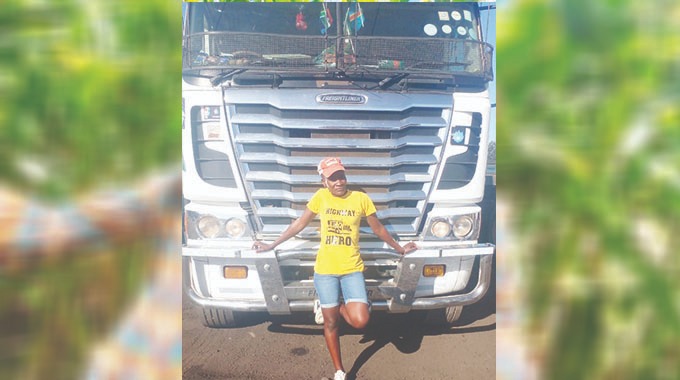
Sikhumbuzo Moyo, [email protected]
SHE’S always been one to buck the trend. A passionate Dynamos supporter, for instance, despite living practically next door to Barbourfields Stadium in Mzilikazi — a suburb where Highlanders is more than just a football club; it’s a way of life. Highlanders, with its regal roots — founded by King Mzilikazi’s grandsons, Rhodes and Albert Khumalo back in 1926 — holds a unique place in the community’s heart.
Living so close to Emagumeni, you’d expect most Mzilikazi residents to be Bosso fans, or at least have some connection to the club. If not, they’d probably be Zimbabwe Saints supporters, or simply not interested in football, given that other local teams are relatively recent additions.
Supporting a team is a matter of personal choice but some choices are just unique. A black and white flag in Mbare, Harare, for instance, would be unusual, just as a Barcelona kit in Madrid or a Real Madrid flag in Catalonia would raise eyebrows. It’s more of a cultural taboo, though not impossible.
Sindiso Ndlovu, however, took a far more unconventional path. She left her career as a cartographer with the Zimbabwe Statistics Agency (ZimStat) — a profession involving drawing and producing maps — to become a cross-border haulage truck driver.
“My initial inspiration was a woman driving a ShuShine bus when I was in Grade Five in Hwange. She drove us on a school trip to Masvingo and I was just fascinated that a woman could drive something so huge. I told myself that if she could do it, so why not.”
Ndlovu’s grandfather was also a cross-border truck driver and she fondly remembers him bringing his truck horse home. She would climb inside and admire it, further fuelling her love for haulage trucks.
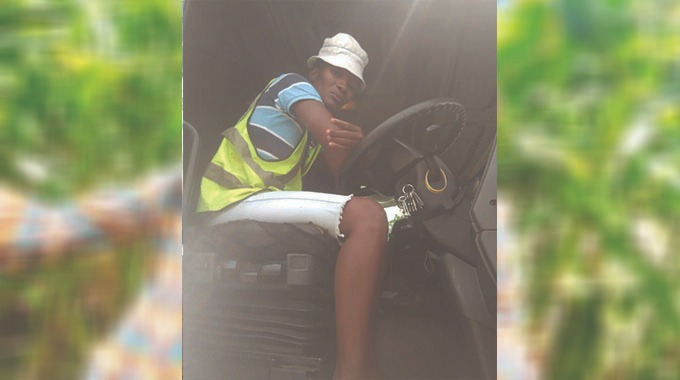
“Truck driving wasn’t my first career. I started as a cartographer at ZimStat but the desire to do something extraordinary pushed me to leave that profession and pursue my childhood dream,” she said.
Her first experience of driving a truck was at age 22, in 2005.
Although she didn’t have a licence at the time, it was just for fun. She obtained her driver’s licence in Zambia in 2011 where her family originally comes from, although she grew up in Zimbabwe. Even after getting her licence, she continued working as a cartographer until 2015, when she became a full-time haulage truck driver.
“I would drive from the Democratic Republic of Congo (DRC), through Zambia and Botswana, or sometimes Zimbabwe, to South Africa. The trucks I drove were the big ones, super link haulage trucks, the ones with two trailers,” said Ndlovu.
Slimly built, Ndlovu said she always encountered curious looks on the road, from other motorists, police officers and Zimbabwe Revenue Authority (Zimra) officials at roadblocks and toll gates.
“I’d get a lot of curious stares, even at toll gates. At one time at a toll gate, I was asked to pull over because the officers didn’t believe I was the driver. I also remember at a roadblock near Mbokodo on the Bulawayo-Plumtree Road, police officers ordered me to park. One of them said, quite clearly, that there was no way someone as slim as me could drive such a huge vehicle. After checking my documents, I told them I wasn’t carrying the load on my shoulders; my job was to control the vehicle carrying the load. They were in stitches,” she said with a chuckle.
Ndlovu was fortunate to work for a company that transported copper and had a policy of travelling in convoy. If one driver had a breakdown or needed to check something, everyone stopped; no one was left behind.
Haulage truck drivers often take breaks at truck stops, sometimes overnight. It’s well known that these stops can be places where drivers indulge in alcohol and other illicit activities, and where some male drivers are alleged to bring in sex workers. Ndlovu didn’t deny this.
“It depends how you present yourself. If you present yourself as someone who’s interested in those things, you’ll be treated accordingly. But if you are dignified, you will be treated with respect.”
Ndlovu praised the increasing number of gender-sensitive facilities at truck stops, particularly the provision of separate male and female bathrooms.
“Most truck stops now have facilities for both male and female drivers such as bathrooms. As for the company I worked for, it was company policy that we didn’t just stop at any truck stop; we had specific ones, so it wasn’t really an issue for me when I needed to use the bathroom or have a wash in the morning.”
Ndlovu believes that driving haulage trucks is a calling and urges other women to follow their hearts and not be deterred by anything or anyone.
“To the ladies out there, don’t let anyone look down on you. Do what you feel like doing. The sky is the limit. Yes, men will always be men, and as women, we are sometimes submissive, but that must not put you down or make you change what your heart tells you.”