admin
adminBritish occupied our country.
Our independence followed years of bitter protracted struggle.
Ask yourself how many had to die for this great day to come.
The bitterness of our colonial experience could have so easily driven us into a pogrom against the white community, most of whom diligently served and sustained UDI.
Yet our high level of political consciousness soared above bitterness and has long made us see the Rhodesian problem as inhering in a system of racial injustice and not in the colour of the skin of those who manned that system.
Except of course for those who did not know our politics, it came as no surprise that humanism and magnanimity prevailed by way of the policy of national reconciliation which I declared in 1980.
That policy provided a wand of peace at home and a priceless export in the region as it found a replay in Namibia and South Africa.
While all within the white community welcomed and benefited from the policy, not all felt the compulsion to reciprocate this gesture of forgiveness, reconciliation and peace across the colour bar.
All the same that policy gave our society the multi-racial character for which Zimbabwe has been applauded.
What we reject is the persistence of vestigial attitudes from the Rhodesian yesteryears, attitudes of a master race, master colour, master owner and master employer.
Our whole struggle was a rejection of such imperious attitudes and claims to privilege.
The issue of land remains both emotive and vexed.
It has always been so and many will recall that negotiations for independence almost got bogged down over this matter.
Between 1980 and 1995, we were able to resettle 71 000 families on about 3,3 hectares excised from the commercial sector.
This was a far cry from the 162 000 families we had hoped t settle on 8 million hectares of land.
We resumed land reforms under what we have termed the second phase and to this day over 2 422 households have been resettled on 66 farms.
The second phase of land reforms envisages the excision of about five million hectares of land from the commercial sector with one million hectares set to be delivered for resettlement every year.
We had hoped that this would start as nearly 1 000 farms which we had designated for acquisition.
Sadly, this was not to be as the commercial farmers contested the matter in the courts, forcing Government to abandon the acquisition process.
The process of land delivery has been both slow and frustrating.
Between 1980 and 1990, we were slowed down by the “willing seller, willing buyer” clause in the Lancaster House constitution.
Equally, the resources which the British and American governments had pledged to make available at Lancaster House either stopped or were reduced to a trickle.
Even after reducing the constitutional barriers, we were still faced with the issue of diminishing resources against ever-rising prices.
After 1997, we also had to contend with the reluctance of the new Labour government which did not want to honour commitments made by previous British governments on the land issue.
We also faced farmer resistance, whose manifestations included not just the legal challenges I have already referred to but also resistance to the land clause we had introduced in the rejected draft constitution.
Naturally, this has created frustration leading to the current spate of farm occupations by the war veterans and sporadic clashes in which two lives have regrettably been lost.
We can understand the frustrations of the war veterans, just as we appreciate the pressures faced by the commercial farmers.
Yesterday and today, I have been meeting with the leadership of the farmers and war veterans so we can reach some understanding.
Two weeks ago, I met with the British Foreign Secretary who suggested Zimbabwe send a delegation to the United Kingdom to reopen negotiations on land reform.
We should be able to find a way forward but one that recognises the urgent need for land reform.
It is the last colonial question, heavily qualifying our sovereignty.
We are determined to resolve it, once and for all.
Let us continue to cherish our independence as well as upload the principles of our sovereignty.
Let us defend our freedom and deliver the benefits of independence to our people.
Happy anniversary!


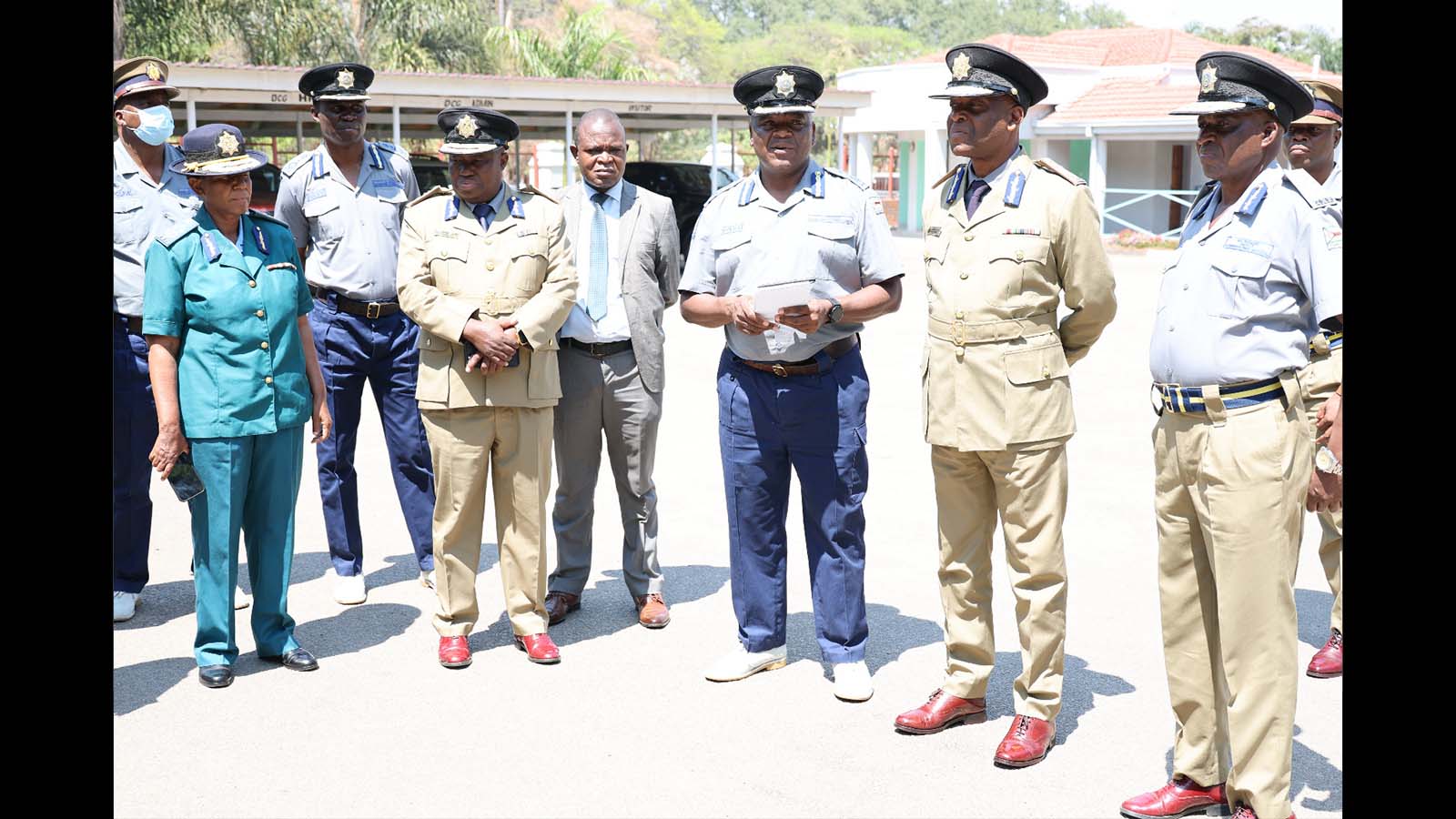
Online Reporter
- Herald
- September 28, 2026
- 4 views
Police acquire more highway patrol vehicles, motorcycles
Freeman Razemba Senior Reporter Police have acquired more highway patrol vehicles and motorcycles as part of their efforts to curb road carnage and bring sanity to the country’s roads.…