
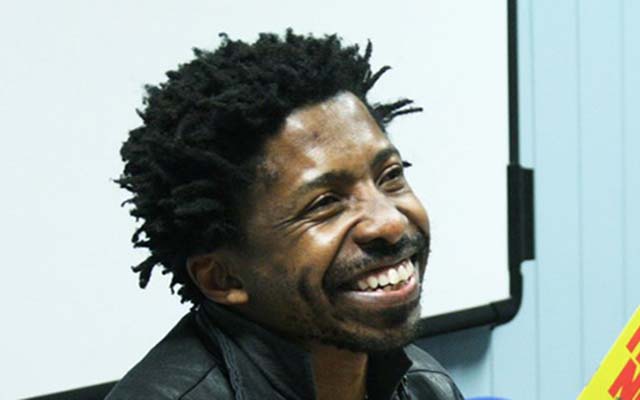
Elliot Ziwira
At the Bookstore
Words are a powerful weapon to dissect and perforate man’s seemingly impenetrable heart, whose voyeur derives a perverse excitement from trauma and anguish.
They are subtle, often invisible instruments, yet capable of unsettling the deepest recesses of human consciousness.
Unlike missiles or nuclear weapons that are mass destructive, and whose possession or purported ownership begets fear, deceit and deification, words work differently.
They perforate the hardest shell that makes up man’s fortress, which gives it a formidable outlook, not necessarily to destroy, but to deface the heinous apparition presented to the world.
In doing so, they expose the inner man, whose inherent virtues have the potential to foist a peaceful, tolerant, harmonious and corrigible world. Thus, language, in its purest form, is both revelatory and transformative.
However, for words to wield such power, they must have a shared meaning. Without this mutuality, communication collapses into a void. Words must be shaped into language, structured and contextualised, lest they be lost to the wind.
To the undiscerning ear, they are mere symbols; hollow sounds without resonance or consequence. Yet within systems of power, these very symbols can be manipulated to include or exclude, elevate or diminish, liberate or oppress.
In “Harare North” (2009), Brian Chikwava deftly explores the oppressive nature of language in the life of the migrant worker who journeys to foreign lands in search of hope. The promise of opportunity is quickly undermined by the harsh realities of alienation, where language becomes not a bridge, but a barrier.
The migrant must navigate unfamiliar terrains across borders that are not only geographical, but also linguistic and cultural.
The use of the term “original native” in the novel, alongside distinctly Shona names, lends authenticity to the entrenched master-servant dynamic that persists in post-colonial contexts.
This dynamic is further reinforced through the deployment of Pidgin English, a deliberately simplified form of communication. The language used is stripped of agency, reduced to functionality, and tailored for obedience. It is not meant to express identity, emotion or complexity but is merely intended to facilitate instruction.
In such an oppressive set-up, where language is instrumentalised, emotions are inevitably suppressed. The individual is reduced to a tool, and the richness of human experience is curtailed. Psychological and emotional repression becomes the norm, as language no longer serves as a vehicle for self-expression, but as a mechanism of control.
Chikwava’s use of rustic language in “Harare North” gestures towards a broader historical reality rooted in colonial systems. In Southern Rhodesia, Chilapalapa was widely used on farms and in mines. It was a crude lingua franca designed to ensure communication between coloniser and colonised, while simultaneously entrenching inequality.
As cited in Jeater (2006:188): “In this Africa of a thousand languages and dialects, it is essential for the success of the natives, as wage earners, that they should have a common language, intelligible to each other and their masters. It does not matter much what the language is, so long as it is adequate for the ordinary purpose of life.”
The phrase “ordinary purpose of life” is revealing. It reduces the African to a labouring entity whose existence is defined by service to the imperialist. Language, in this context, is not meant to empower, but to facilitate exploitation. Its adequacy is measured not by its richness, but by its utility in maintaining the colonial order.
This phenomenon was not confined to Southern Rhodesia. Across the region, similar linguistic constructs emerged. These were ChiKabanga in Northern Rhodesia and Fanakalo in South Africa, all serving the same purpose of control and subjugation (Jeater, 2006).
These languages were not organic evolutions of cultural exchange, but imposed systems designed to strip away complexity and enforce hierarchy.
It is within this framework that theorists such as Lacan (1973) and Fanon (1952, 1967) locate language as both a psychological and political construct. For Lacan, language is tied to neurosis, shaping the individual’s sense of self and reality.
For Fanon, it is inextricably linked to colonial domination — a tool that reinforces inferiority and dependency. The colonised subject internalises this linguistic hierarchy, remaining tethered to the colonial master even in the pursuit of self-definition.
Thus, language becomes not merely a medium of communication, but a symbol of oppression. It carries within it the weight of history, power and identity.
The obsession with the West as a panacea for African challenges is sharply interrogated by Mashingaidze Gomo in “A Fine Madness” (2010).
In “Harare North”, the anti-hero, the “original native”, embodies a fractured psyche shaped by displacement and longing. While others flee the homeland, he is consumed by a desire to return, clinging to an idealised notion of belonging.
His existence becomes quantified; reduced to a singular figure: $5 000. Every action, thought and aspiration is measured against this goal. The reduction of his identity to a monetary target highlights the dehumanising effects of displacement and economic desperation.
In his pursuit, he becomes alienated from those around him — Shingi, Paul Sekai — and even his cultural roots. His obsession manifests in repetitive thought patterns and compulsive fantasising, rendering him increasingly detached from reality. The quest for $5 000 transforms him into a selfish, amoral and ultimately tragic figure.
His past looms over him as an inescapable burden.
He bemoans: “When the past always towers over you like a mother of children of darkness, all you can do is hide under she skirt.”
This haunting imagery captures the entrapment of memory and identity, further compounded by linguistic dislocation.
Closely intertwined with the oppressive nature of language is the motif of the chestnut tree in the novel. The tree emerges as a powerful symbol of universal neurosis, a gathering point for the displaced, the dispossessed and the disillusioned.
Under its branches, migrants; homeless, hungry, jobless and despondent, converge in search of solace. Yet they come from diverse social, political and cultural backgrounds, necessitating the creation of a shared language of hope. This language is not imposed, but collectively forged, reflecting a yearning for connection amidst fragmentation.
The chestnut tree transcends geography and identity. It shelters not only Africans, but Europeans and Asians as well, embodying a shared human condition rooted in the legacies of imperialism. It exposes the illusion of the empire’s moral superiority, revealing instead a landscape marked by poverty, alienation and decay.
Britain, as the former colonial master, continues to exert influence over its ex-colonies, particularly through immigration and asylum policies. The irony is stark: those who seek refuge are simultaneously protected and imprisoned. Asylum becomes a double-edged sword, offering safety while severing ties to home.
For many migrants, the promise of return remains elusive. They are caught in limbo, unable to reunite with loved ones, yet unable to fully integrate into their host society. They become sources of cheap labour, their contributions trivialised, as captured in the narrator’s lament, thus:
“Immigrant people’s contribution to this country is equal to one Mars bar in every citizen’s pocket every year.”
If asylum is denied, the situation worsens. Migrants are forced into a perpetual state of flight, engaging in cat-and-mouse games with authorities. Their existence becomes precarious, defined by fear and uncertainty. The psychological toll is immense, manifesting in mental breakdowns and a fractured sense of self.
At the family level, the impact is equally profound. Social responsibility is reduced to financial remittances, eroding emotional bonds. Even those with legal status, such as Shingi and Aleck, are constrained by the very systems meant to protect them. The inability to return home exacerbates their sense of dislocation.
In this context, the mother tongue assumes a therapeutic role. The mere sound of a familiar African language can evoke a sense of belonging and comfort. Tsitsi’s encounter with MaiMusindo illustrates this poignantly. It is a moment where language transcends its oppressive function to become a source of healing.
Yet the overarching reality remains unchanged. The chestnut tree offers only temporary respite from a condition that is deeply entrenched. The convergence of migrants beneath it reflects a collective struggle — a shared neurosis that cannot simply be wished away.
Characters such as Dave and Jenny, alongside the Polish hooker with whom Shingi loses his virginity, complicate the narrative further. They embody the contradictions of the so-called civilised world, exposing the moral decay that underpins the imperial project. Through them, the oppressive nature of language is revealed in its multifaceted forms; psychological, emotional, physical and mental.
Eventually, the individuals who gather under the chestnut tree are united not by purpose, but by a visionless hope. They come from varied professions and educational backgrounds, yet share a common sense of displacement. The empire’s attempt to project an image of order and prosperity is undermined by the very lives it seeks to marginalise.
In exposing these contradictions, Chikwava insists that language is never neutral. It is a site of struggle, a reflection of power dynamics, and a tool that can either liberate or oppress. When stripped of its humanity and reduced to function, it becomes an instrument of control — silencing voices, erasing identities, and perpetuating inequality.
Therefore, when language becomes a tool of oppression, it does more than distort communication, but it reshapes reality itself.
For an immersive reading experience, visit the Typocrafters (DigiHub) retail shop at Herald House, corner George Silundika Avenue and Sam Nujoma Street in Harare.