


 Chronicle Editor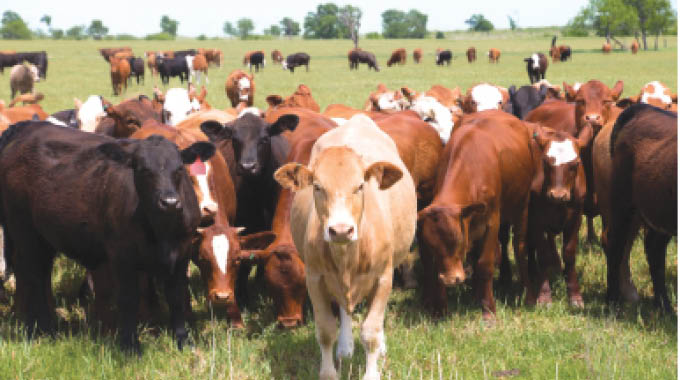
DURING the course of last week, I had an interaction with livestock farmers from one district of Matabeleland North Province. It was almost a week-long interface and as always lessons that one gets when interacting with livestock farmers are immense and very enriching.
One lesson that stuck to my mind and perhaps informs this instalment, was the demonstrated appetite for huge-framed animals. We had the opportunity to work with a very nice Brahman bull in one of the herds. It was a very good bull by all considerations but some farmers felt that it was short on frame and they wanted something larger, a half elephant if you ask me! However, a majority of the world through its breeders, is moving from very large framed animals to medium frames, because of a number of factors but principally because of the ever-diminishing rangelands.
The rangelands world over are ever decreasing both in size and in productivity as a result of increasing populations and the general climate change factors.
While breeding large-framed animals has been the driving breeding objective for most stud breeders over the years, the paradigm has been shifting slowly over the years, gravitating towards medium-framed animals that retain the aesthetics, yield enough beef and thrive on limited veld.
Evidently the memorandum about focus shifting from huge-framed animals to medium ones has not reached the farmers I was interfacing with, but it is becoming important every day for farmers to realise that very large framed animals will obviously need more forage to sustain them and our dwindling rangelands are not able to provide that amount of herbage. It does not make sense to have a very large-framed animal which you will struggle to feed for the majority of the season, instead of average frames which will thrive on the amount of grazing you have. The other issue which came out very clear as I interacted with these livestock farmers was the need for research and documentation of ethnoveterinary medicines that most livestock farmers so largely depend on.
It is a well-known issue that most smallholder livestock farmers use a lot of locally available herbs to treat various ailments on their livestock, but very little scientific research has been done on most of these herbs and there is no documentation to explain their existence and use.
These are herbs which can not just be dismissed because they have been working for the farmers in the majority of cases. In fact, simple logic will posit that these herbs would not be so widely used and existed for long among the communities if they did not work.
The call is therefore for researchers to do some scientific work on these ethnoveterinary medicines, document them and perhaps help in regularising their use by the livestock farmers. It is an undeniable fact that natural herbs are better on humans who eventually consume the meat, than the synthetic drugs which tend to have residue effects. Communal farmers have local herbs for most of the ailments that affect animals, from dealing with placenta retention, wound remedies, eye infections to even healing fractures. A proper research, documentation and publication of these will go a long way in preserving this wealth of indigenous knowledge as well as propagating its use.
I therefore call upon our research institutions, our under-graduate and post-graduate fellows with an appetite for research and publication to explore this field which is very rich in untapped knowledge.
Ethnoveterinary is a field that has massive but yet to be explore opportunities. In the same manner that natural herbs are now being promoted for use by humans, preferred over synthetic drugs, so can it be with our livestock. It just needs our academics and researchers to leave the usual streets and walk the jungle of veterinary herbs that are awash in our communities. Let us help our communities help themselves.
Uyabonga umntakaMaKhumalo. Mhlupheki Dube is a livestock specialist and farmer. He writes in his own capacity. Feedback [email protected]/ cell 0772851275


 Bongani Ndlovu
 Online Reporter