Chronicle Editor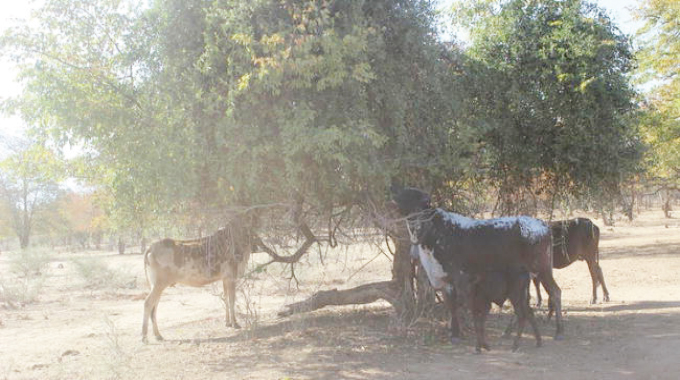
IT is an established fact that most of our livestock, in fact up to 90 percent belongs to the small holder farmers bracket.
These small holder farmers belong to different land tenure systems- such as small privately owned farms to resettlements and communal lands.
While privately owned plots and farms are protected by laws such as those against tresspassing, in communal lands such laws find little application. It is my contention that some of the challenges faced by small holder livestock farmers are because of weak or non-existent laws.
Yes, we have generic laws as pronounced by various Acts that are housed under different applicable ministries, but it is my view that some laws and regulations should be crafted and housed under the Rural District Council which is the custodian of the communal lands under which most of our small holder livestock farmers fall.
Management of the grazing land, for example, is an important and very critical component of livestock production in both communal and private farms. Your grazing land provides the cheapest feed to your animals and therefore it is imperative that it is properly managed.
One would have thought that there would be a very strict law around management of such a critical resource base, but what you see are communities struggling to enforce locally crafted by-laws that are very difficult to enforce as some difficult community members ignore them.
Yet if we had a proper law that could lead someone being taken to court for any transgression relating to that law, communities could probably manage their rangelands much better as their effort will be supported by an existing law and therefore enforceable by the law enforcement agency.
Some important resources with the community that are essential for livestock production are destroyed because of lack of enforceable laws that communities can fall back on and take violators to the courts of law. We have very important rivers and dams destroyed by community negligent behaviour which could be curtailed if specific laws could be formulated and enforced.
I am aware that we have agencies like the Environmental Management Agency (EMA) which has laws to govern some of the resources I have mentioned here but we will agree that the enforcement aspect is weak. Obviously I am out of my depth here because we are talking laws and regulations, I am an animal scientist, but I hope my point is clearly understood.
We need laws specifically formulated and enforced to help community members especially livestock farmers to regulate use of the common property resources that are essential for livestock production such as the rangeland itself and the water bodies and resources.
Talking about regulations and laws, I would like to submit that people who put up snares in our rangelands and farms, which end up trapping our livestock, should be given stiff penalties. Many livestock farmers are losing animals to people who put wires to snare animals and those wires end up snaring our livestock.
Last week I lost an in-calf cow which was due to calve down during the end of this month.
So technically I lost two animals to a reckless person whom I couldn’t even identify as I only found my rotten cow with a wire around its neck!
Hence my submission that stiffer sentences in the category of stock theft itself should be preferred for such people not to be charged under poaching or whatever the charge is, which am sure does not attract anything beyond three years in prison.
Uyabonga umntakaMaKhumalo.
Mhlupheki Dube is a livestock specialist and farmer. He writes in his own capacity.
– Feed [email protected]/ cell 0772851275.


 Online Reporter