Online Reporter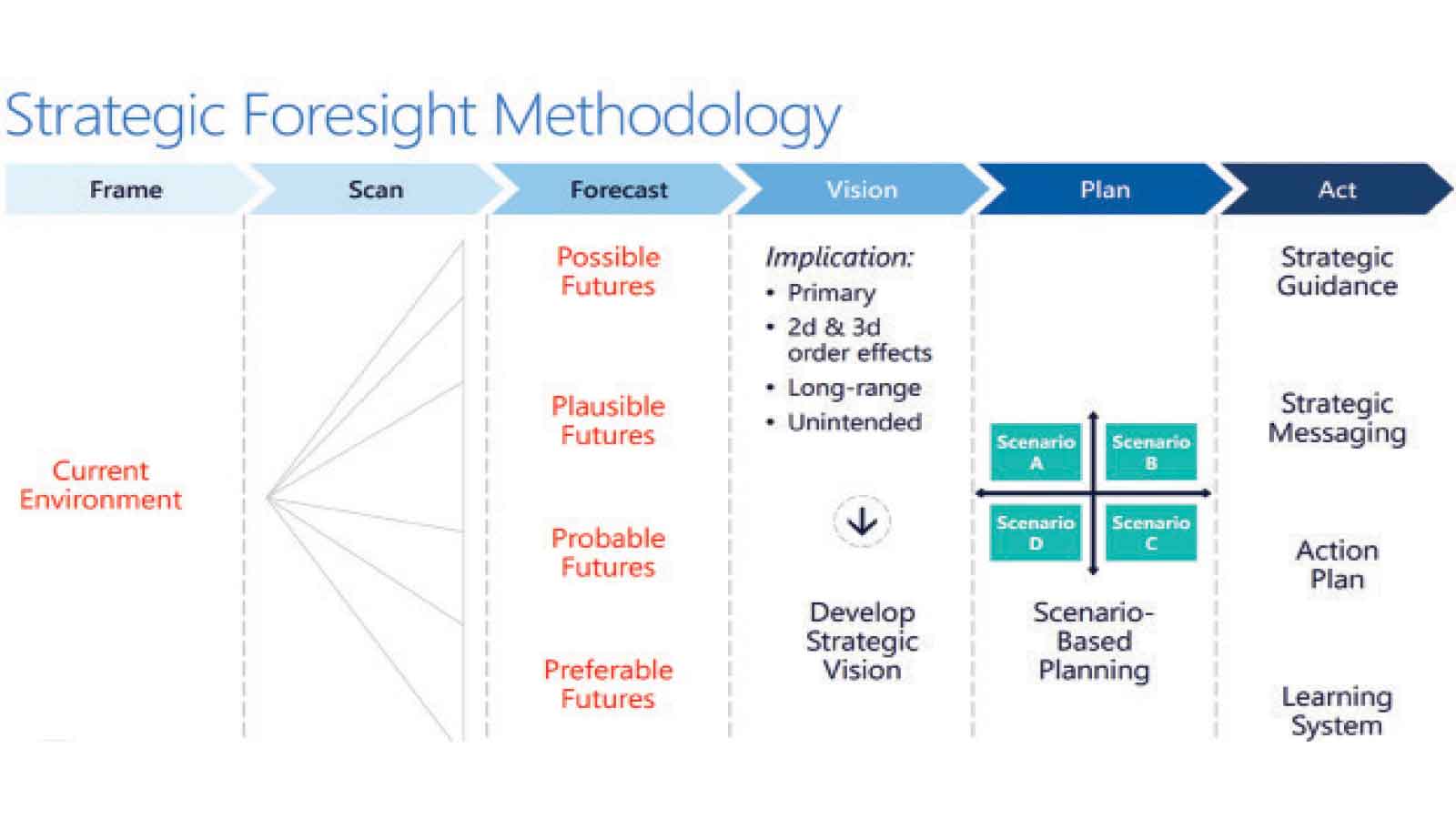
Arthur Marara-Point Blank
There is a quiet, defining choice every leader makes, often without realising it. It is the choice between two fundamental postures: Foresight or Fear.
One builds, the other defends. One plants seeds in ground others deem barren, the other fortifies walls against storms they see too late. One is the work of creation; the other, the work of survival.
In an age of perpetual disruption – where technological shifts erupt not in years, but in months, where global currents rewrite industries overnight – this choice is no longer merely strategic. It is existential.
Fear is a powerful, primal motivator. It narrows vision, triggers reaction, and seeks immediate safety. In organisations, fear manifests as the desperate pivot after a competitor’s breakthrough, the brutal layoff following a missed quarter, the clinging to a dying business model because it’s the devil we know.
Fear-based leadership is recognisable by its vocabulary: “batten down the hatches,” “circle the wagons,” “cut our losses.” It is a leadership of contraction, of retreat into a known past.
Foresight is something different entirely. It is not prophecy. It is not a crystal ball.
Foresight is the disciplined practice of becoming a student of the future, and having the courage to act on your homework before the test begins.
It is what separates the curator of a museum from the architect of a cathedral. It is the work of those who see the horizon not as a threat, but as a canvas.
Nature’s most resilient survivors, like the Arctic fox, operate on this deeper rhythm. The fox does not shiver in its summer coat, hoping winter will be mild. It reads the irrevocable shortening of days, and its very biology initiates a total metamorphosis – a scheduled, complete reinvention of its interface with the world.
It leads its own transformation from a position of strength, not desperation. It embodies a truth we have forgotten in the rush of modern business: The greatest security does not come from stronger armour, but from a more adaptive organism.
For today’s leaders, the mandate is clear. We must move beyond managing the present and become architects of “the next.”
This is not the exclusive domain of Silicon Valley start-ups or tech visionaries. It is the pressing, practical necessity for the manufacturing plant, the financial institution, the retail chain, the hospital.
To lead with foresight is to build an organisation that doesn’t just weather change, but metabolises it as fuel for evolution.
This article is not about predicting the future. It is about developing the corporate physiology to sense it, prepare for it, and ultimately, shape it. We will explore the tangible systems, rituals, and cultural shifts required to transform leadership from a exercise in crisis management to a practice of conscious creation.
We will learn how to build the sensing organs to see change coming, design the moulting rituals to reinvent on schedule, and forge a culture where courageous patience is valued over frantic reactivity.
The future is not a destination you arrive at. It is a muscle you build, a discipline you practice, and a choice you make every single day.
The era of leading from fear is over. It is exhausting, diminishing, and ultimately, futile. The time has come to embrace the harder, more hopeful work of foresight.
Let us begin. The Architecture of Foresight: Building an Organisation That Feels the Future
To lead with foresight is to undertake a profound metamorphosis of leadership itself. It is the shift from being the organisation’s chief problem-solver, forever battling crises that rise like sudden storms, to becoming its chief context-setter and system-designer.
This is the heart of modern leadership: the disciplined replacement of the adrenaline of urgency with the clarity of intention. It is not a single declarative act, but the meticulous cultivation of a new operating system – one that is inherently proactive, perceptive, and brave. The core challenge we must solve is both simple and profound: How do we see the future clearly enough to act on it bravely today?
The answer lies in building an organisation with the physiology of a natural survivor. We must design not just strategies, but sensing organs, moulting rituals, and a culture of courageous patience.
I. Build the Sensing Organs: See the Seasons Change Before You Feel the Cold
The Arctic fox does not decide to moult because it is shivering. Its transformation is triggered by a deeper, more reliable signal: the imperceptible shortening of daylight. It senses the inevitable winter long before the first snowflake falls.
Our organisations must develop analogous capabilities – formalised systems that detect the subtle shifts in our commercial climate.
This begins with institutionalising strategic foresight. This is not the occasional off-site retreat, but a rhythmic, integrated discipline. Imagine a “Peripheral Vision Committee” or a quarterly “Horizon Scan,” whose sole mandate is to analyse the weak signals that mainstream strategy misses.
This group tracks nascent technologies (seeing generative AI not in 2023, but in 2019), demographic tremors, regulatory whispers, and, crucially, innovations in non-competing industries. How is gaming mastering user engagement? How is advanced logistics redefining resilience? The goal is not prediction, but pattern recognition – seeing the mosaic before the picture is clear to all.
This system is useless without leadership’s active, humble participation. Leaders must personally engage in these sessions and model a new type of questioning. The pivotal inquiry shifts from a defensive “How does this threaten us?” to a generative and expansive “What does this allow us to do that was impossible before?” This simple reframe turns a potential threat into a field of possibility.
Simultaneously, we must listen to the heretics and the young. The most uncomfortable, and therefore most valuable, insights almost always emanate from the edges – from those not yet enculturated into “the way things are done.”
This requires creating protected channels for dissent: junior employee sounding boards, formal “Red Teams” chartered to assassinate sacred-strategy cows, and job rotations that place marketers in R&D and engineers in customer support. The leader’s behaviour here is critical. They must publicly reward the bearer of bad news, saying, “Thank you for showing us the iceberg. That is your job.” This systematically dismantles the “kill the messenger” culture that blinds an organization to its own vulnerabilities.
To be continued . . .
Arthur Marara is a corporate law attorney, keynote speaker, peak performance and corporate strategy speaker. With his delightful humour, raw energy, and wealth of life experiences, he captivates audiences and inspires them to unlock their full potential. He is also a leadership expert with extensive experience in leadership development and coaching. He is passionate about developing effective leaders and empowering individuals and organisations to achieve their full potential. Through his engaging talks and workshops, he imparts invaluable insights and practical strategies that empower individuals to lead with confidence and make a lasting impact. Arthur is the author of “Toys for Adults” a thought-provoking book on entrepreneurship, and “No One is Coming” a book that seeks to equip leaders to take charge. Send your feedback to [email protected] visit his website www.arthurmarara.com or contact him at +263772467255.