Nyasha Simbisai
Agriculture Correspondent
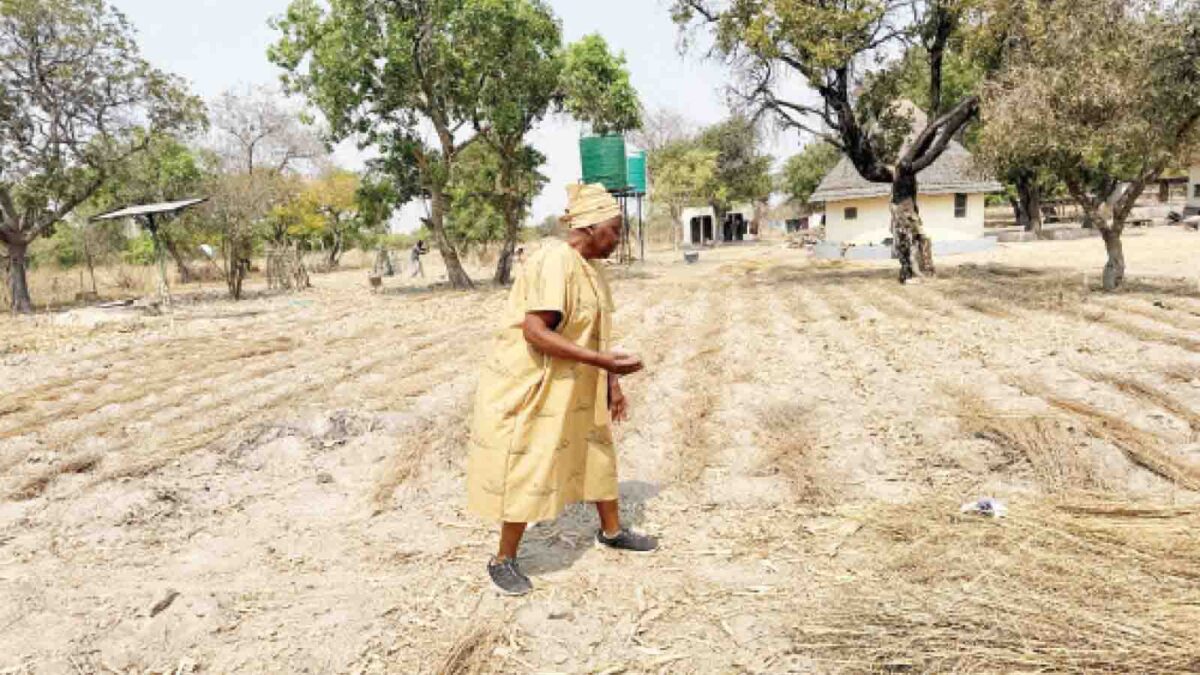
GOVERNMENT is intensifying climate-smart agricultural production, with more than 15,2 million plots prepared under the Pfumvudza/Intwasa programme, representing 95 percent of the national target of 16 million plots.
This comes as farmers are urged to prioritise traditional grains and adhere to agroecological suitability amid anticipated climate variability during the 2026/27 summer cropping season.
Ministry of Agriculture, Mechanisation and Water Resources Development Permanent Secretary Professor Obert Jiri has urged farmers to place greater emphasis on traditional grains, particularly sorghum, pearl millet and finger millet.
“These crops play a critical role in strengthening our resilience to climate variability. Farmers must remain guided by the agroecological suitability of their respective regions.
“Farmers should not be tempted to plant crops that are not suited to their agroecological regions simply because the season begins with favourable rainfall. Early-season rainfall should not be mistaken for a guarantee of sustained precipitation throughout the season,” he said.
His remarks come as the latest Agricultural Development Advisory Services (ADAS) weekly report shows that 1 121 122 hectares have been prepared under Pfumvudza/Intwasa, surpassing the programme’s one-million-hectare target. The report describes the programme as “building resilience through climate-smart farming”, with 15 280 726 plots already prepared, representing 95 percent of the national target of 16 million plots. A total of 3 725 369 farmers are participating in the exercise.
Of the total area prepared, 713 307 hectares are under farmers with three plots and below, while 236 360 hectares have been prepared by farmers with four plots and above. Mechanised conservation agriculture has contributed a further 171 077 hectares.
The emphasis on traditional grains comes against the backdrop of anticipated climate variability during the 2026/27 agricultural season. Sorghum, pearl millet and finger millet remain important components of climate-resilient production, particularly in areas where rainfall patterns and soil conditions favour their cultivation.
The ADAS report identifies “minimum tillage, mulching, integrated soil fertility management and liming” as key practices for improving soil health and agricultural productivity.
Progress has also been recorded in the adoption of these practices, with 1 365 510 farmers having collected mulch, while 59 711 have applied lime. Government is simultaneously strengthening early warning and agricultural advisory systems to ensure farmers make informed production decisions.
The latest 10-day rainfall outlook indicates prospects of scattered thunderstorms across several provinces between November 23 and 27, although localised heavy downpours, hailstorms and strong winds are possible.
Farmers have been advised to “continue planting within the normal window where the seedbed has adequate moisture”. They have also been encouraged to maintain contour drains and waterways, protect fields against soil erosion and time fertiliser applications according to soil moisture conditions and crop growth stages.
Meanwhile, national strategic grain stocks have reached 369 866 tonnes, comprising maize, traditional grains and wheat. Government is leveraging AI-powered silos and increased grain purchases to build a dedicated 600 000-tonne Strategic Grain Reserve by October 2027.
The winter wheat programme has also registered significant progress, with 130 277 hectares harvested out of 130 316 hectares planted, producing 676 473 tonnes at an average yield of 5,2 tonnes per hectare.
Beyond crop production, Government is extending climate-resilience interventions to the livestock sector through improved water security, feed conservation and drought-resilient fodder production.
The ADAS report indicates that 1 118 of the country’s 1 527 rural wards have established Drought Mitigation Centres, Village Business Units or solarised boreholes.
“Farmers are urged to plant drought-resilient fodder varieties, conserve wheat stover and establish fodder banks to strengthen feed security ahead of the expected El Niño,” read the report.
The interventions fall under Government’s Agriculture, Food Systems and Rural Transformation Strategy 2 (2026-2030), which prioritises climate-resilient production, technology adoption, early warning systems and sustainable natural resource management.