


 Sundaymail Editor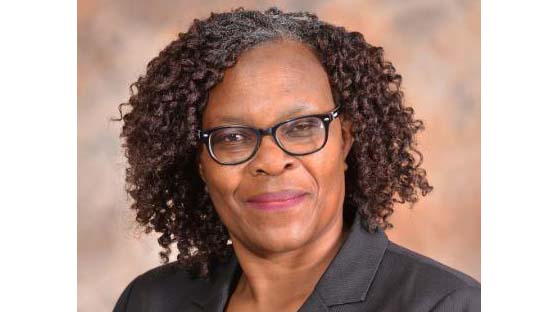
In this week’s edition of the Women in Leadership series, Dr Moreen Mudenda (MM), an industrial and organisational psychologist and change management consultant, speaks to Reginna Chinamasa (RC), the Commissioner-General of the Zimbabwe Revenue Authority (Zimra).
*********
MM: Reflecting back, how has your upbringing influenced this leadership journey?
RC: I grew up in a family where my father was a teacher and he gave us opportunities to excel in whatever we did. This latitude helped me to benchmark myself against my elder brothers and other male counterparts who were doing well. My mother, who was a housewife, was a strong role model because she taught me how to be motherly and to embrace feminine behaviour such as compassion.
Simultaneously, she also taught me to develop leadership skills to be better than the boys such as being open-minded to situations. It is imperative as a leader to have an open- minded approach to leadership. Furthermore, in a family of seven, issues of teamwork were critical and we learnt to complement our skills and not be gender sensitive in our roles, for example, I had a brother who was very good at ironing. Therefore, we were not brought up in stereotypical gender roles and never penalised for not succumbing to those roles. The values of perseverance, respectfulness, humility, honesty and issues of integrity were family values that I use in my leadership role today.
MM: What do you think has contributed to your leadership successes to date?
RC: My faith. I thank God for orchestrating my career path. Growing up in an African family, the community is important and has played a vital role in my success. For example, when I joined the Department of Taxes there was a community sense whereby I had women at various levels that made critical interventions in my early career life. This contributed to my leadership success.
MM: How have you pushed through the failures in your leadership experience?
RC: I take comfort in biblical scriptures and that God has given me opportunities and the power to readdress the mistakes. I also reflect on the mistakes, chart a way forward and make sure we do not repeat them.
MM: How would you describe your leadership style?
RC: From my upbringing, I am a believer in having an open mind and being transformative. At ZIMRA, during my leadership journey, I have introduced transformative initiatives such as spearheading the modernisation of Customs and Excise. Those initiatives are still being implemented today. Ultimately, leadership is all about influencing and having that agility to adapt your leadership style.
MM: Detail your educational background and career trajectory up to this position.
Tertiary Education: Bachelor of Honours degree in Business Studies — University of Zimbabwe; Masters in Customs Laws, Policy and Administration and an International Leadership Certificate — University of Münster, Germany. The Masters degree was a key game changer in my career because it was a great experience to be exposed to advanced innovative processes. Returning to Zimbabwe, this formed the bedrock of the transformative changes at ZIMRA’s Customs and Excise.
Career Path: This was not a clear-cut journey at ZIMRA. In 1994, my career started as a Tax Assessor in the then Department of Taxes. I joined the newly formed Investigation Division in 2001. I was appointed Head of Compliance and Risk Management (Customs and Excise) and moved to Domestic Taxes in 2014. I was Acting Commissioner, Domestic Taxes, 2016-2018. I was appointed Commissioner, Revenue Assurance, in 2018 prior to the present role as the ACG.
MM: What has made you stay committed to ZIMRA in your professional career?
RC: The diversity of functions at ZIMRA, with the realisation that within the taxation framework there is scope for career development. It has been an exciting journey where I have learnt a lot and continue learning. Besides, the global environment is consistently changing and this requires ingenuity and new ideas to deliver on our mandate. There is that community sense of wanting to serve your nation with a strong passion.
MM: One of the ways of putting ZIMRA’s values into action has been the strengthening of integrity in management performance. What measures have been undertaken to live your organisational values?
RC: We have five values at ZIMRA, which will be briefly illustrated. Firstly, integrity is key and fundamental to fully account for the funds which have been entrusted to us. Secondly, transparency, for example, in publicising the results on a quarterly basis no matter they are negative because we are amenable to addressing the gaps. Thirdly, fairness, where we look at how best to deliver services on a fair platform and having standardised internal systems and procedures to ensure consistency across the board.
Fourthly, commitment because when you have a passion to serve, it requires commitment to deliver on our mandate. Lastly, innovativeness, where our strategy is anchored in digitilisation, and people required us to scale up our digital platforms. All these values will enable us to work towards Vision 2030 and prepare for continental changes such as AfCFTA (African Continental Free Trade Area) to ensure that we mobilise maximum revenue collection.
MM: Describe some organisational barriers that may hinder women’s leadership progress.
RC: These barriers may fundamentally emerge by not having a platform that requires equity.
MM: What can organisations in Zimbabwe, such as ZIMRA, practically do to break down some of these glass ceiling barriers or create a conducive work environment for women to thrive?
RC: It is imperative that organisations create equity opportunities starting at recruitment. At ZIMRA we have a gender-sensitive recruitment policy based on merit and not quotas. At the lower levels at ZIMRA, women dominate in terms of numbers. We are working on developing capacity and identifying leaders so that women feel they can go past middle and senior management levels. The former ZIMRA Commissioner General, Ms Faith Mazani, broke that barrier and gave hope to other women that they could succeed to the highest levels. With the advent of the pandemic, we developed an agile working arrangement policy for workplace flexibility. This enables women who have social responsibilities such as childcare to work accordingly. Our transfer policy is also sensitive to social and African family responsibility issues that particularly affect women. Essentially, in all of our processes, we enshrine gender sensitivity issues.
MM: What is your viewpoint regarding employees’ mental health and its impact on the well-being and productivity of the workplace?
RC: Mental health is affecting everyone and the more we can do on that front the more it will be appreciated. At ZIMRA, we are working towards a 360 view on wellness that encompasses both physical and mental well-being.
MM: Regarding your personal wellness, how do you de-stress?
RC: I rely on my faith, attend church and pray throughout the day at work, starting from the morning ,to set the right trajectory. During the weekends I love gardening, especially flower growing because it is so therapeutic for me that I am so refreshed by Monday.
MM: What are some of the important life lessons learnt to impart to young women aspiring for management and leadership positions?
RC: I developed the Zimbabwe chapter of African Women in Tax Network and put in a framework to encourage female leaders within the field to rise up.
I encourage women in taxation to not be limited by the various roles that they play. Additionally, as women we mentally limit ourselves that we can’t do it and sometimes you just have to jump in. When those opportunities arise you must be able to say yes to take up the challenge. When you say yes there are people to help you, all it takes is a word, a look and a touch and that has helped me in the past seven months.
MM: For the next generation of leaders what are the essential business competencies that they should have?
RC: Technological skills to enable them to make data driven decisions. For example at ZIMRA we utilise data analytics for risk management and just in general. We are also really focusing towards the future on Artificial Intelligence innovations. Additionally, they must also have an adaptable approach to understand the global economic dynamics.
MM: How may business and tertiary institutions enhance their collaboration to adequately prepare the next generation of leaders?
RC: Taxation should be elevated to a greater level as a cross-cutting course because it affects everyone. Other key courses are business and data analytics which are important for the workforce. ZIMRA has been a vital training ground for student attachments because exposure is important and it will continue to provide attachments in other overlooked business areas.
MM: What do you want your leadership legacy to be?
RC: That I was able to deliver results and had a positive influence on people by having achieved God’s plans.
Dr Moreen Mudenda is an Industrial and Organisational Psychologist and Change Management Consultant, specialising in collaboratively assisting management to effectively and efficiently enhance their Human Capital performance and employee well -being. Additionally, Dr. Mudenda is a Senior Lecturer: Industrial and Organisational Psychology, teaching both Undergraduate and Master’s students at the Applied Psychology Department, University of Zimbabwe. Contact: [email protected]



 Bongani Ndlovu
 Online Reporter