Online Reporter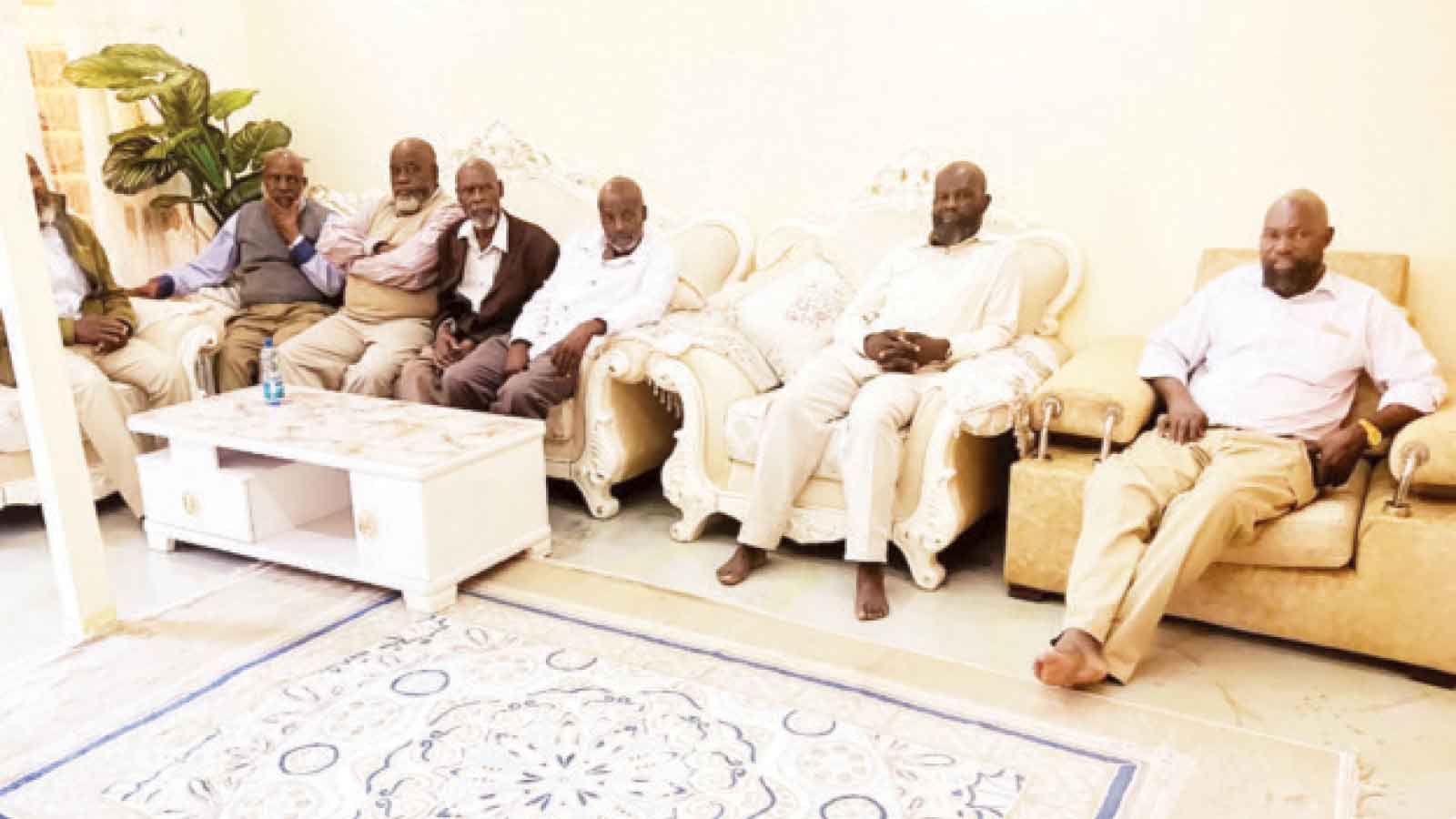
Ruth Butaumocho recently in NAIROBI, Kenya
This is not a movie script, but real life that plays out, day and night, in fulfilment of an apostolic faith prophecy.
A long perimeter fence, probably two metres high, stretches for more than two kilometres along Valley Road in Hurlington, right in the heart of Nairobi, Kenya, putting a formidable barricade between the hullabaloo, hustle and bustle of the busy traffic jungle and a serene compound.
Here, everything gives an aura of Godliness and holiness.
Here again, myth and mystery abound as religion and levels of devotion give prominence to the apostolic church.
Hordes of men and women clad in white apparel of various shapes and forms slide through a black metal gate into the compound, which locals have always held in questionable regard, awe and wonder.
As one edges closer to the entrance, it is difficult to miss the banner shouting; “The Gospel of God Church,” boldly scripted right across the gate.
Opening the gate, one is greeted by a euphony of melodious singing from a group of women of all ages adorned in white dresses. The outfits are complemented by white headgear, commonly known as “Musamaria” within the apostolic sect.
The singing does not seem strenuous, given the choreographed vocals whose intonation systematically flows in pitch and crescendo.
A spitting distance from the female gathering, a Band of Brothers huddles together, caucusing before a scheduled church service slated for 2.30pm.
It is a Saturday, a day of prayer and communion with the Lord.
The compound is the home and headquarters of the late spiritual leader of the Johane Masowe Apostolic Sect, known by his legions of followers worldwide as Baba Johane.
Commonly known as the home of the Shonas by locals, the church is located right in the heart of Nairobi.
For more than six decades, the compound has been a citadel of worship, a fortress of strong religious belief whose roots date back to Zimbabwe, where the Johane Masowe Church began.
Boasting over 3 500 followers – all domiciled in Kenya – the Johane Masowe Church, also known as the Gospel of God Church or Vapostori, has attracted the interest of humanity in its broad totality.
It has maintained significant and unmistakable presence in Kenya since the early 1960s when Baba Johane settled in that country before his death in Zambia years later.
Founded in Zimbabwe by Baba Johane, whose real name was Shoniwa Masedza Tandi Moyo, the apostolic church has spread globally and now has a presence in Australia, the United Kingdom, the US and in several African countries.
In a recent interview in Nairobi, some of the 12 ordained leaders of the church, commonly referred to as Vadare, affirmed that their decision to permanently settle in Kenya – “the Promised Land” – was inspired by the need to continue the work of the late prophet.
Members of the group include leader Evangelist Peter Mwawa, Pastor Mica Sibindi, Ishmael Mukwazhi, Silas Kiaro from Kenya, Edo Dube, Albert Mwanga from Zambia, Branchman Maregere, Jefta Nyathi, Zackaria Masaiti, John Mwiki, Williams Muleya and Prophet Oliver Maregere.
The decision was also a fulfilment of a prophecy made in 1956, the leaders say.
The church leaders say Baba Johane, nicknamed “Sixpence,” chose Kenya to be the home of the gospel owing to a series of prophecies and connected events that occurred over a period of time.
“Baba Johane vakati munyika yeKenya ndimo muchagara izwi raMwari,” Pastor Sibindi, one of the ordained leaders, revealed recently in a wide-ranging interview at the Johane Masowe headquarters in Nairobi.
Giving a chronology of events which resulted in the formation of the Johane Masowe Church in Kenya, Pastor Sibindi said Baba Johane had his last lap of missionary work in Kenya after years of preaching the gospel across several African countries.
“He started his work in 1932, before going to South Africa, where he convened congregants in Port Elizabeth in 1947.
According to Pastor Sibindi, Baba Johane left for then Northern Rhodesia and ended up in Arusha, Tanzania, in 1961 after preaching, converting, and healing people.
“In 1962, Baba Johane and his legion of followers arrived in Kenya.”
While in Kenya, he visited a place called Laikipia, commonly referred to as the “Equator” as it sits on the equator in the shadow of Mount Kenya.
Pastor Sibindi said in Laikipia, Baba Johane revealed to his legions of followers that his journey had ended and he would no longer travel beyond the Equator.
During a prayer session at the Equator, Baba Johane boldly declared Kenya as the home of the gospel.
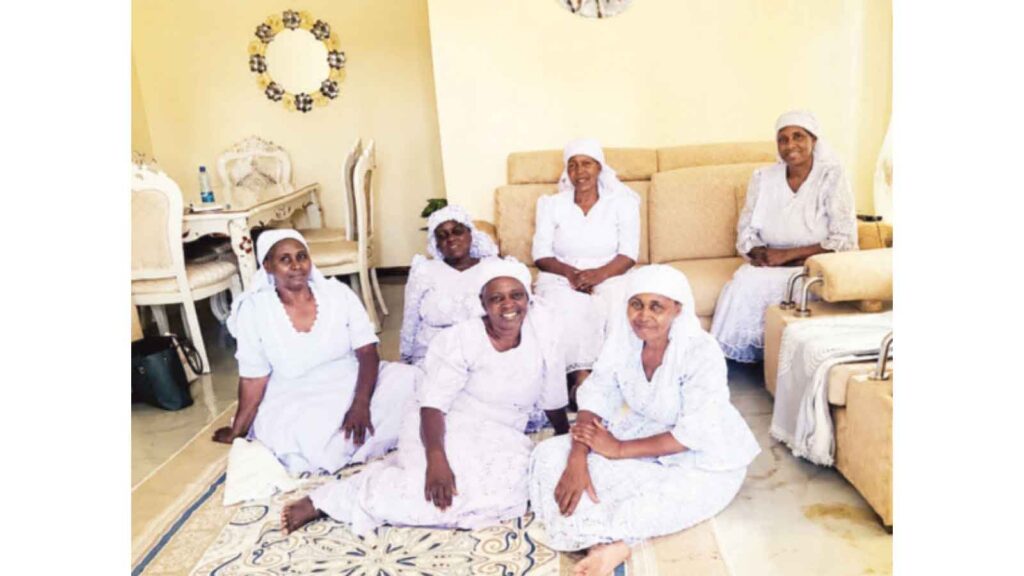
Part of Anamai Vechirangano group at the Johane Masowe Apostolic Church in Nairobi.
The spiritual leader asked his followers to continue his mission by visiting seven other countries beyond the Equator, that is Israel, Britain, Ethiopia, Germany, the United States, India and Australia.
Evangelist Mwawa said Baba Johane’s declaration resulted in his legions of followers putting up at the compound, which was built on land bought by the late spiritual leader.
To this day, the house in which Baba Johane lived in is still standing and is a stark reminder of the late spiritual leader’s stoicism.
“Our church is firmly grounded on the teachings and ideologies of Baba Johane, whose evangelical work continues to be revered and followed by millions of people across the globe.
“We are torch bearers. We are carrying forward the gospel of Baba Johane, which was passed over to us by our late parents who traversed the continent until he died in 1973 in Zambia.
“We have lived all our lives fulfilling his wishes, and that of our parents. We were told never to leave the church. We are here to stay. We will never sacrifice what our fathers believed in for anything. Never.
“We have taught our children to live within the confines of Baba Johane’s teachings and we are happy to say they are gladly following in our footsteps.”
Evangelist Mwawa said before the spiritual leader died, he requested his followers to continue with his work, adding that the journeys that have since been fulfilled were part of a divine mandate to fulfil spiritual obligations and unlock sacred revelations.
“We recently returned from Australia in fulfilment of what Baba Johane requested us to do. It took us 25 years to plan and execute the Australia trip due to several challenges, but I am happy we managed to accomplish the task,” he said.
Once all the logistical issues are put in place, the group will be going back to India.
Evangelist Mwawa said Baba Johane’s followers in Kenya are expected to fulfil unique divine mandates in each of the seven countries as highlighted by their late spiritual leader.
“When we went to Germany, we had to pray for the souls of the Israelites that were killed in that country during the Holocaust.
“Recently we were in Australia, and we had a different mission. We had simply gone there to pray. There are black people in that country (Aboriginal Australians), and Baba Johane wanted us to pray with them.
Evangelist Mwawa said the late spiritual leader explained to his followers that Australia was an important country because of the geographical commonalities between Australia and Zimbabwe.
“Both countries sit on the Tropic of Capricorn at 23.5 degrees South, which according to Baba Johane was not only a common physical and geographical phenomenon between the two nations, but was also spiritually important,” said Evangelist Mwawa.
During our recent visit to Kenya, it was established that the apostolic pilgrimage was not only confined to men, as several women abandoned their families and homes to be part of this historical ongoing journey.
Madzimai Margaret Maphosa, who is now in her mid-70s, relocated to Kenya in 1962 with her parents when she was a young girl.
Her late parents were part of the entourage that travelled with Baba Johane and lived with him up to his death.
She remembers being part of a group of young girls who would sit in front to sing for the late revered spiritual leader during many of his sermons during the church’s formative years.
“Vabereki vangu vainamata, saka nguva yedu zhinji yaive yekugara tichinamata nekuimbira Mweya Mutsvene,” she recalled.
After her parents died, Madzimai Margaret remained grounded in the religious beliefs of the church. She even had to dedicate her life to God by joining Anamai Vechirangano (apostolic sisters) after taking her vows.
“I have been living at the sisters’ quarters here at the church. Baba Johane vakaita basa rakanaka rekudzora nekutendeutsa nyika. SeVanamai Vechirangano, basa redu nderekunamatira church kuti ikure uye vatendi vachengete zvitsidzo zvaBaba Johane kuizwi,” said Madzimai Margaret.
Reflecting on the six decades she has spent at the church, Madzimai Margaret said the experience has been fulfilling to say the least.
Another female congregant whose father was among the first people to traverse the region with Baba Johane, Madzimai Sarah Gutu said the Christian virtues instilled in them by their late founder have been their strongest rallying point.
Madzimai Sarah, who was born in Kenya, said their late spiritual leader taught them that women have to bear many children in accordance with the Biblical command “be fruitful and multiply.”
Giving birth was also meant to pacify the spirit of thousands of babies who were killed in unclear circumstances.
“Baba Johane vakati vakasangana nevana vacheche vakanga vari kudenga, vachichema vachiti rutongo rwedu ruchatongwa rinhi. Ndosaka muchiona zvichirambidzwa kubvisa pamuviri kana kuvhara chibereko,” Madzimai Sarah emphatically said in Shona, although she has never been to Zimbabwe.
Having withstood trials and tribulations for decades, leaders of the Gospel of God Church say they remain resolute to continue spreading the gospel of Baba Johane in Kenya and beyond.
But who can blame the followers for daring to dream big after they were recognised as Kenya’s 46th tribe, marking the end of generations of uncertainty?
In December 2024, the Johane Masowe followers were officially documented and granted citizenship after over 60 years of statelessness.
They expressed gratitude to President Mnangagwa, who personally wrote a recommendation letter to Kenyan authorities, advocating for the Shona community’s citizenship.