Online Reporter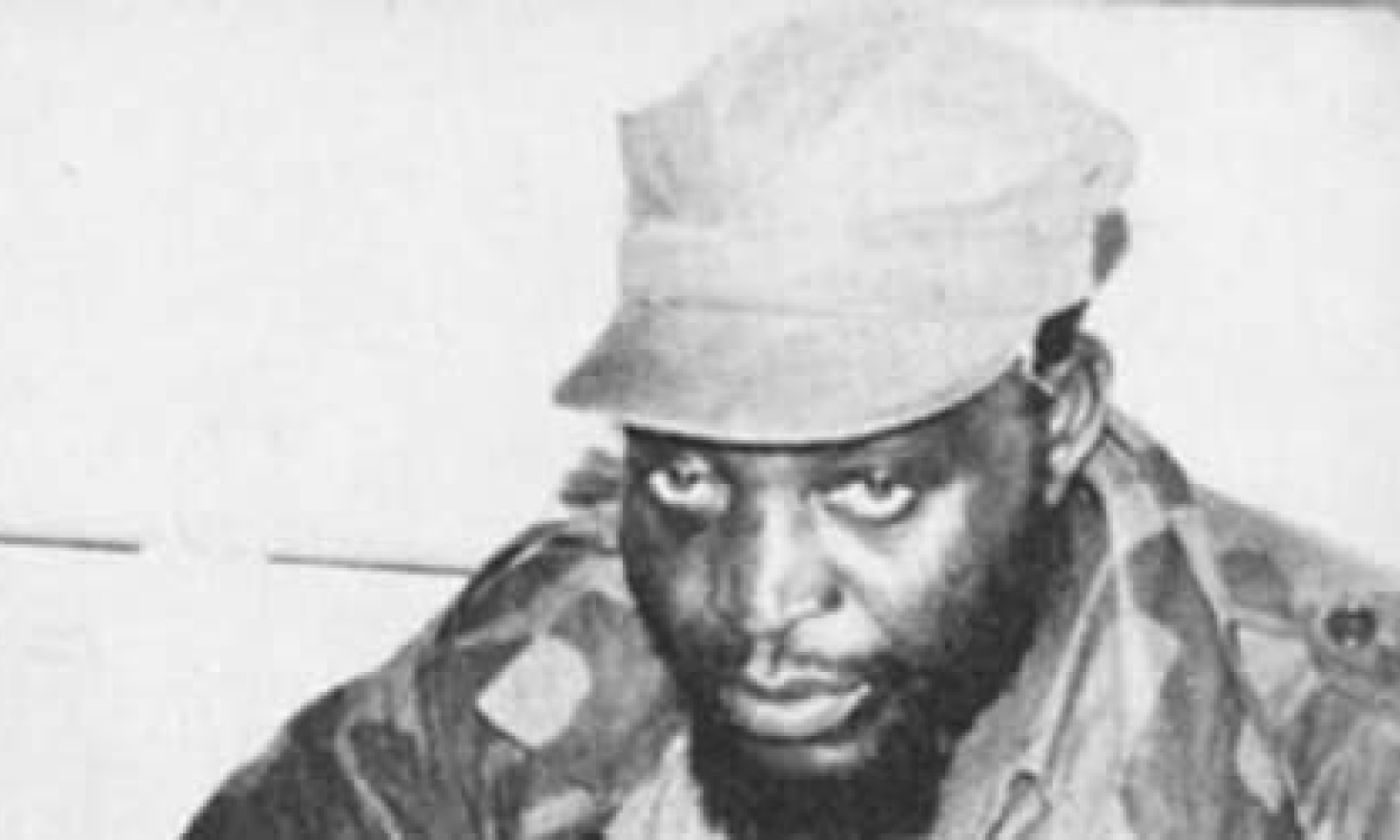
Gibson Mhaka
Zimpapers Politics Hub
AS the nation draws closer to the solemn observance of Heroes’ Day on August 11, a day etched into the nation’s soul to honour those who sacrificed for its freedom, it is impossible to overlook one of the most enduring and pivotal relationships shaping its past, present and future: its relationship with the People’s Republic of China.
China played a critical role in supporting Zimbabwe’s liberation from British colonialism.
More than just diplomatic ties, the bond between Beijing and Harare is a tapestry woven with shared struggles, ideological camaraderie and a pragmatic evolution towards a robust economic partnership. It’s a story that began in the crucible of liberation and has blossomed into a comprehensive strategic alliance, truly moving from “Comrades to Capitalists”.
The Unshakeable Foundation: A Bond Forged in Liberation
The two countries share strong bonds, which emanate from similar historical circumstances and affinities. Both share a history of imperialism and colonisation, having once been colonised by Britain.
Relations between China and Zimbabwe date back to the liberation struggle of the 1960s, when Beijing provided military support to the Southern African country. During this period, China provided significant military and logistical support to Zimbabwean liberation forces, laying the groundwork for a lasting friendship. This support included training guerrilla fighters and supplying arms, which were crucial during the liberation struggle against British colonial rule and white minority governance.
One of the most critical forms of assistance provided by China was military training. In the early 1970s, Chinese military advisors began to train guerrilla fighters in tactics suited for bush warfare, which were essential given the nature of the conflict against well-equipped Rhodesian forces.
Zimbabwean historian, Phyllis Johnson writes: “The first group of five recruits for the Zimbabwe African National union (Zanu) went to China for six months training in military science on September 22, 1963, led by (President) Mnangagwa.
“A second group, who had basic training in Ghana in 1964, went to China in 1965 for advanced training as instructors. Early in 1966, Josiah Magama Tongogara led a group of 11 to the Nanjing Academy in Beijing where they trained in mass mobilisation, strategy and tactics, returning to Tanzania later the same year.”
According to Johnson, Cde Tongogara, who became Commander of the Zimbabwe African National Liberation Army (Zanla), “learnt in China that it was vital to mobilise the people, and it was that lesson which shaped future strategy”.
Johnson further stated that eight Chinese instructors arrived at Zanla’s training camp at Itumbi in southern Tanzania in January 1969.
One of these instructors, Comrade Li, the infantry expert, played a particularly important role in the evolution of the new strategy. It was at Itumbi and other training camps that the recruits learned the meaning of “a people’s war, a people’s army, the objectives of the war and the basic teachings of Chairman Mao on guerrilla warfare . . . ”
The training not only equipped guerrilla fighters with necessary combat skills, but also instilled a sense of ideological commitment aligned with Maoist principles.
The influence of Chairman Mao’s “Three Rules of Discipline and Eight Points of Attention” resonated deeply, even inspiring songs like Cde Paul Chigango’s hugely influential ‘Nzira Dzemasoja’.
According to an account, Cde Chigango composed the song, ‘Nzira Dzemasoja’ while at Mgagao Training Camp in Tanzania in 1974 soon after completing an orientation session on the guiding principles for Zimbabwe’s liberation struggle.
Cde Chigango recalls, “We had just finished an orientation session on Chairman Mao Tse Tung’s Red Book, which became the guiding principle during the liberation struggle. I wrote the song based on Chairman Mao’s military doctrine ‘Three Rules of Discipline and Eight Points of Attention’.”
With such music as the soundtrack of war and Chinese discipline and philosophy as guiding lights, the war was successfully prosecuted with Zanla supported by the Chinese, alongside Zipra (Zimbabwe People’s Liberation Army) which had the backing of Russia.
In China, Chairman Mao’s doctrine was developed as the code of conduct guiding the Chinese Red Army and later adapted as the basis that informed the liberation fighters’ interaction with the masses during Zimbabwe’s liberation struggle.
This foundational relationship, rooted in ideological solidarity and military support during Zimbabwe’s fight for independence, has since evolved significantly.
From Comrades to Commerce: The Evolving Partnership
What began as a bond between “comrades” in the anti-colonial struggle has transformed into a complex economic partnership, often characterised by substantial Chinese investment in Zimbabwe’s mining, infrastructure and agricultural sectors.
This shift reflects a move towards more capitalist-driven engagements.
In September last year, President Mnangagwa undertook a fruitful visit to Beijing, China, where he also participated in the Forum on China-Africa Cooperation (FOCAC).
While in the city of Nanjing, he had the opportunity to reflect on the transformative experiences that shaped his leadership and Zimbabwe’s history. The city of Nanjing also bore witness to his triumph as the President of a free and independent nation. He also went to Shaoshan, Hunan province, the home of Chairman Mao.
“Today, after over 60 years or more that I trained here in the People’s Republic of China in order to go back to Rhodesia — now Zimbabwe — to begin our armed liberation struggle, I wish to sincerely thank and congratulate the revolutionary people of the People’s Republic of China, who enabled the first group of the trained cadres — and I was one of them — to go back to Rhodesia to launch our armed liberation struggle that brought about our freedom and democracy we enjoy today,” said President Mnangagwa then after touring the birthplace of Chairman Mao, a revered figure not only in China but in the Global South as well.
“Thank you, the people and leadership of this country, for enabling us to fight for our freedom. Our armed liberation struggle started here when you trained us in 1963-1964.”
President Mnangagwa laid wreaths at the bronze statue of Chairman Mao and signed the visitor’s book at the Mao Memorial Hall.
From Battlefield to Nation-Building: Post-Independence Support
With the dawn of independence in 1980, China was among the very first nations to establish diplomatic ties with the newly sovereign Zimbabwe.
This marked a pivotal shift, transitioning the relationship from revolutionary camaraderie to structured diplomatic and economic engagement.
Early Chinese contributions to the nascent nation’s development were immediate and visible, notably the construction of the iconic National Sports Stadium and the deployment of the China Medical Team, providing essential healthcare support in the very early years of independence.
This initial phase demonstrated China’s commitment to support Zimbabwe’s nation-building efforts beyond the battlefield.
The “Look East Policy” and Deepening Ties amid Sanctions
The true test and subsequent deepening of the Zimbabwe-China partnership came in the early 2000s.
As the United States and the European union imposed punitive economic sanctions on Zimbabwe following the land reform programme — a move aimed at correcting historical injustices but met with Western condemnation — the country found itself isolated.
It was during this challenging period that Zimbabwe decisively turned to China, articulating its “Look East Policy”. Beijing responded with an updated friendship package, providing crucial infrastructure support, loans and foreign direct investment.
This assistance was vital in sustaining Zimbabwe’s economy at a time when Western countries actively sought to stifle it through denial of markets, equipment, finance, skills and investment.
This assistance was vital in sustaining Zimbabwe’s economy at a time when Western countries actively sought to stifle it through denial of markets, equipment, finance, skills and investment.
This period solidified China’s position not just as a historical ally, but as a pragmatic partner committed to Zimbabwe’s economic independence and growth.
A New Era of Cooperation: Driving Economic Development
Under the astute leadership of President Mnangagwa, the Zimbabwe-China relationship has entered a new phase of exponential growth, particularly in trade and economic development projects.
China’s investments are not merely symbolic; they are tangible drivers of national progress, reshaping Zimbabwe’s infrastructure and industrial landscape.
Key projects stand as monuments to this deepened partnership: the rehabilitation and expansion of the Robert Gabriel Mugabe International Airport, the expansion of Hwange Thermal Power Station’s Units 7 and 8, the vital construction of Kunzvi Dam and the architecturally striking new Parliament building in Mount Hampden, built with a grant from China.
Beyond infrastructure, Chinese investment has poured into critical sectors like mining and manufacturing, exemplified by the US1.5 billion Dinson Iron and Steel Company project in Manhize, the Afrochine ferrochrome smelters and significant investments in lithium mines through Sinomine Resources, Zhejiang Huayou Cobalt, and Chengxin Lithium Group.
Furthermore, Zimbabwe has become an active participant and beneficiary of China’s expansive global networks, including the Belt and Road Initiative, the Global Development Initiative, the Global Security Initiative and the Global Civilisation Initiative.
The Forum on China-Africa Cooperation framework continues to provide a structured platform for mutual benefit, fostering cooperation across energy, telecommunications, agriculture and health. China’s significant support during the Covid-19 pandemic and its ongoing efforts to drill boreholes across the country underscore its commitment to Zimbabwe’s modernisation and industrialisation efforts towards Vision 2030.
Reflecting on an Enduring Friendship
As Zimbabwe commemorates Heroes’ Day, reflecting on the sacrifices that paved the way for its freedom, the journey of its relationship with China stands as a powerful testament to an enduring friendship.
From the trenches of the liberation struggle, where Chinese military doctrine and training shaped a generation of freedom fighters, to the modern era of multi-billion-dollar investments driving economic transformation, the bond has evolved. It is a relationship that has navigated ideological shifts and geopolitical currents, consistently adapting to meet Zimbabwe’s evolving needs.
China remains a strategic partner, an “all-weather friend” whose support has been instrumental in the past and continues to be a cornerstone of Zimbabwe’s aspirations for a prosperous and independent future.
The story of China and Zimbabwe is a compelling narrative of solidarity, resilience, and a partnership that continues to build on its shared history.