admin
admin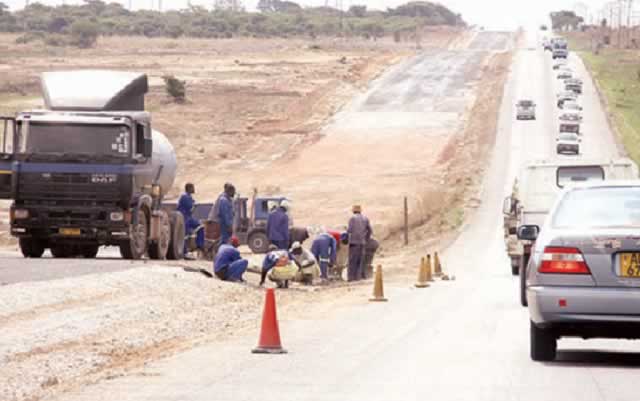
THERE is general consensus across all spheres of the economy that the liquidity crisis is one of the biggest factors that has resulted in the economy grinding to a halt.
Other economic challenges that have been identified include: Lack of long-term loans, expensive loans, lack of foreign direct investment and non-performing loans.
In simple terms, there is not enough money to oil the economy. Several reasons have been given as to why the country does not have enough funding for both public and private investments.
At the moment the country does not have a conducive environment to do business.
There seems to be a variance between what investors believe is right for this economy and what Government believes is right for this economy. Until such a time as there is a common understanding between the majority of investors and Government’s thinking, this economy will continue to be hamstrung by the current challenges with high chances of the economy worsening. The biggest question is what can be done to allow capital to flow into the country?
Aligning laws with investor expectations
There is no doubt that the indigenisation law in particular, have been the biggest bone of contention between investors and Government. The handling of this law has the biggest potential to unlock and influence the flow of investment into the country. It would do a lot of good if the responsible minister is to call for an indaba with all those who are interested in investing in the country, so as to iron out the misunderstandings of the law. Most investors rely on information from third parties, some of whom do not understand the laws themselves. Government through the 2014 Budget has emphasised the need for confidence building which can be done through direct engagement with potential investors.
Our policies should be less disruptive
The recovery momentum that the country had gained in the early days of the Government of National Unity was undone by policy inconsistencies that emerged as parties to the GNU tried to outdo each other towards the July 2013 elections. Lack of one voice, particularly with regards to the indigenisation laws, was the biggest draw back in efforts to resuscitate the economy.
In 2014, the country can regain some lost ground if there are less disruptive policies.
Focusing on investor friendly policies will be an obvious area in which we could see immediate results in growing the economy. It remains to be seen how this will play out in reality.
Political risk gradually waning
The July 2013 elections brought in a Zanu-PF Government and this doused the impact of political uncertainty in the financial markets. The party, through its Government representatives, are trying to sing from the same hymn book for confidence building.
Infrastructural development: Bringing in the right partners
Another area begging for improved performance is supply side constraints, especially electricity, road and rail infrastructure.
The upgrading of critical road infrastructure should already be felt with the resurfacing and dualisation of some parts of the Mutare road. The Beitbridge-Harare Highway and the Harare-Chirundu Highway should receive greater attention as they have the potential to be the country’s cash cows.
The biggest growth drawback at present is still electricity supply to industrial users, constraining their output and new fixed investment. At the moment, even if companies are to retool and recapitalise, there won’t be enough electricity to turn on the machines. This is growth inducing, and for that reason recovery may be delayed.
There has been talk that major national projects like the construction of roads, oil pipelines and power generators will be done through partnerships with private players with deep pockets. Several deals have been discussed in the media, although nothing concrete has been achieved yet.
If followed through and implemented, this could be a welcome development as we believe that apart from the primary benefits, these projects can provide jobs and in the process reduce the country’s high unemployment levels. Worryingly though, is Government’s capacity to negotiate deals that can be a win-win for both the investor and the country. Several deals signed recently have not done much to improve the economy.
In Chiadzwa, Government is in partnership with diamond miners but nothing seems to be coming to the country’s coffers as revealed in the 2014 Budget.
The Ziscosteel and the Green Fuel deals are also supposed to contribute significantly to the economy, but nothing tangible has been achieved. It is thus important that competent people are given the mandate to negotiate and structure deals on behalf of Government.
Outside forces
Global recovery in both the US and China has the potential to lift Zimbabwe’s earnings, especially considering that mining output has been the biggest contributor of our export earnings in the last couple of years.
The Chinese and US economies have seen some encouraging numbers in the last quarter of the year 2013. All this shows evidence of a gradual acceleration in demand conditions globally, lifting confidence, and inviting further supply responses, further boosting the growth pace.
This is one leg that can support our export performance, and thus our national income.
In summary, there are things happening externally that have probably already “turned our tide”, and although proceeding gradually, may cumulatively add to our growth momentum from 2014 onward. We might, however fail, to fully enjoy the benefits of the ongoing recovery because we are certainly not mining enough.
Hwange Colliery is now lagging behind new coal mines in Mozambique due to a plethora of reasons including lack of capital expenditure and lack of leadership.
The same applies with platinum mining. Investments in that particular sector have been slowed down as decision makers look to digest the implications of the indigenisation policies. With the situation in South Africa, companies like Zimplats would have invested quite a lot of capital in their local operations, but have put such investments on hold as they seek clarification of the empowerment laws. With such noise coming from our laws, not much will be invested into the mines, resulting in a missed recovery. — LES.


 Online Reporter