Gibson Mhaka-Zimpapers Politics Hub
THE morning sun stretches across the open Matabeleland landscape, casting long shadows over the grounds of Manama Mission in Gwanda South.
To the casual observer, it is a quiet school, its classrooms and pathways bearing the familiar signs of everyday learning.
Yet beneath that calm lies a story of sacrifice and a generation whose childhood was interrupted by Zimbabwe’s liberation struggle.
In January 1977, hundreds of pupils left these grounds on a journey that took them from the classroom into the history of the independence war.
Some were barely teenagers.
Their departure, alongside teachers and school staff, transformed Manama into one of the most poignant landmarks of the struggle.
Plans to erect a monument and a roll of honour at the mission go beyond mere commemoration; they aim to give permanent recognition to young people whose contributions deserve a lasting place in the national story.
The initiative also reflects a broader duty to preserve the physical spaces that bear witness to the war, ensuring past sacrifices do not fade into historical footnotes.
On January 5, 1977, ZIPRA guerrillas arrived at the mission before departing with roughly 400 pupils—230 boys and 170 girls—alongside teachers and nurses.
The group marched more than 40 kilometres, crossing the Shashe River into Botswana before proceeding to Zambia for military training.
Because Manama’s history has long been shaped by competing accounts and nationalist fervour, preservation must be anchored in reliable records and balanced interpretation rather than selective recollection.
A roll of honour is vital because it restores individual identities to what is often remembered only as a collective exodus.
National Museums and Monuments of Zimbabwe (NMMZ) curator of archaeology Dr Senzeni Khumalo confirmed that work has been completed at the Ratanyana Battle Site Museum, while a monument has been erected at Thekwane High School.
Teams will now focus on Manama and the Zezane Assembly Point.
“We are combining Manama with the Zezane Assembly Point monument. Our teams will now be moving to Manama, where the designer is already working on the plaque with the roll of honour of the 400 that left the school to join the liberation struggle,” she said.
At Thekwane High School, where the entire student body reportedly joined the liberation struggle, interpretive panels and a monument are already in place. Dr Khumalo noted that the school’s roll of honour remains pending while administrators locate historical records so a plaque bearing the names can be mounted.
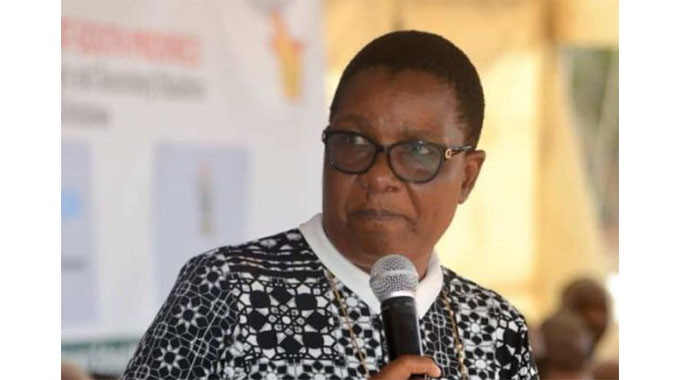
Evangelical Lutheran Church in Zimbabwe Western Diocese education secretary and former Primary and Secondary Education permanent secretary Mrs Tumisang Thabela welcomed the Government’s recognition of the pupils’ sacrifices. (Note: Original text reads “Evangelical Catholic Church”, corrected here to Manama’s actual church authority, or retained if intentional). She explained that NMMZ approached the school and church ahead of the 2026 Independence celebrations with plans to build a field museum honouring the “children of valour”.
“We are glad, as a responsible authority, as a church, that the Government has finally recognised the role that this school and the children from this school played in the fight for the liberation of Zimbabwe,” Mrs Thabela said, adding that the monument would formally record the contributions of the school, church and region.
This recognition underscores that the war was not fought solely by figures who dominate national histories; schools, churches, rural communities and young people were all drawn into the struggle. Consequently, projects at Manama, Ratanyana and Thekwane form part of a wider national responsibility spanning battlefields, training camps, pungwe meeting sites, protected villages and former colonial detention centres.
Detention centres established by the colonial regime to isolate nationalist leaders—such as Wha Wha in Gweru (February 1964), Gonakudzingwa in Chiredzi District (April 1964) and Sikombela in Gokwe South (June 1965)—deserve equal preservation. Protecting these sites ensures future generations understand not only the courage of guerrilla fighters, but also the resilience of detainees who maintained political resolve behind barbed wire.
The Government’s heritage programme also extends beyond Zimbabwe’s borders, acknowledging the regional dimension of the struggle. Ahead of the 2026 National Heroes’ Day and Zimbabwe Defence Forces Day commemorations, the Ministry of Home Affairs and Cultural Heritage launched the second phase of rehabilitating liberation sites in Mozambique and Zambia, while preparing to begin work at a site in Angola.
The regional initiative covers four sites in Mozambique—Tembue, Nyangao, Doroi and Chicualacuala—and six in Zambia: Freedom Camp, Nampundwe, Mkushi, Mlungushi, Kavalamanja and St Mary’s in Kabwe.
Domestically, preservation efforts have also targeted the Battle of Chinhoyi site, Chibondo Memorial in Mount Darwin, Altena Farm in Centenary, and mass grave sites such as Matumba Six in Mutasa and the Butcher site in Rusape, which require dignified protection and accurate records.
While NMMZ serves as the nation’s principal heritage custodian, preservation cannot rest on one institution alone. Schools, churches, local authorities, veterans, historians and communities must help gather testimonies, safeguard documents and verify names where records are incomplete.
Properly maintained, these historic sites can function as living classrooms for pupils and researchers, connecting younger generations to Zimbabwe’s past beyond the pages of textbooks while supporting heritage tourism.