Moffat Mungazi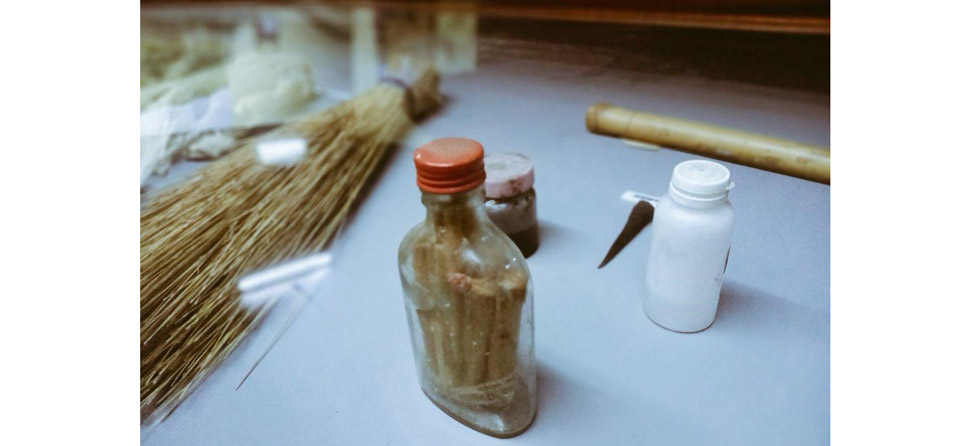
Lloyd Makonya
Correspondent
THE Mutare Museum holds many captivating exhibits, but few are as mystifying as the “mheni” (lightning) collection.
These objects, reportedly used in the summoning of lightning for retributive justice, were surrendered to the museum by a family in Nyanga in the early 1990s.
They include a 275ml bottle with a red cap containing 10 tied wooden sticks believed to be from the ‘mutamba / Umhahli’ (Strychnos or Black Monkey Orange tree), a small kudu horn, and two small containers filled with mysterious black and clear liquids.
The presence of these artefacts raises profound questions about the intersection of Science and African spiritual beliefs regarding lightning.
These items, arranged as part of the museum’s exhibit, evoke interest and unease, as they are believed to be components used in summoning lightning.
The combination of organic materials, animal remains, and unknown liquids suggests a deliberate and ritualistic process embedded in African spiritual practices.
Science explains lightning as an electrostatic discharge caused by the build-up and separation of positive and negative electric charges in the atmosphere.
When the difference in charge becomes extreme, a sudden surge of energy is released in the form of a lightning bolt, travelling between clouds or from the clouds to the earth.
The process involves ionisation of the air, rapid heating, and the creation of plasma, which manifests as the visible flash we see.
This natural occurrence is random and influenced by meteorological conditions, such as humidity, atmospheric pressure, and wind patterns.
Unlike the scientific explanation of lightning, African traditional beliefs particularly in the eastern part of Zimbabwe speak of a different kind of lightning ‘mheni’, a form of retributive justice that can be directed at an individual.
The Manyika people have a well-known warning: ‘Tingoonana maenza’ (We shall meet in the rainy season). This ominous phrase suggests that those who have wronged others should be wary and seek peace, as supernatural forces may be invoked against them.
The objects displayed at Mutare Museum are believed to be components used in this process.
Traditionalists and spiritualists claim that certain herbs, bones, and enchanted materials, when combined and activated through ritualistic incantations, can summon lightning upon an intended victim.
The mutamba tree, known for its medicinal properties, is thought to be a conduit in this practice.
The kudu horn and mysterious liquids might serve as catalysts or ‘spiritual conductors’ to direct the bolt toward a specific person.
The existence of mheni in African traditional knowledge poses an interesting paradox when viewed through the lens of science.
Can humans control lightning?
While meteorologists have found ways to influence electrical charges using conductors like metal rods, the idea of directing natural lightning to target individuals remains unproven.
However, cultural perspectives cannot be easily dismissed.
Stories abound of individuals who allegedly fell victim to mheni after being warned, lending credence to the belief system.
Fear of retribution through lightning has historically played a significant role in maintaining moral order in communities, reinforcing the power of traditional justice systems.
By displaying these artefacts, Mutare Museum offers a rare opportunity for both academic inquiry and cultural reflection.
Visitors are left to ponder whether mheni is a mere legend or a yet-to-be-explained phenomenon.
The collection serves as a bridge between scientific reasoning and the deeply rooted African worldview that acknowledges forces beyond human comprehension.
Whether one chooses to believe in the power of mheni or attribute lightning strikes to purely natural causes, the mystery remains a testament to the richness of African cultural narratives.
Mutare Museum’s collection invites further exploration into the confluence of traditional beliefs and scientific understanding, ensuring that the legacy of mheni continues to spark curiosity for generations to come.



 Online Reporter