Online Reporter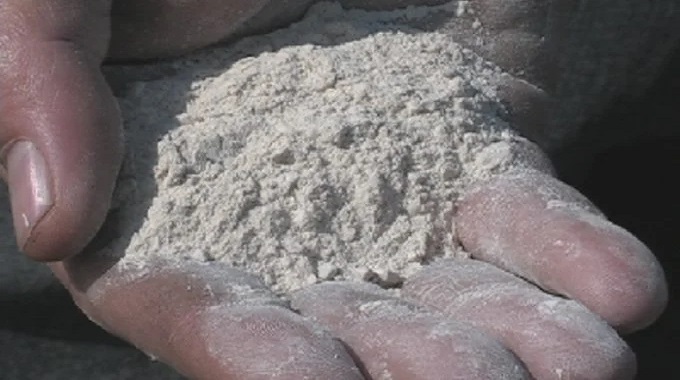
Martin Kadzere
THE closure of G&W Industrial Minerals’ Rushinga plant — following a legal dispute with a local mining firm — has hit the agriculture sector by halting domestic supplies of critical agricultural lime.
The facility was placed under care and maintenance in 2016 due to severe operational and viability challenges. It was resuscitated around 2022 following a fresh capital injection by the Industrial Development Corporation of Zimbabwe (IDCZ).
G&W, which is wholly owned by Chemplex Corporation, fully owned by IDCZ, produces agricultural lime, a critical input for neutralising acidic soils, improving nutrient absorption and optimising crop yields.
Without it, fertiliser efficiency drops, forcing farmers to apply larger quantities of expensive chemical fertilisers to achieve standard yields.
According to findings presented to the Parliamentary Portfolio Committee on Industry and Commerce by the G&W management, the plant produced 120 000 tonnes of high-grade agricultural lime annually upon resuming operations in 2022, meeting 40 percent of national demand.
The revival of the plant saw G&W slashing domestic lime prices by half, from US$150 per tonne to US$75 per tonne, making soil treatment significantly more affordable for local farmers. Those gains were wiped out when operations collapsed in April 2023 following a court-ordered eviction by Seldo Mining over claim block 37311, a high-grade dolomite deposit in Rushinga. G&W had built its processing facility on the site.
The background of the legal dispute goes back to 1989, when G&W’s original tributary arrangement with the Agricultural and Rural Development Authority is said to have expired.
Although G&W continued operating on the site without a valid legal title, Seldo subsequently pegged and registered the claims, obtaining registration certificates dated July 1, 2009. Seldo approached the High Court seeking to stop G&W from mining and processing ore from the block.
G&W argued before High Court judge Justice Tawanda Chitapi that repegging an active processing plant violated the Mines and Minerals Act, petitioning the President to intervene and requesting a stay of proceedings pending a decision by a Ministry of Mines dispute committee.
Justice Chitapi rejected G&W’s arguments and granted an interdict in favour of Seldo, ruling that, as the registered titleholder, it enjoyed exclusive mining rights without hindrance.
Noting that G&W’s refusal to recognise Seldo’s titles created a reasonable apprehension of irreparable harm, the court ordered G&W to be ejected from the property with all its equipment and machinery.
“The demise of the plant in 2016 slowed down rural industrialisation,” G&W management reportedly informed the committee.
“While the Industrial Development Corporation of Zimbabwe injected US$1,4 million to resuscitate operations, viability challenges and delayed installations of additional milling equipment hampered the country’s import-substitution goals.”
The shutdown at G&W highlights a broader picture in a report by the committee detailing how systemic operational failures across dysfunctioning upstream entities in the fertiliser value chain, including G&W and Dorowa Minerals, have severely hurt the country’s entire agriculture sector.
These upstream disruptions have forced farmers to rely on expensive imported alternatives or skip critical soil treatment altogether, contributing significantly to a staggering US$2 billion national fertiliser import bill that accumulated since 2018, while straining foreign currency reserves.
According to the findings, the G&W shutdown has triggered US$11,2 million in cumulative revenue losses, translating to US$400 000 in lost monthly revenue, along with severe deterioration of its refurbished machinery, loss of market share and heavy reputational damage.
Prior to the closure, the facility directly supported 170 workers. Contract workers were paid their outstanding dues and permanent staff were redeployed across the Chemplex Corporation.
At the briefing, lawmakers questioned whether mining authorities and the IDCZ had exhausted all legal, administrative and institutional avenues to protect the strategic investment.
They also expressed concern over allegations that a former executive from the IDCZ became associated with Seldo and emerged as a central party to the ownership battle, creating perceptions of a conflict of interest that undermines public confidence.
In response, the G&W management informed MPs that the matter remains sub judice and pledged to provide comprehensive documentation, including court filings, legal submissions, inter-ministerial correspondence and technical reports, to assist Parliament in formulating an intervention.
The Parliamentary committee recommended that the Ministry of Industry and Commerce, the Ministry of Mines and Mining Development, and the IDCZ collaborate urgently to resolve the operational constraints and restore domestic agricultural lime production.
Furthermore, the committee directed the IDCZ to urgently overhaul its corporate governance framework by December 31, 2026 to prevent similar conflicts of interest and protect public investments.
Following the 2014 shutdown of G&W’s Willowvale facility, the subsequent closure of the Rushinga plant dealt a double blow to Zimbabwe’s economy. This severely undermined agricultural productivity, hampered broad-based industrialisation and hurt local employment.
By cutting off high-purity raw materials derived from Rushinga’s rich dolomite and limestone deposits, the shutdown adversely affects domestic manufacturing value chains and industrialisation, and forces the country to rely on expensive imports.
Beyond agricultural lime, which is essential for controlling soil acidity, boosting fertiliser and herbicide efficiency, and improving crop yields, the facility’s collapse cuts off crucial industrial minerals that power domestic factories and construction.
These include hydrated and quick lime, a critical input for water treatment, gold cyanidation in the mining sector and sugar refining.
The company also produced industrial fillers and clays, including kaolin, kyanite, talc and ball clay, essential raw materials for the domestic production of paint, plastics, ceramics, rubber and paper.
Beyond supplying red and black oxides and construction aggregates for pigment manufacturing, road building and civil engineering, the facility also produced feed-grade calcium carbonate, a key mineral supplement for commercial livestock and poultry feed.