Online Reporter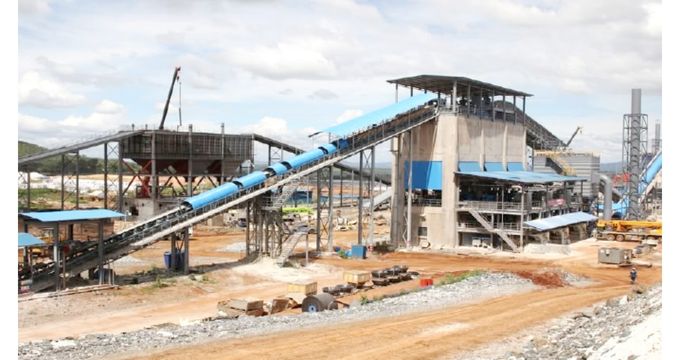
Oliver Kazunga [email protected]
MORE than 5 000 jobs have been created in Zimbabwe’s lithium industry following the Government’s introduction of export quotas aimed at accelerating value addition and strengthening local beneficiation.
President Mnangagwa has reiterated the need to scale up value addition and beneficiation of minerals, leveraging growing domestic capacity in science, technology and innovation.
A critical pillar under the Second Republic’s National Development Strategy (NDS1 and NDS2), Zimbabwe is using value addition and beneficiation to protect employment, safeguard foreign currency inflows and sustain momentum towards establishing a fully integrated lithium processing industry as the country pushes towards Vision 2030.
The intervention follows extensive engagements between the Government and lithium mining companies after authorities in February this year suspended the export of lithium concentrates and other unprocessed minerals as part of efforts to promote beneficiation and tighten oversight in the sector.
Under the new framework, five major lithium producers — Prospect Lithium Zimbabwe (PLZ), Gwanda Lithium Company, Kamativi Mining Company (KMC), Bikita Minerals and Maxmind, which owns Sabi Star Lithium Mine in Buhera, Manicaland Province — will continue exporting under strict conditions while completing local processing facilities.
In line with President Mnangagwa’s directive, the Government has stressed that the quota system is designed to safeguard the country’s mineral resources while allowing continued operations during the transition to full beneficiation.
Under this framework, exports of lithium concentrates will be phased out completely by January 2027, by which time all producers are expected to have established local processing plants.
The latest development comes as Zimbabwe positions itself as a strategic player in the global battery minerals value chain amid rising international demand for lithium used in electric vehicles and renewable energy technologies.
In a recent joint submission to the Government on the development and growth of Zimbabwe’s lithium sector, producing companies indicated that their workforce now stands at around 5 200 employees and reaffirmed their commitment to the country’s beneficiation agenda.
The firms have collectively created direct employment opportunities through mining operations, processing plants, logistics and support services.
“We fully understand and respect the Government’s policy objective of promoting local value addition and beneficiation of mineral resources and we commend Zimbabwe’s strategic vision of strengthening domestic industrial capacity within the mining sector.
“In alignment with this policy direction, the five companies represented in this letter have already planned, invested in, or initiated the construction of lithium sulphate processing projects within Zimbabwe.
“At present, the companies collectively provide substantial employment opportunities in Zimbabwe, including: KMC approximately 1 200 local employees — Bikita (approximately 2 000) — Maxmind and PLZ projects (approximately 2 000),” reads the report, which has been submitted to Government.
The quota arrangement is also expected to sustain ongoing billion-dollar investments in downstream processing infrastructure.
Last month, PLZ announced it had begun exporting its first batch of lithium sulphate from its US$400 million processing plant, marking Zimbabwe’s inaugural production of lithium salt and a significant milestone in the Government’s beneficiation drive.
The companies said additional processing facilities were at various stages of development.
“The lithium sulphate processing facilities of Bikita Minerals and KMC are currently under active construction, each involving an investment of approximately US$500 million, with completion and commissioning targeted before the end of September 2027.
“Maxmind has reached an agreement in principle to entrust lithium salt processing to facilities located within Zimbabwe, ensuring that raw minerals will not leave the country without local beneficiation. In addition, Gwanda Lithium intends to cooperate with the Sandawana Lithium Project to jointly establish a lithium sulphate processing facility.”
Meanwhile, the Minerals Marketing Corporation of Zimbabwe (MMCZ) said the lithium sector recorded the strongest performance in the first quarter of this year, underscoring rising global demand and increased local value addition.
Lithium sales reached 240 826 tonnes valued at US$178,64 million during the period, representing a two percent increase in volume and a 106 percent surge in value compared to the same period last year.
In the first quarter of last year, lithium sales stood at 224 610 tonnes valued at US$84,19 million.
“Government’s ban on lithium concentrates exports, while producing short-term disruption to global spot supplies, has solidified Zimbabwe’s strategic influence over the global battery supply chain through domestic processing.
“As a supplier of approximately 15 percent of the spodumene imported into China, Zimbabwe is a critical and vertically integrated partner for the world’s leading battery manufacturers and the shift to processed products is projected to drive lithium export revenues beyond US$1 billion, significantly amplifying the sector’s contribution to national GDP (Gross Domestic Product),” MMCZ general manager, Dr Nomusa Moyo, has said.
MMCZ said the first quarter of this year marked a defining moment in Zimbabwe’s mineral governance following the Government’s decision to ban exports of unbeneficiated minerals.
“Against this transformative backdrop, MMCZ recorded an outstanding sales performance for the quarter, with total mineral sales reaching 1 288 761 tonnes valued at US$983,85 million, surpassing 2025 volumes by 27 percent and values by 79 percent. The result positions the Corporation firmly on track to meet and potentially exceed its annual revenue projection of US$3,5 billion,” said Dr Moyo.
In the same period last year, total mineral sales were 1 014 722 tonnes valued at US$549,64 million.
MMCZ attributed the strong performance to firming prices across most mineral commodities, although rough diamonds continued to face subdued global market conditions.