


 admin
admin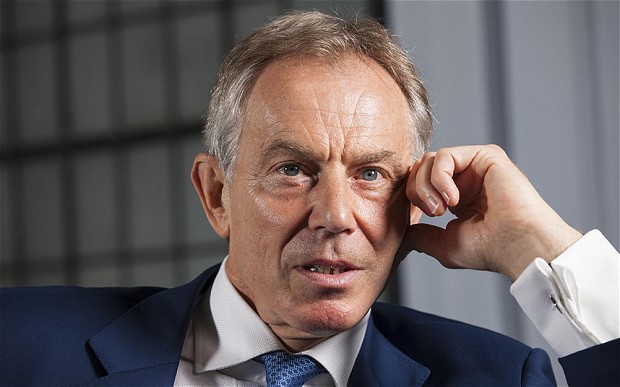
Vincent Gono
IN his famous and timeless novel Things Fall Apart, the late Nigerian author Chinua Achebe tells the story of a great Umuofia wrestler called Okonkwo.
He says Okonkwo was well known throughout the nine villages and beyond. His fame, the author tells us, rested on solid personal achievements, first as a young man of eighteen when he threw Amalinze the Cat whose back was believed to be allergic to the ground.
Although well known, respected and revered Okonkwo’s main undoing and flaw was the fear of appearing to be weak. His whole life was dominated by fear, the fear of failure and of weakness. It was not external but lays deeper within himself at least according to the author as he unpacks the character of Okonkwo. It was the fear of himself.
He was extremely war-like, ill-tempered and had a violent, often cantankerous character. Okonkwo had a softer side to him but he always worked hard to conceal it.
He never showed any emotion openly unless if it was that of anger. For him showing affection was a sign of weakness, the only thing that was worth demonstrating was strength.
He wanted to remain painfully steely, difficult and firm.
But those attributes are the ones that pronounced Okonkwo’s downfall for he lived in a borrowed and anecdotal personality.
Analogies can however, be drawn from the life of Okonkwo the protagonist in Things Fall Apart and the political lives of former British Prime Minister Tony Blair and his war minded counterpart former US President George Bush in light of Sir John Chilcot’s Iraq War inquiry that was released recently.
The Iraq War inquiry revealed some truths that President Mugabe has always been telling the world about the unholy dual alliance between the two former leaders.
He had, not once, not twice but on several occasions and at many fora told the world that it was in trouble with the two bullies but very few listened to him and now he has been vindicated.
The political tiff between President Mugabe and Mr Blair therefore had its basis in the insincerity of the former British Prime Minister and his appetite to destabilise other sovereign nations through acts of military aggression.
The Iraq War inquiry unconcealed some truths that the two leaders would not have wanted to be bared to the world.
The truths exposed them to their evil deeds and inescapable criticism hitherto them being portrayed as grandmasters of peace, freedom as well as paragons of world democracy.
The inquiry said the war was an unjustified act of military aggression as there was no “imminent threat” from the late Iraq leader Saddam Hussein, the intelligence assessments were wrong and ill-prepared troops were sent to battle and die by Mr Blair.
The long and short of it is that the 179 British service personnel and civilians killed in Iraq died for an unjustified and vain cause. In other words, Mr Blair’s irrationality and fear of failure and weakness led to the loss of lives.
The inquiry said the Iraq War was an act of military aggression launched on a false pretext and was largely regarded as illegal by the overwhelming international opinion.
The two leaders had lied to the world in order to avoid accountability, they had lied to justify their largely unjustifiable atrocities as well as try and turn their personal inflated conviction into everyone’s religiosity.
A spokesperson of the victims said their relatives died unnecessarily and without just cause and purpose.
Indeed they died to protect the gold-coated thrones of greedy merciless leaders as well as to safeguard and massage their selfish interests and ego that is driven by the need to dominate the world militarily.
Mr Blair admitted responsibility and unashamedly seemed to suggest it was better to sacrifice the 179 lives on the altar of US friendship than letting them live while their alliance with the US crumbles.
“I had to decide. I thought of Saddam and his record, the character of his regime. I thought of our alliance with America and its importance to us in the past 9/11 world and I weighed it carefully with the heaviest heart,” said Mr Blair.
“The intelligence assessments made at the time of going to war turned out to be wrong, the aftermath turned out to be more hostile, protracted and bloody than ever we imagined . . . For all of this, I express more sorrow, regret and apology than you may ever know or can believe,” he added.
Ironically, he was not afraid of the threat posed by Saddam’s falsified weapons of mass destruction but was more afraid of not siding with the US. “We were better to be strongly onside with the US. It was better for our security,” he added.
Whatever he meant, it can be taken to mean that they subjugated the truth because they did not want to be seen to be going against the US.
The two were just arrogant bullies with a mental code of gangsterism who just like Okonkwo were incapable of rational thought.
They were war mongers who have been caught by their own petard.
They were incapable just like Okonkwo of showing affection and it remains to be seen as to what action the International Criminal Court (ICC) will take on Mr Blair as the sinister and not so dead relic of his political miscalculations remain in frigid isolation and continue to haunt him.
Arguably Mr Blair should be charged with the crime of aggression which includes a military invasion not permitted under the United Nations (UN) Charter.
Action is however, very unlikely as it has become crystal clear that the ICC is for African leaders only although the ICC prosecutor Fatou Bensouda said she will consider the Iraq War inquiry before deciding on instituting a formal investigation.
It is understood however, that the families of the troops who died in the war in Iraq are taking legal advice on whether Mr
Blair and others might face prosecution in civil courts on charges of wrongdoing in a public office.
If either the ICC materialises in prosecuting Mr Blair or the civil courts as pursued by the families of the victims, he like Okonkwo, will become the tragic hero whose fear of failure and weakness that blurred his rationality in seeing things will pronounce his inevitable political end in a regrettable manner.


 leeroy
 Online Reporter