Online Reporter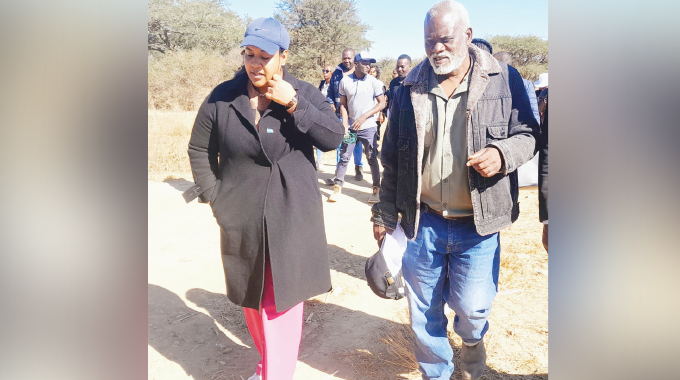
Raymond Jaravaza, [email protected]
TUCKED in rural Esigodini, Matabeleland South Province, Biano Farm owned by renowned Simmentals cattle breeder, Mr Obert Chinhamo, looks like any other ordinary farm in the area with nothing exceptional to make it stand out from the rest.
But in the last three years villagers in the area have watched in awe as high end vehicles and motorcades cruised from the Bulawayo/Gwanda Highway into the dusty road leading to the 80-hectare farm and probably wondered about the identity of the visitors making their way to Mr Chinhamo’s humble home.
Hosting an ambassador from a foreign country is an opportunity that most people can only dream about. Mr Chinhamo, however, counts three ambassadors and countless dignitaries as some of the high profile personalities that have walked into his farm and were left breathless by what goes on at the sprawling farm that is home to one of the most impressive cattle breeds in the country — the Simmental.
In 2024 Mr Chinhamo and his peers coordinated the export of 45 heifers and 15 bulls to Kenya after meeting President William Ruto, who was guest of honour at the Zimbabwe International Trade Fair (ZITF).
“In the last few years we have hosted three ambassadors from South Sudan, Indonesia and Nicaragua and a lot of other Government officials and ordinary people who are interested in seeing our Simmentals,” he said.
“I think the reason why we attract high profile people to our farm is because we strive to do the right things in the pedigree breeding business by avoiding cutting corners to make a quick buck.
“Cattle breeding is a serious business whose results will be there for everyone to see and we try our best to breed high quality Simmentals and we don’t shy away from allowing anyone who wants to see and learn how we breed the cattle at Biano Farm,” said Mr Chinhamo.
Last week Mr Chinhamo hosted the Ambassador of Nicaragua, a country in Central America and the gateway to several countries in that region, Ms Nadeska Cuthberth Carlson.
The visit by Ambassador Carlson was to share notes on the areas of co-operation that local farmers and those from Nicaragua can learn from one another in the agricultural sector particularly in the beef and milk production.
The two countries have almost the same number of cattle, about 5,5 million and are both heavily reliant on agriculture as the main driver of their respective economies.
Mr Chinhamo is also the president of the Simmental Association of Zimbabwe, an elite club of less than 10 farmers who are into Simmental cattle breeding nationally.
He is not an absentee farmer but is a hands-on individual who enjoys the smell of cow dung and has since established a rapport with his animals. His hands are a sure sign of a man who interacts with farm work on a daily basis.
Mr Chinhamo has invested heavily on his farm, which is wholly mechanised with tractors and other machinery.
He is evidently building a legacy for his family while being productive on a national scale. To him, farming is a business which people should take seriously, and if done properly, “it pays big”.
He says he believes there is a serious deficiency in the area of livestock breeding and urged youths and women with a passion for farming to take up the venture.
“I started farming cattle in the early 1990s but faced a number of challenges then because I had no experience.
“It was through patience, passion and dedication that I continued. Otherwise I could have tried other things because at times it was really discouraging,” said Mr Chinhamo.
He started breeding Simmentals in 2006 and never looked back.
Mr Chinhamo tried his hand in the truck business where he used to own a number of trucks but abandoned it when corruption was high on the roads to focus his attention on his farming venture.
He submitted that farmers, even those in communal areas should be encouraged to change the narrative from growing numbers to growing quality.
Mr Chinhamo’s argument is that instead of keeping more cattle that neither have weight nor quality beef, farmers can keep small numbers of breeds that have both weight and quality.
His Simmental breed weighs an average of 500kg with some of his bulls going to a tonne and selling for up to US$6 000 while his heifers are sold for no less than US$2 500. “The idea of people taking pride in numbers of poor quality cattle has never appealed to me. We need to do a lot to improve our breeds as a nation. Indications are that our average cattle size has dropped by almost 50 percent,” said Mr Chinhamo.
“There is a genetic deficiency in pedigree breeding and I encourage youths and women to come in and bridge the gap.
It’s a lucrative business venture with a lot of exciting opportunities.”
Mr Chinhamo has also mastered the art of producing silage and says he doesn’t remember the last time he bought cattle feed and yet his herd has been in excellent condition.
He has not skipped trade showcases in the country such as the Zimbabwe International Trade Fair and the Zimbabwe Agricultural Show that he says help him market his breed and exchange ideas with other farmers.
“Learning is a continuous process. So, trade showcases help us interact, engage and incubate ideas on how best we can improve ourselves,” he said.
“I am not saying people should go into Simmentals but any breed that improves the quality of our cattle is good.
“We can do that through cross-breeding and we have breeders who are willing to do that,” he said.