peter
peter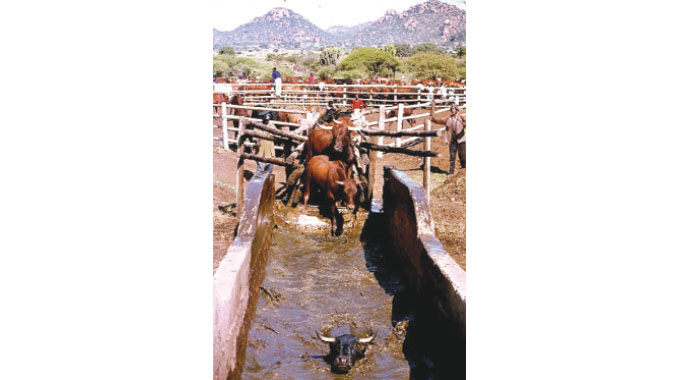
IN my line of work, I get to interface with a lot of smallholder livestock farmers across many rural regions of this country and as result I get to learn first hand a lot of things that need improvement from this sector.
Like many other facets of life, livestock production especially by smallholder farmers tend to remain rooted in old and at times retrogressive ways which stifle growth in this sector. One such practice which has lingered and remains unchanged for most farmers in a lot of different areas, is the low cost and low attention to livestock production.
Most smallholder livestock farmers want to treat a beef production enterprise as something where you just invest in buying the animals, put them at your homestead, and that’s it, the rest will sort itself out! There is very little investment done in training the helper who will be looking after the animals, who invariably is some unfortunate school dropout from a less privileged family.
There is also no investment in important structures such as handling facilities and even basic equipment. Basically, the animals are expected to just survive and multiply with minimal attention from the owner. This cannot happen anymore as a lot of things have changed in the production landscape which demand the farmer to adapt.
There are issues to do with climate change which have seen gradual but definite changes to our rangelands over time. Rainfall amounts have become smaller and erratic over the years and this has made our rangelands to be even less productive. Some reliable water sources such as perennial wetlands have dried over the years because of lack of recharge by annual rains.

This has put even more water pressure to most livestock farmers as their animals now need to hoof several kilometres to the available few and wide apar water sources especially during the dry season. Due to poor rains and several successive droughts over the years most rangelands have seen the proliferation of unpalatable grasses which by their very nature are most resistant to harsher environments.
This means there is much less availability of palatable grasses which are important for dietary requirements of the animals. Added to the pressure of climatic changes, is the general expansion in human settlement as the population increases. This means much less land is now available for grazing and most rangelands tend to be overstocked.
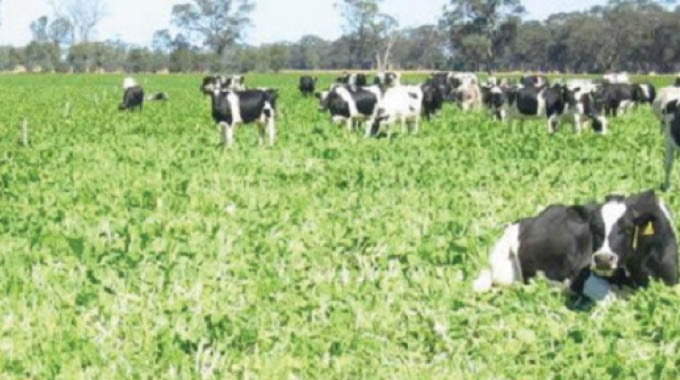
All this point to the fact that it’s no longer business as usual in livestock production for smallholder farmers. They need to embrace new strategies which will allow them to continue producing but in a more efficient way. One such strategy which is slowly gaining traction especially among early adopters, is production. Farmers who need to continue producing animals in places that are not only shrinking in size but have rangelands which are becoming less productive, have to produce fodder for their animals.
The Government is already ahead in this aspect, trying to promote fodder production. Livestock farmers need to embrace this new production approach as a matter of necessity and give it utmost attention. The other issue is on water provision. A lot of small dams and weirs have silted over the years due to poor watershed management practices within the catchment or they have simply outlived their lifespan.
It’s time livestock farmers come together, find a new dam sites, approach the relevant authorities and construct at least earth dams to harvest water for their livestock. Water bodies are now far and wide hence farmers need to help create some new water harvesting bodies. In places that have higher water table, smallholder livestock farmers now need to consider pooling resources, sink a borehole and solarise it for easy water reticulation system.
Livestock production is now active high investment system and farmers need to embrace that. You have to sink in some money into the enterprise for it to operate effectively. It is no longer an enterprise where you just buy cows and send them home to your aging parents to look after. A lot now needs to go into it. Above all livestock farmers need to cooperate and work with government in controlling disease that have a potential to wipe their investment.
We are grateful to government for raising the alarm level in response to January disease outbreak. A war has been declared against the disease and proactive government actions is observed on the ground, with extension messaging on the disease amplified.
Personally, I would not protest if every player who is benefiting from a function livestock industry, is levied to support the fight against January disease. Government needs all the resource support it gets to bring this under control. As livestock farmers part of the change in management I have alluded to above, is treating dipping with a new level of seriousness and ensuring that all the time your animals dip a hundred percent, no animal is said to be missing during the dipping. We need to change with changes in the climate and the industry.
In fact, theorists posit that climate change could be the reason why January disease which was previously endemic in high rainfall areas is now in marginal drier areas of the country. This is for scientist to research as farmers we can only adapt and learn new ways if we are to survive and remain viable in the industry.
Uyabonga umntaka MaKhumalo.
Mhlupheki Dube is a livestock specialist and farmer. He writes in his own capacity. Feedback [email protected]/cell 0772851275


 Online Reporter