Chronicle Editor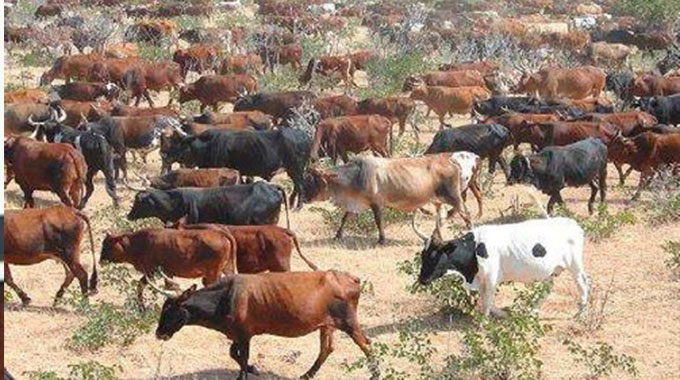
IT is an established fact that close to 90 percent of the national herd is under the holding of smallholder farmers. These farmers are mostly in the purely communal lands or in resettlement areas with just a few in small private farms.
The communal lands carry the bulk to the national herd, yet it has complex administrative processes that hinder progress in so far as livestock production is concerned.
The major challenge of the communal areas comes from the effects of the age old phenomenon of the tragedy of the commons.
This is a phenomenon which affects communal owned resources, whereby no one takes responsibility for the upkeep of a shared resource, resulting in that resource being over exploited, depleted or broken down.
It could be community borehole, community dam, communal grazing land or even a community irrigation scheme. Sadly, no proper strategy from both the Government and private stakeholders has been deliberately crafted to deal with communal set ups due to their intrinsic peculiarity.
The lack of such a custom strategy and approach for communal areas has led to the running down of all communal assets resulting in the downward spiralling of agricultural production in general and livestock production in particular.
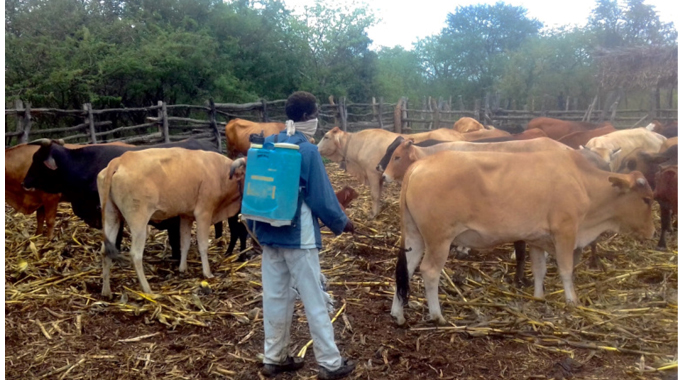
In livestock production I could quickly point out a few examples of some critical infrastructure that has gone down because of collective neglect by the community and the negative consequence of the loss of that infrastructure.
First to be destroyed were the veterinary cordon fences which were meant to separate game area from the grazing lands such that wildlife and livestock would not mix.
A similar fence also ran along the national highways in some cases serving the same purpose as well as preventing livestock from straying on to the ways.
The loss of the veterinary fences has resulted in increased frequencies of disease outbreaks especially along areas bordering protected areas. The negative result is that livestock farmers in such areas are always under quarantine which make livestock trading difficult.
The second casualty of the tragedy of the commons, are the rangelands or grazing lands themselves.
These have undergone severe degradation due to a myriad of challenges brought by collective neglect of the community, such as over stocking, over grazing, poor rangeland management practices and so on.

Animals are grazed in a haphazard manner with no regard for principles of rangeland management as a result there is general and wide spread degradation of rangelands across most communal areas.
This has resulted in the grazing lands becoming less productive and livestock production deteriorates and we see most communal areas losing a lot of livestock to poverty deaths.
We can also talk of siltation of dams and development of gulleys on the rangelands, with just about the same effect on livestock production in communal lands.
It is the submission of this pen that a whole new approach and paradigm is needed to arrest this decline in communal areas and promote proper livestock production and productivity. To do that, it will require getting the basics right.
The first issue will be to recognise that communal areas are a unique production area which needs custom intervention not just the generic text book approach. Secondly the farmers unions need to be re-energized and reconfigured to be useful to communal farmers. It is easier to work with and to manage unionised farmers than individual ones.
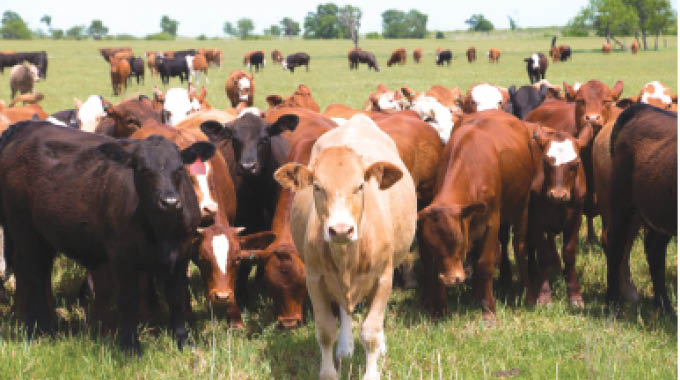
Through properly organised and structure communal farmers, some important production activities can be carried out, an example being implementation of biosecurity protocols by farmers.
Organised farmers can be activated to enforce simple biosecurity protocols such as prevention of animal movement across boundaries. This will prevent the spread of diseases from infected areas to clean areas.
Also organised farmers are able to implement important grazing land management practices such as simple rotational grazing.
There are no paddocks in communal set ups but there are natural demarcations which communities can use as paddock ends.
This requires the cooperation of the whole community and hence can only be achieved if the community is structured and this can be done by a farmers union supported by relevant Government departments.
The principle in managing communal areas should be to prevent everyone doing what pleases them, how they so please with no regard for the wider implication.
A structured community can also make it possible for important livestock production interventions to be carried out, such as provision of better quality bulls to improve breeds and arrest effects of inbreeding.
This article does not claim to have all answers regarding the issue of managing livestock production in communal lands, but motivates for new thinking and approaches that will answer the enduring challenges of the tragedy of the commons in communally owned resources. Without new thinking, new strategies and new approaches, communal areas will continue to degrade and deteriorate into unusable land with devastating impact on livestock production.
Uyabonga umntaka MaKhumalo.
Mhlupheki Dube is a livestock specialist and farmer. He writes on his own capacity. Feedback [email protected]
Cell: 0772851275


 Online Reporter