

 admin
admin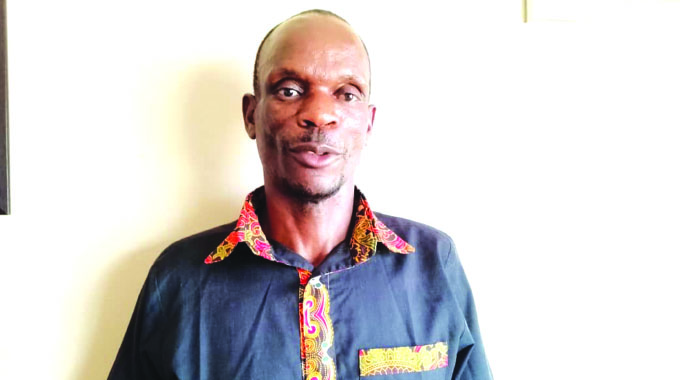
Tsitsi Tasaranarwo Herald Correspondent
Two years after his wife’s death, Reki Jimu (52) encountered many hardships in life.
When he tested positive for HIV, that is when his life started to go downhill. He faced many discouraging and negative reactions from his relatives, colleagues and friends.
Despite these negative circumstances, Jimu managed to stay strong.
Jimu, of Chitungwiza, is a person living with HIV. He tested positive in the early 2000s and it was during this time when HIV/AIDS discrimination was at its peak.
This resulted in him being sacked from work and also his church when he disclosed his status.
“When l started to lose weight, someone told me that I had been bewitched by my brother and that small evil creatures were sucking blood from me,” he said in an interview. “When I sought help from churches, priests insulted me and could not help pray for me or lay hands on me as they were afraid of my frail stature.”
These discouraging comments even started when his wife and two sons were still alive.
The first wife, Tendai Goba, who was 27 then, died in 2001 at Chitungwiza Central Hospital due to skin cancer related to AIDS.
Skin cancer usually affects those with weak immune system. Also, their two sons died that time.
Jimu recalls people passing negative comments on the death of his sons and how sickly they looked.
“Our sons died prematurely because they were severely underweight,” he said. “We did not know then that they were HlV infected.”
Jimu is grateful for the support and help he received from Chitungwiza Central Hospital during the difficult and trying times in his life.
“I am thankful for having received help from Chitungwiza Central Hospital. Before treatment l had many skin conditions and l also could not even walk outside my house. I was bed ridden.
“I am thankful that l managed to overcome this difficult time in my life. Those who used to look down on me are surprised on how stronger l have become. I am one of the survivors of HIV. To those who have been diagnosed with HlV, that does not mean it is the end of the world.”
Despite now living with HlV, Jimu is stronger than ever before.
He has even appeared on talk shows, Positive Talk and Perspective TV, shows talking about his condition.
Jimu received counselling from the Population Services International (PSI) and this helped him accept his condition and live positively.
The discrimination Jimu faced at church encouraged him to form his own organisation with others who had faced the same predicament.
His role is counselling and encouraging those who are positive and have lost hope. He is instrumental in assisting and making sure that those on treatment adhere to their medication and never feel marginalised.
After his training by PSI, Jimu was first assigned at Parirenyatwa Group of Hospitals and later opted to work for Chitungwiza Central Hospital which was nearer to where he lives.
“I would like to thank Chitungwiza Central Hospital public relations department for supporting me,” he said. “We formed a Christian fellowship network trust where we worship God freely without discrimination.
“We are still taking medication well. We encourage each other to take medication on time and following doctors’ prescriptions.
“At our support group, we share testimonies to encourage each other and the newly diagnosed HIV positive to accept their status.
“The testimonies we share are helping and changing many lives and the support group is continuing to grow.”
Jimu is popularly known as an HIV/ AIDS activist and the leader of Christian fellowship network trust.
He is living a normal life just like anyone else and is healthy.
Jimu is now married to Francisa Thompson whom he met at the support group.
“When l started taking antiretroviral pills, the sickness was reversed,” he said. “When we walk no one can suspect that we have HIV. This is how we are living.
“At first I used to meet with other people with HIV at a support group we named “Moving On”. We started with what was called moving on support group which operated at PSI and Citimed, Town Centre and other different clinics in Chitungwiza.
“So, what drove me to form the Christian Trust Network is because l saw many people dying. I saw that God created a human with intelligence of creating a machine for testing HIV and being able to bring out results. It was also formed to support others in every aspect of their lives.
“At first, ARVs had many pills and some could not adhere to the treatment. Others would throw away the medication in a toilet and under bed mattress. Others are still defaulting medication.”
Jimu said there was still need for support from church and at workplaces for people living with HIV.
“Some youths are being irresponsible. Because of drugs, they are engaging in unsafe sex. These young ones need help and education,” he said.
Jimu’s challenge has been some people who come to his organisation only for material benefits such as donations.
“At the support groups, there were people who helped us with different things. Some gave us bulgur, collards and many other different things,” he said.
Jimu is working as a builder. He however has a problem of epilepsy.
He said he has challenges of seizures caused by epilepsy and working as a builder with his condition was difficult as he was exposed to danger.
Jimu said working at his support group was voluntary.
Members do various activities there such as sports which children enjoy. The activities for adults include income generating projects such as learning how to make dish washer, toilet detergents and many others.
“Children from our support group are being trained as mortar mechanics and nurse aides,” he said.
The support group is facing challenges as it does not have any investors.
“We do sports at Chitungwiza Central Hospital grounds,” he said.
“There is netball and soccer. We have not yet received help, but we are grateful to Chitungwiza Central Hospital for giving us space to hold these sporting events.”
Jimu’s relationship with his family has improved a lot since the family members have accepted his status and are pleased with seeing him in good health.
Previous research conducted in Zimbabwe showed that adolescents living with HIV (ALHIV) in Zimbabwe are particularly affected by stigma and self-stigma.
The research report stated that 73 percent of ALHIV experienced stigma that affected their medication adherence and 47 percent had virological failure.
The stigma experiences reported included abuse, negative self-perception, neglect, social isolation, and discrimination.
Additionally, some of the indigenous terms used to identify People Living with HIV(PLHIV) include derogatory terms that translate into “dead one” or “plagued”.
This linguistic phenomenon reinforces an unfavourable and hopeless view of HIV.
Government has made strides in preventing the spread of HIV, as HIV and its effects are being fought successfully in Zimbabwe by reducing the infection rates and ensuring that those who are infected can access the treatment they need.
These collective efforts from Government and private sector have seen death rates being sharply reduced, with fewer people being added to the pool of infected people each year and those who are now mostly able to achieve normal lifespans.



 Online Reporter