daniel chigunwe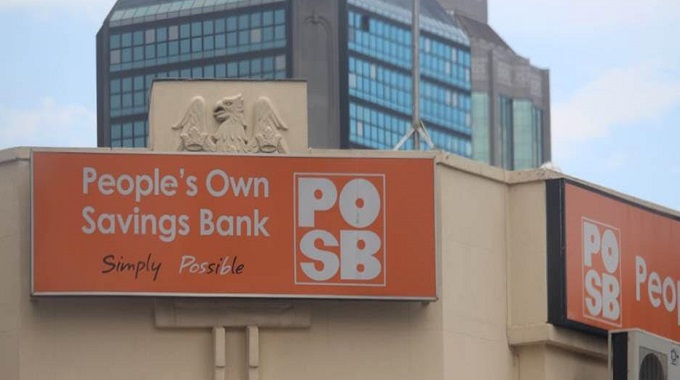
Business Writer
People’s Own Savings Bank (POSB), says high interest rates have seen a reduction in credit facilities uptake and high default rates from the bank’s clientele.
Towards the end of June 2022, Reserve Bank of Zimbabwe (RBZ) increased the bank policy rate from 80 percent to 200 percent per annum as a way of arresting insurgent inflation and restricting speculative bank borrowings that resulted in sustained attacks on the local currency which drove inflation.
As a result, annual inflation retreated from a high of 285 percent in August 2022 to 229, 8 percent in January 2023.
This came out after RBZ Financial Intelligence Unit unmasked several situations where corporates or business were manipulating the bank loan systems by securing multiple loans for nefarious activities including selling on the parallel market.
At the time the depreciation of local currency saw a precipitous increase in prices, a position that significantly diminished incomes for those who earn in the local currency.
However, in the first quarter of 2023, RBZ reduced the benchmark policy rate to 140 percent and then moved it to 150 percent, inspired by a downward path in the month on month inflation figures.
Albeit being able to stabilise prices and the exchange rate and curbing speculative transactions the high interest rates have undoubtedly curtailed firms and individuals’ affinity for loans particularly due to rising cost of credit.
It should be considered that credit is the lifeblood of many businesses, enhances economic activities as it allows businesses to invest beyond their cash on hand.
Speaking at the recently held ninth annual general meeting, POSB chief executive officer, Garainashe Changunda, indicated that loans have become expensive and unattractive, until recently.
“The effects included – low uptake of credit facilities because of high interest rates and reduced qualifying amounts, high default rates.
“Loan instalments for some clients have increased beyond their monthly income, negative growth of the loan book, panic as some customers are paid off outstanding loan facilities and positive impact on interest income from existing facilities. ” said Changunda.
He, however, indicated that of the $1, 970 trillion loans and advances made by the banking sector POSB disbursed $10,4 billion translating to 0,53 percent of the banking sector market share.
He said most of the bank’s lending at 37 percent went to civil servants while parastatals took 12 percent, education institution was allotted 6 percent.
Information and communication segment took 6 percent, as agriculture had a 5 percent share.
As at end of June 2023 the bank’s non performing loans ratio stood at 0,58 percent against regulatory sector requirement of five percent translating to a satisfactory credit management.
“The Bank is managing a cleaner loan book when compared to its peers in the market,” said Changunda.
However, to support foreign currency revenue generation, the bank recently launched USD credit facilities with the aim of providing USD support to all qualifying customers.
The bank is targeting segments like farmers, corporates, Small to Medium Enterprises (SMEs) the mining sector space and individuals at a rate of about 12 percent per annum.
According to POSB the interest rate is meant to enable the bank to increase its foreign currency revenue through increased interest income.
As at 30 June 2023 POSB’s loan book in USDs amounted to US$8, 08 million up from USD 2, 4 million recorded on 31 December 2022.
During the six months to June 2023, the Bank generated income averaging US$1,4 million monthly from a monthly average of US$305 000 monthly generated during the year 2022.



 Online Reporter