

 Online Reporter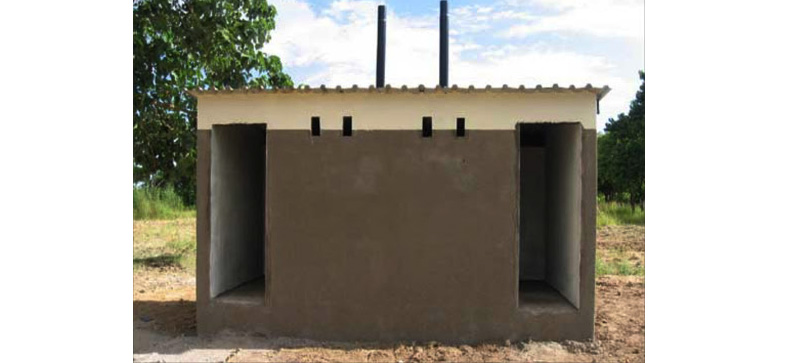
Lovemore Kadzura
Post Reporter
LOCAL authorities and environmental health experts in Manicaland are ramping up efforts to combat open defecation in rural areas by implementing various initiatives aimed at encouraging villagers to construct proper and standard ablution facilities at their homesteads.
The push for improved sanitation, aimed at promoting hygiene in rural areas, has led some local authorities to impose a fine of US$50 per inspection to address the lack of toilets, which has exposed communities to avoidable health risks.
Open defecation remains a significant issue in rural settlements, where some citizens are reluctant to build toilets at their homesteads, despite their crucial role in facilitating the proper disposal of human waste.
The unavailability of ablution facilities is a serious concern, as it can lead to the spread of waterborne diseases such as cholera, typhoid, and diarrhoea.
Moreover, the absence of such facilities can erode the social standing of those who lack them, as access to private sanitation is a fundamental aspect of human dignity.
According to the Zimbabwe Livelihoods Assessment Committee (ZimLAC) 2024 Rural Livelihoods Assessment Report, open defecation remains a major challenge, threatening gains made in water, sanitation, and hygiene provision.
In Manicaland, Buhera District lags behind, with 36 percent of households lacking ablution facilities, equivalent to one in every three households.
Makoni follows with 14 percent, Chipinge with 11 percent, Mutare with nine percent, Chimanimani and Nyanga tied at seven percent, and Mutasa at five percent.
Across the country, some districts have high proportions of open defecation, such as Binga (74 percent), Kariba (64 percent), Chiredzi (63 percent), and Lupane (53 percent).
Manicaland Provincial Water, Sanitation, and Hygiene (WASH) subcommittee chairperson, Engineer Robert Chawatama expressed concern over rampant open defecation, poor waste management, and inadequate WASH infrastructure in rural communities.
“To address this, we are promoting Sanitation Focused Participatory Health and Hygiene Education (SafPHHE) at the village level, encouraging communities to construct standard latrines without roofs. Ward water and sanitation subcommittees are supporting households to add roofs, making the toilets safe to use,” said Engineer Chawatama, further recommending that resource-constrained families construct Upgradeable Blair Ventilated Improved Pits and adopt low-cost technologies like hand-washing facilities, such as tippy taps.
He said out of 223 rural wards in the province, 154 have achieved open defecation-free status.
To enforce compliance, Makoni Rural District Council has invoked its by-laws, requiring villagers to construct toilets by November 1, 2025, with non-compliance resulting in US$50 fine.
“Notice is hereby given that in terms of Statutory Instrument 228 of 2023 (CAP 29:13), Makoni RDC (Environment and Natural Resources Conservation) By Laws 2023: It is illegal to reside at a homestead without a toilet. You are hereby notified that with effect from November 1, 2025, Makoni RDC shall be fining US$50-00 (per each inspection) to each household without a standard toilet,” reads the notice issued last week.
Makoni RDC chief executive officer, Engineer Edmore Chidembo said the prevalence of open defecation is more pronounced in fast-track resettlement areas, particularly on smallholder plots, where occupants failed to construct proper structures.
“The basis for this action is our subpar open defecation-free rating. To address this, we are giving villagers a five-month ultimatum to construct toilets. We are collaborating with the Ministry of Health and Child Care to ensure every household has a toilet,” said Engineer Chidembo, adding that fast-track land reform areas are the most affected, whereas old resettlement and communal areas have better sanitation coverage.
“Resettled individuals did not prioritise constructing permanent structures, including toilets, when they occupied the plots. Some former farm workers, who benefited from the land redistribution, had limited resources and did not focus on building facilities. In some cases, plot holders do not reside on the plots permanently, and the welfare of employees, including provision of ablution facilities, is not being prioritised,” he said.
Engineer Chidembo emphasised that villagers, particularly tobacco farmers, should utilise their current financial liquidity to construct ablution facilities.
The decision has drawn mixed reactions from locals, Government officials and citizens on social media.
“The Makoni Rural District Council is taking steps to improve sanitation and hygiene in the area. According to recent reports, households without toilets will face penalties, with fines set at US$50, effective November 1, 2025. This initiative aims to promote good hygiene practices and reduce waterborne diseases,” said Government spokesperson, Mr Nick Mangwana on X.
Last month, Buhera Rural District Council, in partnership with World Vision, commissioned a piped water scheme in Mashingaidze Village, after it achieved open defecation-free status, with all households constructing standard ablution facilities.
Buhera RDC acting chief executive officer, Mr Ishmael Jachi said the council is using an incentive-based approach to encourage villagers to build toilets.
“The community now has access to clean and potable water within a 500m walking distance. The scheme was established as a reward for the village’s achievement of open defecation-free status, with every household constructing standard toilets,” he said.
Mutare Rural District Council official, Engineer Drought Musungo said villagers are responding positively to the council’s call to maintain high standards of hygiene, thanks to training facilitated by the local authority and its partners.
“We are educating communities through workshops about the risks associated with open defecation. Government’s thrust is that people need to prioritise having toilets. We are working with partners like Mercy Corps and Care International to carry out community conscientisation programmes, highlighting the costs associated with treating illnesses linked to open defecation. The cost of treatment far exceeds that of constructing a toilet,” he said.
Engineer Musungo added that his council is constructing public toilets at market shelters, such as Rowa and Matongo Turn Off in Marange, and drilling boreholes to maintain hygiene.
Chimanimani RDC chief executive officer, Mr Nehemiah Deure said council is using awareness campaigns and partnering with organisations like World Vision and Tsuro to promote sanitation, with positive results.
Residents of Mutidzawanda in Chakohwa have raised concerns about the increasing cases of open defecation in the area.
They said some neighbours, particularly those living in single-room spaces without proper sanitation facilities, are using nearby bushes as toilets, posing a serious health risk the potential outbreak of diseases like cholera.
Mr Kenneth Gumira, described the situation as dire, especially at night.
“People are relieving themselves behind trees and along footpaths. It is disgusting and dangerous. We wake up to find human waste just a few meters from our doorsteps. If cholera breaks out, we will not survive,” he said.
Another villager, Ms Edith Gwenzi said while some families have constructed makeshift pit latrines, others, particularly tenants, seem unconcerned about the consequences.
“Mostly, it is people renting small rooms. Landlords do not provide toilets, and tenants use the bush. We have tried talking to them, but they don’t listen,” she said.



I’ve been living with Multiple Sclerosis (MS) for quite some time, and for years, I struggled to find lasting relief or stability. Medications helped manage some symptoms, but flare-ups, fatigue, and neurological discomfort would always return sometimes worse than before. It left me feeling drained, uncertain, and emotionally overwhelmed.
Out of both hope and hesitation, I decided to try an herbal treatment program from NaturePath Herbal Clinic. I’ll be honest I was skeptical at first. But around the four-month mark, I began to notice real changes. My energy levels improved, the tingling and numbness became less frequent, and my overall mobility and mental clarity felt more stable. It wasn’t an instant fix, but the progress was steady and, most importantly, lasting.
For the first time in years, I feel more in control of my body and my daily life. I can participate in conversations without struggling to find words, take walks without the same fear of imbalance, and enjoy daily routines with a renewed sense of hope. The mental, emotional, and physical impact this has had on me has been truly uplifting.
If you’re considering natural options for managing MS, I genuinely encourage you to explore what NaturePath Herbal Clinic offers. It’s been a transformative experience for me, and I’m deeply grateful that I decided to give it a chance.
www. naturepathherbalclinic. com