


 tawandamusarurwa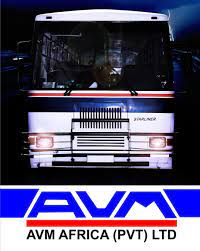
Emmanuel Kafe
AVM AFRICA (PVT) LTD, Zimbabwe’s oldest bus manufacturer, expects to restart large-scale bus assembly in September, marking the consummation of the company’s partnership with Belarusian automotive manufacturer Minsk Automobile Plant (MAP).
Experts from MAP were in the country in June to lay the groundwork for large-scale bus production following the signing of a partnership agreement between the two companies early this year.
The joint venture targets to assemble at least 50 buses every month, with the potential to create over 5 000 jobs at full capacity.
AVM Africa also plans to leverage on locally produced steel from Dinson Iron and Steel Company for the fabrication of bus shells following the recent commissioning of the latter’s iron and steel production plant.
In a recent interview with The Sunday Mail, AVM Africa’s chief executive officer Mr Jacob Kupa said: “We are finalising the road map towards full production through the Belarus joint venture project . . . In June, a high-level technical team from Belarus was in Zimbabwe to finalise some technical aspects of the buses that we intend to manufacture.
“We were finalising the technical and structural specifications of the buses, including the drivelines that we are going to be making.
“Now, they are putting all that together and as soon as they are done, they will bring the specifications back to us for finalisation.
“We expect to start work in the next two months.”
In a bus assembly plant, the driveline refers to the complete system that transmits power from the engine to the wheels.
It is essentially the heart of the propulsion system of a bus.
He said AVM had also entered into an agreement with Dinson for the supply of iron and steel to manufacture bus shells and other components.
“AVM Africa has made contact and secured a deal with Dinson to establish a dedicated workspace at the plant,” he continued.
“All steel fabrication for bus manufacturing will now take place at Manhize once the plant reaches full operational capacity.
“This will eliminate the burden of transporting raw steel to Harare and back for processing leftover materials like offcuts.
“Ideally, we will fabricate the components on-site at Manhize and then the final assembly will occur at our Harare facilities.”
Currently, AVM, operating at 10 percent capacity, assembles five buses per month.
Through the deal with MAP, it will gain access to high-tech bus assembly technology for manufacturing 120-seater buses with various engine and transmission options.
AVM Africa’s plant in Msasa, Harare, can assemble buses powered by drivelines from renowned engine manufacturers like DAF, Scania, Mercedes-Benz, Volvo and Iveco.
At its peak, AVM Africa employed around 2 500 workers and produced 40 buses a month, some of which were exported to Zambia and Uganda.


 Bongani Ndlovu
 Online Reporter