

 admin
admin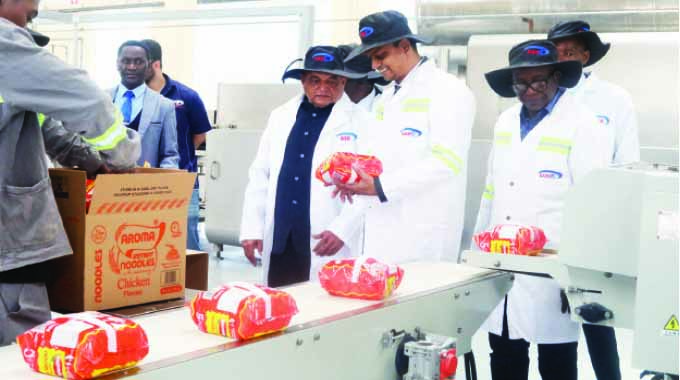
Mutsawashe Mashandure and
Spiwe Sarakunze
ZIMBABWE could significantly enhance sustainable economic development without relying on imports once it can produce 90 percent of its raw materials, Deputy Minister of Industry and Commerce Raj Modi said yesterday.
He emphasised the importance of consuming locally produced goods, to create more jobs and boost the economy.
Deputy Minister Modi toured Blue Ribbon Foods noodles plant in Harare, which is the first such facility in the country.
“This production will go a long way in the food industry, supplying the nation, especially to school children.
“It will be much easier for them to prepare the noodles as they can use cold water.”
Deputy Minister Modi added that the initiative to establish the noodles plant was part of a broader strategy to support local agriculture by using wheat sourced from local farmers, with the extra benefit of saving foreign currency.
The effort is crucial for revitalising local food production and promoting sustainable practices.
“By this action, we will also save money as we will no longer import goods from other countries. They will be able to supply the product to different provinces such as Bulawayo, Gweru, and Masvingo.”
Deputy Minister Modi urged stakeholders to collaborate in bringing initiatives that will boost the production of many goods to foster economic growth.
“I push our industry, at least here in Zimbabwe, to do something using our local ingredients and produce something new, so we do not have to import those things from outside the country,.
Blue Ribbon Foods general manager, Mr Yusuf Kamau, said the new noodle plant was creating employment opportunities and contributing to national development.
“The plant is employing an extra 60 staffers. This improves our economy. In total, Blue Ribbon Foods is employing about 500 employees,.
Mr Kamau further emphasised the significance of the plant in substituting imported noodles and adding value to local wheat production.
“By bringing this plant, what we are doing is adding value to the wheat that our farmers are growing.
“This wheat is converted into flour, then into noodles. The goal is not to have imports but to produce our own local products.”



 Online Reporter