admin
admin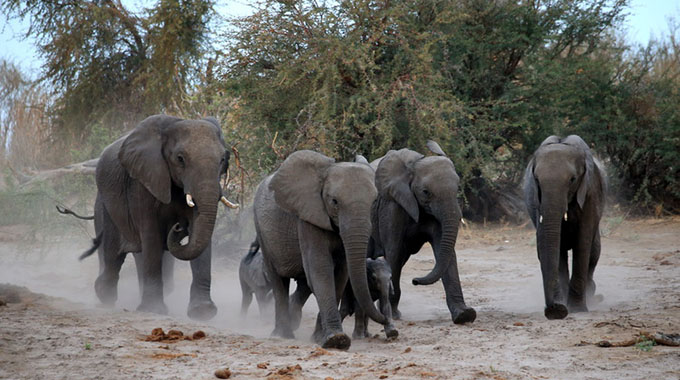
The Herald, December 16, 1994
SCIENTISTS are still battling to establish the cause of a rare and mysterious elephant disease — flaccid trunk paralysis — which hit Zimbabwe a few years ago.
The syndrome paralyses elephant trunks, making it difficult for them to eat and drink, and they affected the elephant population on a popular tourist island in northern Zimbabwe.
Many samples have been tested for heavy metals and organo clorins, but their levels of toxicity were not considered to have caused the flaccid trunk paralysis, meaning that further research still has to be undertaken to establish the cause of the mystery disease.
“What we tested for these compounds were affected and normal elephant tissue and also tissue of plants in the same environment and distant environment, as well as samples of water and soil likewise as a control, but none of them was considered to be of toxic level,” said Dr Nancy Kock, University of Zimbabwe veterinary expert investigating the cause.
“We have to look for another possible toxin that could be causing the trunk paralysis problem,” she is quoted as saying in the latest issue of Greenline, the magazine of Environment 2000.
There was probably an infinite number of toxins, and she had now chosen to investigate a plant toxin, which caused problems in horses, that could also affect elephants.
Last year, it was widely believed that this condition could have resulted from lead poisoning, and speculation was high that the dumping of rubbish, possibly torch batteries and pollution from motorboats, seemed to have been causing the trunk paralysis.
Although the investigation into the cause of trunk paralysis now appeared to be a “guessing game, the good news was that a lot of things had been ruled out, meaning that the cause of the trunk paralysis could be established soon.”
Dr Kock said there should be no fears of the condition, which was reported to have affected 12 elephants by July this year, spreading to other areas as it had since been established that it was not infectious.
LESSONS FOR TODAY
Scientific research shows that wildlife, like humans can also be affected by abnormal diseases, that require expensive and extensive research knowledge skills, and lots of funding before a cure is found.
Further investigations have shown that the flaccid trunk paralysis epidemic hit Zimbabwe’s elephant population around Lake Kariba in 1992 when “a good part of the lake had dried up, and the lead in the lake had become concentrated. The concentrated lead paralysed the nerves of the trunks of elephants that drank from the lake. And the paralysis continued moving up until three fourths of the trunk became disabled.” The current drought situation is a danger to our wildlife.
When wildlife is affected by strange syndromes, it is a major blow not only to the fiscus, but to one of the country’s revenue earners — the tourism industry.
Government is trying by all means to put in place measures that ensure good health and safety of both humans and animals by maintaining a clean environment.
Apart from vigilance, there is also need for synergies between scientists, experts in wildlife management, the environment, communities and other stakeholders.



 Online Reporter