

 admin
admin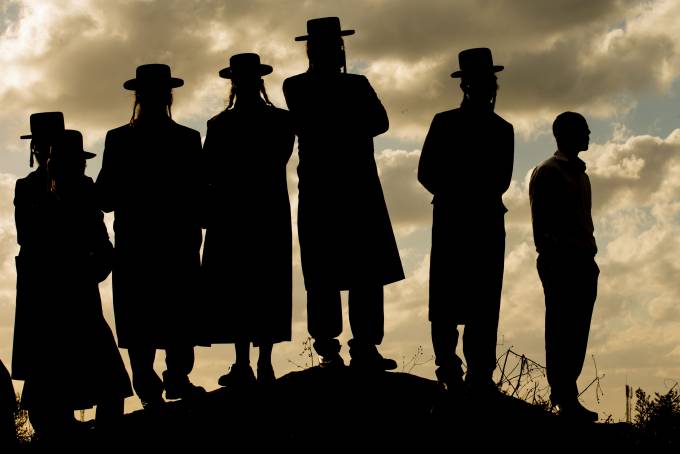
The Rhodesia Herald,
29 March, 1970
A STRUGGLE between State and religion has been raging in Israel for some time in various forms and phases, and is described by many as a “War of Culture.”
It is rooted in a fundamental national argument over the image Israel should adopt as a Jewish State, giving the lead to other Jewish communities across the world.
The issue is whether Israel should be a State of Law or a State of Religion.
Being a young country, Israel has not yet managed to achieve balanced relations between the State and religion.
A minority of Israelis are considered extremely orthodox, rather pious people, who fight constantly for a religious image of the Jewish State.
They wish Israel to be a Jewish State in the same sense that full Jewish religious life prevails by implementation of the original religious code of life of the Old Testament, and desire it to be the code of law of the country. Though small, the group exerts a powerful influence.
This sector is represented in religious political parties, holding 18 out of 120 seats in the Knesset — the Israeli Parliament. They are also armed with moral support of certain sections of world Jewry.
This is often demonstrated here by Jewish tourists, among them South African Jews visiting Israel, expressing their grief and disappointment at the fact that not all aspects of the Jewish faith are pedantically observed in Israel.
On the opposite side is the secular, non-religious majority of the Israeli population, who would like to see in Israel not only a religious centre, but mainly a National State and shelter for Jews persecuted in other countries, who would be able to live in freedom.
In their opinion, it is a State of democratic law, in which religion is a private affair of the individual citizen, separated from the State.
LESSONS FOR TODAY
- The separation of State and religion is one of the most contentious issues in many countries, and this has resulted in the crafting of constitutional clauses, that clearly state the distance between the two.
- Due to its thriving religious tourism, most people believe that all Israelis are religious, and that it is also a religious State, considering that some of the neighbouring countries are Islamic states.
- Mainstream media reporting on Israeli issues does not usually concentrate on this so-called “War of Culture”, but focuses mostly on the unresolved Israeli-Palestinian question.
- If apartheid-ruled South Africa had good relations with Israel, it’s not the same with the current government that downgraded its ties with Israel last year, after recalling its ambassador from Tel Aviv to protest Israel’s response to Palestinian protesters along the Gaza border who were participating in the Hamas-led Great March of Return.



 Online Reporter