admin
admin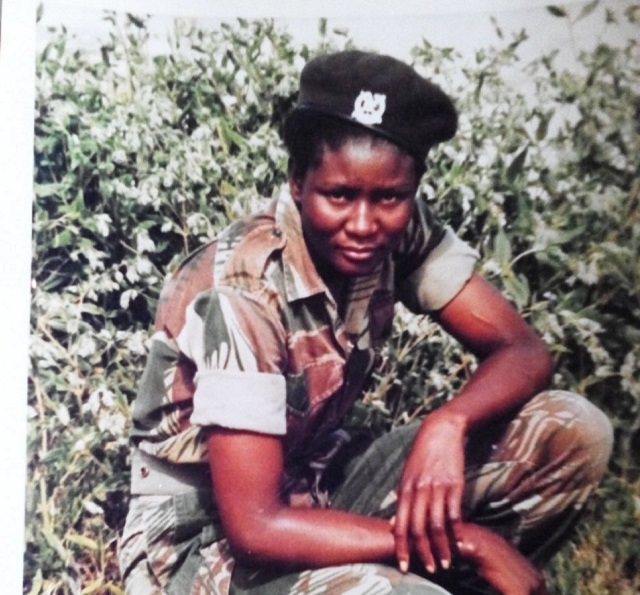

ON 19 October 1978, Rhodesian forces carried out a daring and devastating attack on Mkushi Camp, about 150km north of Lusaka, which was a Zipra women’s military and training camp. Zapu president, the late Dr Joshua Mqabuko Nkomo described the attack where hundreds of women were killed as a cowardly exercise on a camp of young women. Dr Nkomo attacked the Western media of labeling Mkushi a guerilla camp and of confusing 48 rifles “only for defence” worth thousands of Russian AK-47s.
However, although the women were overwhelmed by the attack, those armed gave a good account of themselves that convinced even the head of the Rhodesian Central Intelligence Organisation, Ken Flower, although justifying the attack on the women by saying, “they gave a fair account of themselves fighting back like soldiers and not women” .
A Zapu publication, The Zimbabwe People’s Voice described how three or four fighter bombers and eight helicopters attacked the camp:
While the girls were having breakfast, a late breakfast around 11:00 hours, Smith’s fascist forces rampaged through the camp.
They seized a girl, (Jane, the head of the camp) one of the instructors. They coerced her at gun point into calling other students to parade by whistle. After they were lined up eight to 10 men stood with their guns. The girl instructor was given a gun to shoot her students. She refused and was shot. The white soldiers then opened fire and all the girls were shot.
From that callous attack some survivors are still around to give an account of that fateful day’s events and they include the Deputy Minister of Industry and Trade Cde Chiratidzo Iris Mabuwa, former Zimbabwe International Trade Fair public relations and marketing manager now a businesswoman in Bulawayo — Cecilia Bhebhe and the mother of former Miss Tourism Zimbabwe, Lorraine Maphala-Phiri, Cde Rosemary Mathe-Maphala whose pseudo name was Cde Senzeni Mkhonto or Sigoge. In this week’s Lest We Forget Column we traced Cde Maphala and she opened up about the attack. Our Assistant Editor Mkhululi Sibanda and Senior Reporter Robin Muchetu spoke to Cde Maphala about that dreadful day. Below are excerpts of the interview:
Sunday News (SN): Cde Maphala, when were you born and what drove you to join the armed struggle to fight the racist Ian Smith regime?
Cde Maphala: I was born on 12 August 1957 in Kafusi area in Gwanda District. I did my education at the local school, Kafusi and then in 1977 in March I left the country for Zambia via Botswana to join the struggle. We were three when we left, all the three of us were locals. The reason why I left to join the armed struggle was because at that time the revolutionary spirit was all over and also the Manama Mission incident where guerillas took school girls and boys and led them to join the struggle also had a big motivational factor. After crossing the border into Botswana we were first taken to the police who then facilitated that we join others at Selebi-Phikwe where we found a large number of people there. At Selebi-Phikwe we did not stay long, I think we were there for about two weeks as we were later flown to Lusaka in Zambia.
SN: Then tell us about what happened on your arrival in Lusaka.
Cde Maphala: From Lusaka International Airport we were driven to Victory Camp (VC) which accommodated mostly women.
There were thousands of people there. At VC the Manama group was also there. At VC that is where we started engaging in physical exercises to keep ourselves fit. It was a preparatory way for our military training. Among the instructors there were comrades like Jane, Audrey, Sylvester, Makanyanga and Cecil. We were then moved to Mkushi Camp and we were the first people to occupy that place. That is where we also did our full military training which went on for 18 months. I was in the first battalion and some of the comrades that we were trained with were Ossie, Serve, Abigail, Chiratidzo Iris Mabuwa and Cecilia Bhebhe.
SN: So what happened to you after training?
Cde Maphala: I became company commander and was part of the team of instructors as immediately after we had completed our training another battalion started undergoing training.
SN: Cde Maphala you are one of the survivors of the Mkushi bombing where hundreds of lives were lost on that fateful 19 October 1978. Tell us how it happened.
Cde Maphala: It was in the morning around 10, when the bombing started, we could not tell which direction the Rhodesian army aircrafts came from, they were all over the place. A huge bombardment took place which confused everyone at that moment, from the kitchen to the defence pits side where we were. The bombing lasted for a long time and there was so much confusion. People died, some fell into the river that was near us as they fled from the enemy. Some of us fled to the side where there was no water so we were safe. When there is a bombardment you cannot tell where people have fled to, we were all over.
It was a first for us; we had never seen it before in our lives and we got very scared.
SN: When the enemy started the bombing where were you exactly?
Cde Maphala: I had just left the kitchen as comrades were having breakfast and I and my troops had just been served the breakfast which I think on that day was delayed a bit. So I was out of the vicinity of the kitchen and in fact we had taken positions in our defence pits which was the norm. As for eating we used to do that very quickly because we were soldiers, guerillas eat very fast in fear that the enemy could attack anytime.
SN: So when the first shots were fired, how did you react?
Cde Maphala: There was confusion all over the place like I said, but with my troops we decided to remain in our positions for sometime. Then after a while we manoeuvred, but at that time the Rhodesian ground troops were approaching the camp to comb up. Luckily for myself and my troops when they came we were moving in a position which was between the units of the ground troops. Some were on the left side, others on the right, they had for unexplained reasons left a space in between and that is how we managed to survive. We survived not because we were clever and more tactical than other comrades but just by the grace of God. Our time to die had not come. We could hear shots being fired from the left and right sides.
SN: Wasn’t the camp protected?
Cde Maphala: We had security but on the day of bombardment it was difficult to handle the enemy as they came from all directions with a ground force supported by air. It was not an easy time and I say so because I do not recall that from a second person point of view but I speak from experience, nobody can tell me about what happened at Mkushi. I survived by the grace of God, it is not that I was clever.
SN: Then after escaping from the enemy fire where you did go?
Cde Maphala: We regrouped at a far away place from the camp. However, many people had died while others were seriously injured. It was a terrible sight and it was difficult to talk about it. Those who had survived were taken somewhere else, we had to change base. First we moved to Kafue where we stayed for sometime. We later moved to Solwezi where we stayed until the time of the ceasefire when we returned home. After the ceasefire we moved to Sierra Assembly Point near Gweru in the Midlands Province and by that time I was a battalion commander. I was later demobilised from the army.
SN: During the war how did women take care of issues to do with sanitation and also the issue of keeping morale high?
Cde Maphala: Menstruation somehow took care of itself. It just stopped, somehow and it was the work of God. We found ourselves not menstruating and I think also the training that we did was enough hard work to change our systems and hormones. It was miraculous though. Music played a pivotal role during our stay in the Zambian camps, it served to unify, comfort, encourage and also to entertain us. Being young and away from home, made the feelings of nostalgia temporarily fade. We sang songs that had a message, songs that encouraged us because it was a difficult time indeed for us but the songs gave us some hope.
SN: As for the name Sigoge how did you get that one?
Cde Maphala: I was given by colleagues who felt because of my tall height I resembled one of the tough senior Zipra commanders and former commander of 3 Brigade Retired Colonel Eddie Sigoge Mlotshwa.
SN: At family level in the Maphala home, besides Lorraine, the former Miss Zimbabwe how many other children do you have?
Cde Maphala: I have Wisdom who is based in South Africa and is the first born, Lorraine is our second born, Naledi the third and Molefie Maphala Junior is the last born and is in China doing a degree in International Trade and Economics.


 Online Reporter