admin
admin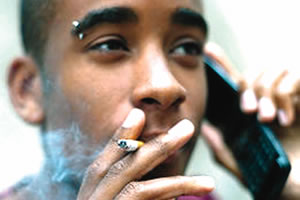
same age as the African child.
The English child takes a bar of chocolate from a shelf nearby. Her mother grabs the chocolate from her and says, “No, darling. You will not have another chocolate. There is one in the trolley already.”
The daughter sticks her tongue out at her mother in defiance. Then she dashes off and brings an even bigger packet of chocolate. She puts it under her armpit and stands back with her arms tightly folded around her shoulders.
The mother lowers her voice and in slow measured tones she says, “Sophie, listen to me. I said you cannot have another packet of chocolate. One is enough.” They wrestle a bit and the mother grabs the chocolate packet from Sophie’s armpit and puts it back on the shelf.
“You are mean! mean, mean! I hate you mum. I hate you!” Sophie screams and shrieks. People in the supermarket smile at each other with embarrassment. The African mother nudges her daughter and speaking in English, she whispers into her ear, “Efi, listen, Efi. If I ever, ever see you behaving like that English child, I will kill you.” Efi nods quietly in obedience.
Back home, when Efi’s father comes back from his night shift job as a hospital cleaner in the early hours of the morning, Efi’s mother tells him about the incident in the supermarket. The father listens, and then he quickly goes to Efi’s room. He pulls her blankets back and she wakes up slowly.
Efi’s father says, “Efi, listen. Your mother has told me about the bad behaviour of the English child in the supermarket. If I ever, ever see you behave like that English child, I will kill you before your mother does. You hear me?” Still half asleep, Efi nods. Then the father slaps her hard on the shoulder.
“That was just a deposit to give you a taste of what I can do to you if you misbehave.” The father said and stormed out, his long-term deposit well and truly stored in Efi’s aching shoulders.
When I told my friend Precious about this story over the phone, I was laughing. But Precious did not think it was funny at all. In reply, she told me what our elders used to say, “Akabereka sekera mudende”, meaning those with children should hide and muffle their laughter inside a calabash when laughing at the bad behaviour of other people’s children because tomorrow, their own children could be behaving the same way.
Precious and her husband Lovemore migrated to Australia 10 years ago. She was a qualified Registered Nurse and he was a high school English teacher. Australia wanted nurses and the employment agency paid the airfare for Precious, Lovemore and all their three children Tafadzwa, Tariro and Tatenda.
In less than five years, they had bought a new house an hour away from Melbourne but not too far from the sea and the countryside. Lovemore drove the latest four-wheel drive Toyota Land cruiser attracting the envy of his Zimbabwean friends at the African soccer matches. He could never have dreamt of driving such a car in Zimbabwe nor did he ever imagine himself living in an upstairs, big four bed roomed house, owning a huge flat screen television set, a music system and a big refrigerator to keep all his beer nice and cold. He had shelved his teaching degree and was making money as a taxi driver.
Finally, Lovemore and Precious had won the battle to live an affluent lifestyle in a Western country where they could just walk into a bank, show payslips and within days they were allowed to borrow thousands of dollars to buy another car. But, as parents, Precious and Lovemore were losing a new battle, that of disciplining and giving guidance to their three children.
One day Precious came home from work after a 16-hour shift in the nursing home. The house was a messy with empty cartons of pizza, KFC and MacDonald’s all over the kitchen floor. She went straight to Tafadzwa’s room. Because she was so angry, she forgot to knock. The 19-year-old was lying on his back with pants on but shirtless, knees bent and smoking something. The last time she smelt that was at her Uncle Ruka’s house back home in Highfield. Sekuru Ruka played music in a band and for years and he smoked marijuana. He made no secret of it even though it was illegal in Zimbabwe.
Precious could feel her blood boiling with anger. “Tafadzwa! Did I bring you all the way from Zimbabwe to stop going to school and smoke mbanje? People who smoke mbanje are losers, mazirombe! Waiwana kupi? Where did you get it?”
Tafadzwa held the long thin cigarette into the air and squinting his eyes at her, he laughed with sarcasm and said, “As if I would tell you where I got it. Mum, could you please speak in English only because when you mix it with Shona, I understand nothing,” he said casually.
Precious just stood there, not knowing what to say next. Was this the same nine-year son he brought from Zimbabwe 10 years ago? She surveyed the room with her eyes. Tafadzwa’s wall was covered with white topless models with long hair. Some were on the beach, on top or rocks, against a tree in the jungle or sitting on top of small cars.
Magazines with similar photos were all over the floor. It had been a while since she entered this room because it was always locked when Tafadzwa was not home. Tafadzwa, otherwise known to his Australian friends as Tuffs lived mostly in his room and came out to grab something to eat, to take a shower or when he was on his way out. Nobody knew where he went. Sometimes he did not return at all for a whole day or two. But today, he was at home, just relaxing.
“Mum, move. Are you nailed to that floor? And, by the way, you should knock next time you want to come in here. There is a sign on the door that clearly says Tuffs. Tuffs, mother, is me.” Tafadzwa pointed to his chest. For the first time Precious saw the eagle tattoo on Tafadzwa’s chest. Speechless, she walked out slowing closing the door behind her.
In the corridor she met 15-year-old Tariro with her headphones on singing, all dressed up in boots and a miniskirt, her hair extensions flying everywhere and with heavy makeup on. Tariro was in a hurry to get to the shopping mall and hang out with friends. This is what she did everyday during school holidays and weekends. She grunted a “hi mum” and quickly disappeared.
In the corner of the lounge room 10-year-old Tatenda was glued to the computer playing a video game called, The Evil Dead. The cover had pictures of a vampire with blood pouring out of his head as he emerged from a dark graveyard.
On the floor was an empty packet of chips and a can of Coke. Tatenda was already fat from eating too much junk food. When he laughed at something funny on television, you could see the rolls of fat on his chest shaking like a girl’s breasts.
During the four hour period they spent together with Lovemore, in between their shifts, Precious brought up the subject of Tafadzwa’s smoking. Lovemore did not seem to be worried about it. He said he would talk to Tafadzwa man to man and reprimand him. But Precious knew that nothing more would be said about it. Nobody could tell Tafadzwa
what to do anymore.
Besides, Tafadzwa was over 18 and in Australia, nobody, not even his parents could tell him what to do. The battle to discipline Tafadzwa had been lost.
“If we had given the children a good beating as deposit at a very early age, we would not be in this situation now,” Precious told me with a tone of resignation. “I should have taught them Shona, maybe it would be easier to talk to them now.”
When we were growing up in the village, my mother hardly ever used the stick to discipline us. All 10 of us knew that we overstepped the boundaries at our own peril.
My mother had a certain presence about her that spoke volumes. If you did something wrong, she would give you a certain look, then simply say, hatidaro, we do not do that. Those words were bigger than the stick. In the village, there were village codes of behaviour understood by every child.
But not all village children were well behaved. There was one bad boy called Panichi. He dropped out of Grade three and he used to hang around the school grounds waiting for the lessons to start so he could break into the teacher’s houses and steal sugar and soap. The worst thing he did was to use the village spring, our source of water, as his toilet. All the village women had to drain all the water and wait for clean water to surface. Panichi was a bad kid, ndururani chaiyo, svuura muromo yemunhu.
Often the elders would say, ah, that one, he took after his uncle who had a similar axe shaped head like him. But bad behaviour was not tolerated into adulthood. The shavi or bad spirit causing one to behave badly always came to an end as one became a man and entered the rites of passage into marriage.
Raising children in the Diaspora is a big challenge. Precious and Lovemore are not alone. Back here in Zimbabwe, we have similar problems, especially among the English speaking only children of the more affluent.
Since independence, we seem to have forgotten the values of our village past. If the children do not know that past, giving them a beating as “deposit” to safeguard ourselves
from what they will become will not change the path they will take.
Before and after independence, we were busy studying so we could get a profession and make money. Some of us made money and built big houses. In the process, we forgot to balance and take what is good in Western culture and throw away what we did not want.
Some time between independence and now, we did not learn how to become parents. There were no role models. We did not teach our children the value of language and hunhu, the kind of respect that made us who we are today. How then, do you discipline a child in the language and culture that is not your own?
If the English parents are struggling to discipline their own children in their own language, it is much worse for us. We must begin to tell our children the dignity and respect of our past before we lose them to the empty values of shopping malls, video games and drugs forever.
l Dr Sekai Nzenza is a writer and cultural critic. She is a consultant and director of The Simukai Development Project.


 Online Reporter