Online Reporter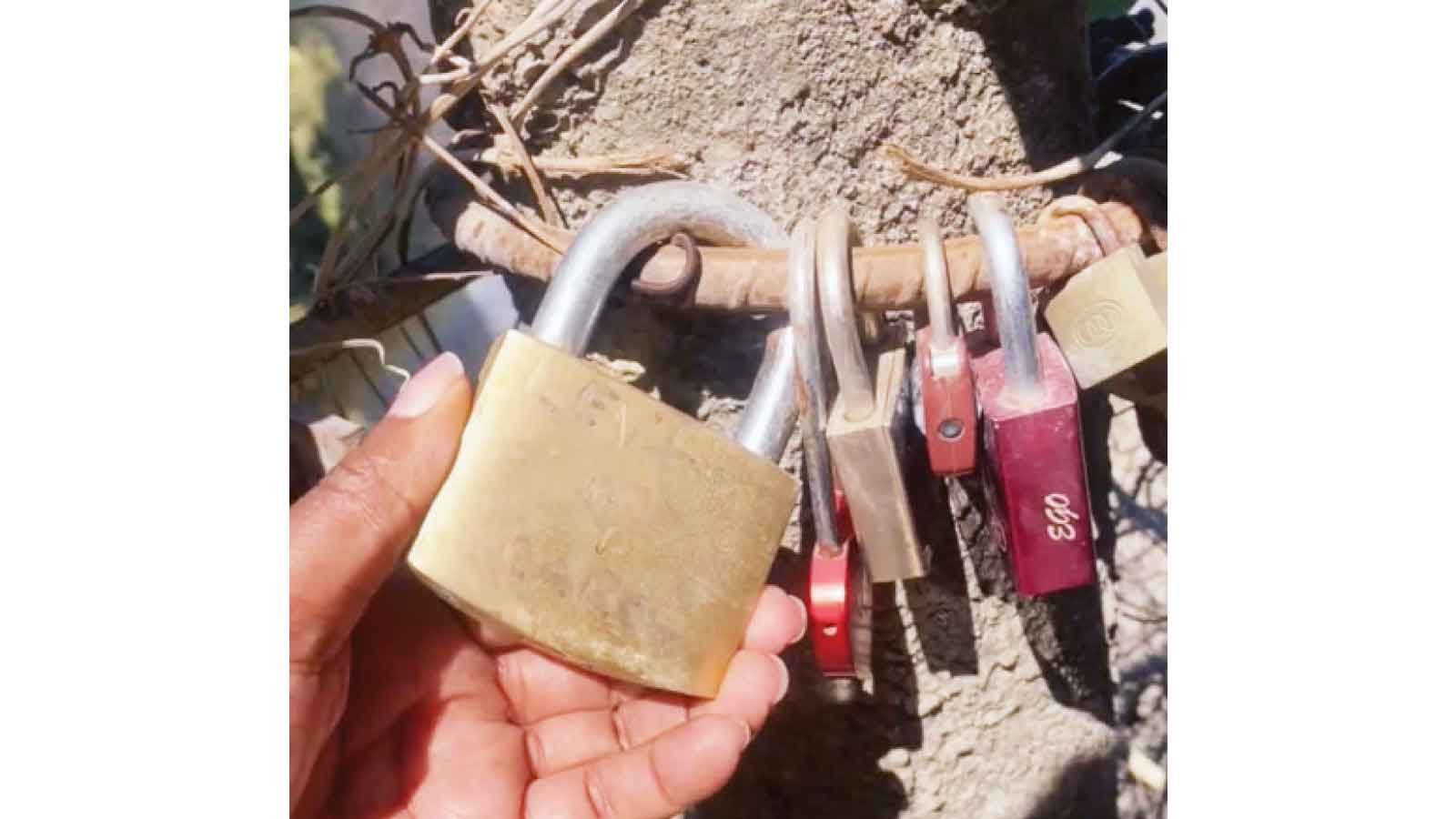
Rutendo Nyeve
Victoria Falls Reporter
ON the edge of the Victoria Falls rainforest, the earth gives way to a spectacle of raw, untamed power.
Here, amidst the perpetual spray that kisses the skin like a blessing, a quieter, more intimate ritual is unfolding.
Down the 73-steep-steps of the Chain Walk, where the descent into the gorge is a test of nerve and the view of the Devil’s Cataract, is a reward for the brave — lovers are building a cage of their promises.
They are fastening love padlocks to the chain railings, a glittering, rusting tapestry of hope against a backdrop of timeless water and stone. The tradition of love padlocks is as romantic as it is tragic.
It is believed to have gained modern popularity in Rome, inspired by Federico Moccia’s novel, but its most iconic stage was the Pont des Arts bridge in Paris.
For years, the bridge became a symphony of clinking metal, its wire mesh railings sagging under the weight of millions of cadenas d’amour.
The City of Light watched as couples from every corner of the globe sealed their vows with a key tossed into the Seine.
But romance has a weight. In 2014, a section of the bridge’s parapet dramatically collapsed under the immense burden, a stark, physical manifestation of promises that proved too heavy to bear.
The city, citing safety concerns, began the difficult task of removing the locks, replacing the metal grilles with solid panels, effectively ending the era of love’s occupation.
This cycle of hope and removal has echoed here in Zimbabwe, at the very edge of one of the world’s top natural wonders.
The Victoria Falls Bridge, an engineering marvel spanning the chasm, once played host to its own constellation of padlocks.
Lovers would pause mid-gorge, the Rainbow Falls shimmering below, to affix their symbols.
But like in Paris, the gesture was not eternal.
The Emerged Railway Properties, responsible for the bridge’s maintenance, deemed them a hazard and removed them, scattering the physical tokens of forever to the winds.
Undeterred, the ritual has simply found a new, wilder home. The Chain Walk at Viewpoint 2 on the Zimbabwean side is not for the faint-hearted.
The descent is a steep, slippery climb, often wet from the Falls’ relentless spray, the chains offering the only sure handhold. It is a journey that demands partnership, a shared deep breath before the plunge.
It is here, with the roar of the Devil’s Cataract as their witness, that couples are now inscribing their stories. The locks cling to the chains like barnacles to a ship’s hull.
“H and C,” “Levy and Carol,” “Joe and Jessmore — forever till eternity”, “Ele and Kuston from Namibia 2024.”
Each one a small, defiant shout against the overwhelming roar of nature. But do they work? Is the metal bond a prophecy or merely a placeholder for a feeling?
We asked those who pilgrimage here. For Mr Tinashe Suliwa, a local guide who navigates the slippery steps daily, the padlocks are a beautiful nuisance.
“They are a part of the story now. But this is a powerful place. The rain, the mist, the sheer force of the water it can make even steel rust. Perhaps it’s a test. If a lock can survive here, maybe the love can, too,” he said.
For Anna, a tourist from South Africa, it is a tangible act of faith.
“It’s not about the lock itself, it’s about the moment. People go down these scary steps together, see this incredible view, and we make a promise,” she said.
“The lock is just their way of leaving a piece of that moment here, in this powerful place. It is a bookmark in their story.”
Conversely, an older gentleman Mr David Scott, visiting from the United Kingdom, watched the ritual with a sad smile.
“I saw the same thing in Paris before the collapse. You see the rusted ones, the ones with names you can barely read. It makes you wonder,” he said.
“The Falls will always be here, crashing and renewing. But those names, it is a museum of moments, some that lasted, and many that did not,” he said.
The love padlocks of the Chain Walk are more than just metal; they are a paradox.
They represent a desire for permanence in a place that is the very essence of powerful, relentless change. They are a fragile human gesture against an immortal landscape.
Perhaps their power lies not in any magical property to bind hearts, but in the courageous, hopeful act itself, the journey down the treacherous path, the shared deep breath, and the conscious choice to say, in that moment, against all odds, “This is forever.”
For as long as the locks hold, and the Falls roar, that moment remains, suspended in the mist.