Online Reporter
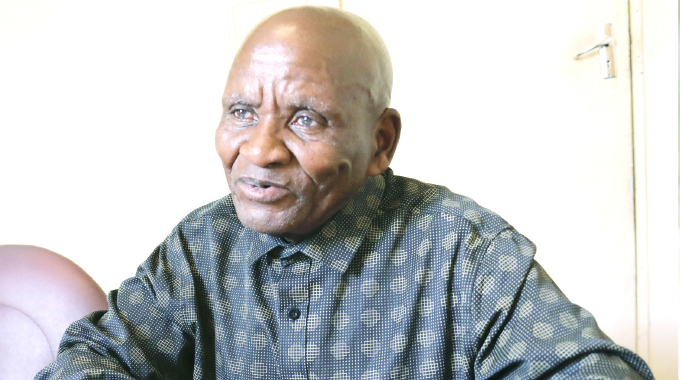
WE conclude our interview with former freedom fighter Lieutenant-Colonel (Rtd) Njabulo Gwembetsha Ngwenya.
This week, Lt-Col (Rtd) Ngwenya, whose pseudonym was Dokotela Makhalima, speaks to our Assistant Editor, Mkhululi Sibanda (MS), about the final days of the armed struggle in Zambia, his time at the Assembly Points (APs), and his integration into the Zimbabwe National Army. Below are excerpts from the interview. Read on…
MS: You previously discussed your time at Mazoe Training Depot (MTD) in Solwezi and hinted at being deployed to the ZPRA Headquarters. Let us resume from that point.
Lt-Col (Rtd) Ngwenya: At that time, moves towards a ceasefire were underway, and as ZPRA, we had shifted our deployments. Officers who had been stationed in camps were being reassigned to operational zones. Officers were deployed to the Northern Fronts 1, 2, and 3. For instance, Elias Moyo, Joubert, and Proverbs were sent to NF3 in Feirra. Irvine Mpala was deployed to the Engineers Squadron, where he was injured when a landmine exploded, also affecting the ZPRA Chief of Engineers, Kenneth, who lost his sight in that unfortunate incident. We also halted training activities, making the MTD group — a large contingent — the first and last to be trained there. Myself, the late Lt-Gen (Rtd) Sibusiso Busi Moyo, and Tamuka Shoko were seconded to ZPRA Headquarters. Tamuka joined the personnel department, and we were accommodated in Mtendere, a residential area in Lusaka. There, we found the now late Brigadier-General Ray Maponga, who later commanded Four Brigade at Independence, and Gabhu Moyo.
We stayed there for about three weeks awaiting further instructions. We were not yet assigned departments, although we once went to infiltrate some troops along the Zambezi River.
MS: Please continue.
Lt-Col (Rtd) Ngwenya: We returned to MTD before being sent to Chingola, where a large group of troops had attempted a revolt, but the situation was contained. They were then sent to FC. Then came the ceasefire period.
MS: Walk us through that period.
Lt-Col (Rtd) Ngwenya: The focus shifted from troop deployment to the prevailing political situation. Comrades who had served in the party and army administrative structures had to leave Zambia, along with our weapons. Some had been stationed at Freedom Camp and Victory Camp (VC) for women. We had fully constituted artillery units at CGT, armoured vehicles, and tanks — yes, ZPRA had tanks. There were also large units at MTD, some trained there and others who had come from Ethiopia and Angola. The troops responsible for defending the camps, including those handling anti-air weapons, had to prepare for repatriation.
MS: When did you finally leave Zambia?
Lt-Col (Rtd) Ngwenya: During the first elections in 1980 that ushered in independence, we were still in Zambia. A large contingent remained, including the three brigades trained at MTD, and others from Angola, Ethiopia, Libya, the Soviet Union, etc. When the 1980 election results were announced, there was deep disappointment. Some comrades couldn’t even eat. Although we were told we would return home, many were uncertain how we would be accommodated in the new Government, as Zapu was not forming the incoming administration.
MS: Tell us about your journey back home.
Lt-Col (Rtd) Ngwenya: It was a large convoy since we were a large force. We travelled in Zapu trucks, such as the Zyl.
We crossed at Chirundu in broad daylight and became a spectacle, with people marvelling at the convoy. We disembarked and marched across, armed with various weapons — AK-47s, bazookas, machine guns like the PKM — and fully kitted. I remember a white man commented, probably a tourist: “These are true soldiers.”
MS: Where were you taken upon entering the country?
Lt-Col (Rtd) Ngwenya: We were taken to Rekomeche Assembly Point, also known as Papa. The area had previously been a tsetse fly research station. The place was teeming with guerrillas who had operated in the area. ZPRA had a significant presence in the Mashonaland provinces. The camp commander was Cde Eddie Sigoge. While many believe Gwayi was the largest AP, I believe Papa had higher numbers, although Gwayi housed four conventional battalions. I stayed there for about a month before being transferred to another AP, Romeo, near Chinhoyi. Romeo was commanded by now Colonel (Rtd) Richard Mataure. There, we were allowed to travel to Bulawayo or Harare if given a pass. From Romeo, I and others were sent to the Zimbabwe Military Academy (ZMA) in Gweru for a standardisation course for officers. Our group, which included Zanla comrades, numbered 30.
MS: Where were you posted after ZMA?
Lt-Col (Rtd) Ngwenya: We were sent to Mbalabala, formerly Balla Balla in Esigodini, home of the army’s infantry school. That’s where we were to collect our troops. I was posted to 4.3 Battalion, stationed in Gutu. The command was given to the late National Hero, Brigadier-General (Rtd) Victor Rungani, with now prominent Harare lawyer Francis Chirimuta as his deputy. Chirimuta a full Colonel but a Major then had served in the National Security and Order (NSO) as intelligence officer under Dumiso Dabengwa during the struggle.
Other officers in the 4.3 command included:
n Major Aaron Sikuza (A Company, with Captain Matora as deputy)
n Major Job Ngwenya (B Company, with Captain Mtseriwa)
n Major Engelbert Rugeje (C Company, with Captain Steamburg)
n Major Bruce Musarurwa (D Company, with me as his deputy, then a Captain)
n Major Shereni (Headquarters Company, with Captain Chigume)
n Major Waison Tshipa, aka John Nyamupingidza (Support Company)
n Captain Hope Mutize (Intelligence Officer)
n Captain M Ndebele (Adjutant)
n Captain Gibson Mabusa (Administrative Officer)
n Captain Mhlanga (Quartermaster)
n Captain Never Mpofu (Motor Transport Officer)
n Platoon commanders (Lieutenants) included comrades such as now General Martin Chendodo, Qonda, Khumalo,
Leonard Manabela, now General Paul Chima (then a Captain), Lt Linyane, Lt P. Dube, Lt Moyo, Lt Ncube, and Lt Ndlovu.
I’ve listed these officers because 4.3, under Cde Rungani, became a model of integration and comradeship despite our diverse backgrounds.
MS: Please continue, Cde Ngwenya.
Lt-Col (Rtd) Ngwenya: What Nyamupingidza said during Cde Rungani’s eulogy was accurate. While skirmishes arose in other battalions due to ZPRA/Zanla differences, we remained united thanks to Rungani’s strong and inclusive leadership. The officers I mentioned supported him loyally, and our battalion remained stable. From 4.3, I was deployed to Army Headquarters in Harare.
MS: What was it like in the early days of the new army?
Lt-Col (Rtd) Ngwenya: The Army Commander was Cde Rex Nhongo (General Solomon Mujuru), deputised by General Lookout Masuku. Under them were Major-Generals Mike Shute, Josiah Tungamirai, and Jevan Maseko (Tshangane). Brigadiers included Charles Grey (Mike Reynolds), Choruma, and Benjamin Mabenge (Cde Freddie Matanga). Among the Colonels was Major-General (Rtd) Paradzai Zimondi, who also served the Prisons Services as Commander. Brigadier Mabenge was particularly interesting.
MS: Oh? In what way?
Lt-Col (Rtd) Ngwenya: Sometimes he’d take his lunch at home and invite junior officers to join him. I benefited from that several times. One day at the officers’ mess, Brig Mabenge walked in carrying a plate full of amacimbi/ madora.
White officers looked on in surprise as he declared loudly: ‘We fought for our country and now it’s time to fight for our right to eat what we want.’ He sat down, abandoned his cutlery, and ate with his fingers — sadza, stew, and amacimbi. He was unapologetically himself.
From Army HQ, I was posted to 2 Brigade as Officer Commanding 2 Transport. The brigade was stationed in Mozambique at the time. That same year, hostilities ceased in Mozambique, allowing ZNA troops to fully withdraw.
An Italian peacekeeping force took over our positions in Chimoio, and we were co-located while preparing our withdrawal.
We were honoured by His Excellency, President Chissano of Mozambique, who praised our professionalism and sacrifice. We left in high spirits and travelled to Mutare, where we received a grand welcome from both Government officials and the public. It was a parade to remember — troop-carrying vehicles, armoured cars. Then President R G Mugabe then came to Craneborne Barracks to thank us for a job well done. Before Brigadier-General Stanford Khumalo (Madliwa) who was the commander of 2 Brigade handed over the parade to Cde Mugabe, he remarked, “All is well that ends well.”
When I left the Army in 1996, I was serving with 2 Brigade.


 derick.khumalo