Online Reporter
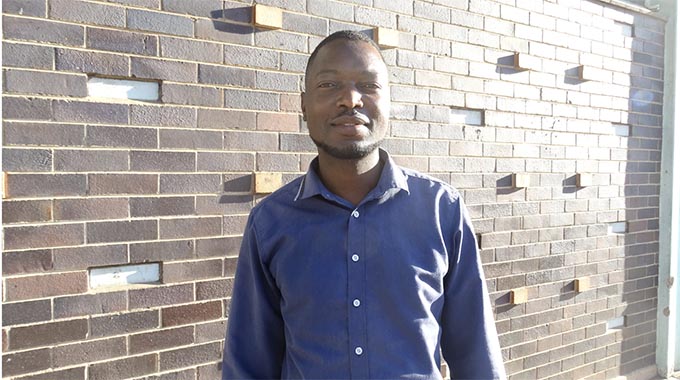
The passing of national hero Brigadier-General (Rtd) Victor Rungani, who was laid to rest at the National Heroes Acre in Harare last week, has prompted several of his former subordinates in the Zimbabwe National Army (ZNA) to come forward and pay tribute. The first was Colonel (Rtd) Waison Tshipa, also known as Cde John Nyamupingidza. On Thursday, Lieutenant-Colonel (Rtd) Njabulo Obert Ngwenya, who served under Rungani as the 4:3 Battalion administrative officer — then holding the rank of Captain — expressed his sorrow at Rungani’s passing, describing him as a “good and fair” commander.
Our Assistant Editor, Mkhululi Sibanda (MS), took the opportunity to interview Lt-Col (Rtd) Ngwenya pseudonym Cde Dokotela Makhalima about his role in the liberation struggle and his subsequent service in the ZNA. Below are excerpts from the interview. Read on . . .
MS: As usual, may we begin the interview by you giving us your background?
Lt-Col (Rtd) Ngwenya: I was born Njabulo Obert Ngwenya, though some people call me Gwembetsha. I was born on 16 August 1956 to Zibathini Ngwenya and Jessie Mahlangu at Mpilo Hospital. However, I grew up in our rural home in the Sibungu area of Nkayi District, Matabeleland North Province.
For my education, I attended Mathetshaneni School for primary before proceeding to David Livingstone Mission in Ntabazinduna, where I did Form One and Two in 1972 and 1973. I did not return for Form Three because I frequently found myself in the staffroom facing disciplinary issues. To be honest, I was a naughty boy, often punished by teachers. Some of the strict ones included John Ndlovu — whom we nicknamed Long John, the ex-husband of Dr Joshua Nkomo’s daughter, Thandiwe — as well as Ramusho and Manyimo. So I opted not to continue my education there.
MS: So what was the next step?
Lt-Col (Rtd) Ngwenya: I convinced my parents to let me pursue a vocational course instead. I enrolled at Speciss College in Bulawayo to study motor mechanics and moved in with my uncle, who lived in Makokoba. My parents remained in our rural home, where my father ran a successful grocery shop.
MS: When did you become politically active and decide to join the armed struggle?
Lt-Col (Rtd) Ngwenya: While I was studying at Speciss in Bulawayo in 1974, I began to notice the unjust system ruling the country. The white community enjoyed privileges that black people were denied. There was overt segregation, black people could not enter restaurants and had to be served through windows, while whites sat inside and were served properly. In 1975, I abandoned my studies and decided to join the armed struggle. I was also inspired by broadcasts from Zambia.
At that young age, I shared my intentions with my brother, who discouraged me from joining the war. He had been influenced by Rhodesian propaganda, which claimed that nationalist guerillas were being killed in large numbers. I did not believe that guerillas could be defeated so easily. In July 1975, I set out alone on a journey to Zambia to join the war.
MS: Take us through that journey.
Lt-Col (Rtd) Ngwenya: I boarded a train at Bulawayo Main Station. I wrongly believed that travelling by train to Botswana would be safer and help me avoid the roadblocks along the Bulawayo-Plumtree Road. Just before Figtree, the train stopped at a siding, and officers from the Criminal Investigation Department (CID) boarded. They questioned passengers about their destinations. I made a mistake and told them I was going to Domboshawa instead of Dombodema, a location in Bulilima District. I knew of Domboshawa in Mashonaland East, so I panicked and gave the wrong answer.
MS: What happened next?
Lt-Col (Rtd) Ngwenya: I was arrested and taken back to Bulawayo, accused of intending to join the “terrorists.” While in custody, I was fortunate — a police officer who was dating my sister intervened and managed to secure my release. I did not abandon my mission. Two weeks later, I left Bulawayo again, this time on foot.
MS: Please continue.
Lt-Col (Rtd) Ngwenya: I walked past what is now Mbokodo Abattoir on the outskirts of Bulawayo along the Bulawayo-Plumtree Road and met Njabulo Gwebu, someone I knew who worked nearby. He advised me to ask for Black Water farm once I reached Plumtree Town. From his location, it took me two days on foot to reach Plumtree. Once there, I was warned that movement was dangerous between 6pm and 6am due to the Rhodesian-imposed curfew aimed at restricting freedom fighters. I slept in the bush.
The next day, I asked a girl I came across for directions to Black Water. As we spoke, a white man in a truck pulled over and asked where we were headed. When I mentioned Black Water, he accused me of trying to join the magandanga (guerillas) and took us to the Plumtree Police Station. I was detained again.
MS: How long were you in detention?
Lt-Col (Rtd) Ngwenya: I was held for several days under very harsh conditions. Many others had also been arrested while trying to cross into Botswana en route to Zambia. The Rhodesian Special Branch tortured detainees brutally. They would show us blood on the floor and threaten to kill us unless we told the truth. I insisted I was travelling to South Africa via Botswana to seek employment and showed them a Soweto address.
They believed me and released me. Instead of returning to Bulawayo, I resumed my journey towards Tjingababili and the Embakwe areas, passing near Embakwe Mission School, which at the time was a Catholic school for coloured boys. After Embakwe I approached a homestead where I was given food, but the people there were not comfortable with me spending the night at their home. They were afraid of the Rhodesian security forces.
MS: When did you finally reach Botswana?
Lt-Col (Rtd) Ngwenya: I crossed the border into Botswana the following day at 9am. From there I got a lift that took me to Francistown.
To be continued next week with Lt-Col (Rtd) Ngwenya describing his arrival in Botswana, his transfer to Zambia for initial military training, and his subsequent move to Tanzania to join Zanla cadres at Mgagao. He was part of the ZPRA recruits commonly known as the Group of 800.