dyton mupawaenda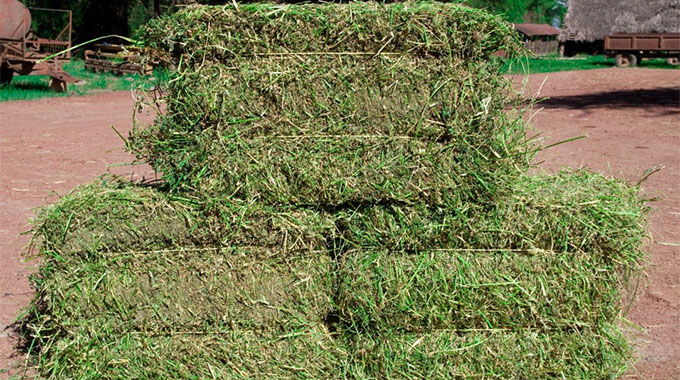
Michael Magoronga–Midlands Bureau
Lucerne is seen more and more as a cash crop that can provide much of the feed needed by the growing dairy herd and help make milk products accessible to ordinary people.
This comes as the Second Republic has already introduced other interventions like the heifer project aimed at capacitating farmers to boost output and meet the annual target of 130 million litres of milk by 2025.
Lands, Agriculture, Fisheries, Water and Rural Development, Dr Anxious Masuka, toured Dendairy Farms in Kwekwe recently where lucerne is being grown at a large scale for dairy cattle feeding.
Dendairy is one of the largest milk producers in the country producing about 280 000 litres of milk per month.
Minister Masuka said the venture by Dendairy was worth emulating as it reduces the cost of milk production.
“We are seeing lucerne production here, which has lowered the cost of milk to about 50 cents per litre compared to up to 70 cents per litre. This is why we want to see lucerne being grown at an industrial scale so that we can have farmers focusing solely on growing lucerne so that small-holder producers can purchase cheap-priced feed,” he said.
“By 2025, we should be able to hit 130 million litres of milk per year and meet the national requirement. At that stage, we will stop all powdered milk imports and only prioritise large-scale producers to be able to import.”
Plans are underway to involve traditional leaders to be part of the drive to have communities embrace massive lucerne production.
“This production facility is producing about 10 times more than other farmers. This is why we want chiefs to come and see this venture because we have a programme of planting about 6 000 hectares under irrigation for them starting with the Lowveld,” said Dr Masuka.
“We will also have about 1 500 hectares for the community so that they also benefit as we march towards Vision 2030.”
Dendairy produces 28 litres of milk per cow per day compared to the average of 12 litres by most dairy farmers.
“If this is emulated, it can enable us to increase our milk production so that farmers profitability can be achieved,” said the minister.
Dendairy director Mr Herman Venter said they had capacity to produce more.
“We are currently producing about 280 000 litres per month, but in two years we should be able to produce about 350 000 litres, maybe more. The plant can handle a lot more,” he said.
Mr Venter alluded to the success of their venture to enhance animal health.
“The key thing is increasing fertility that comes from animal health and good breeding. By increasing the cattle head, we also increase the milk capacity,” he said.



 Online Reporter