admin
admin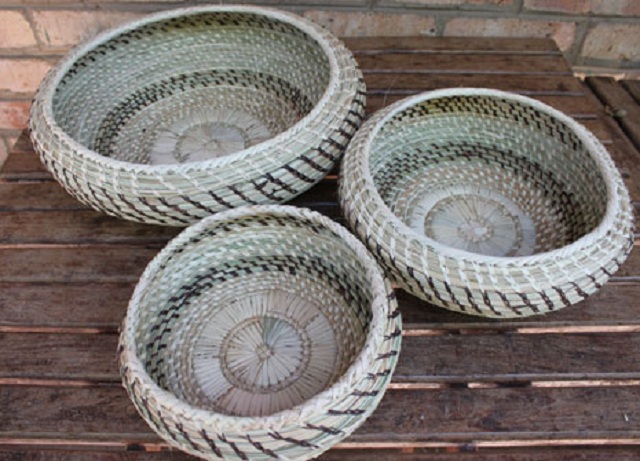

Dumisani Nsingo, Senior Business Reporter
LUPANE Women’s Centre (LWC)’s artistry has attracted a number of foreigners culminating in the rural women’s grouping penetrating the international market with an array of artefacts.
LWC manager Mrs Hildegard Mufukare said there has been a remarkable improvement in terms of creativity and designs of reed, sisal and palm products being produced by women affiliated with the organisation as it forges ahead to attract the global market.
“LWC holds the largest number of organised weavers in the country and as a result this has enabled us to penetrate the global market with ease. When we made our palm dresses we later found that our hats were used at the London fair and at the Indiana Polis modelling fashion show,” she said.
The craft project, which involves about 400 women crafters, has over the years grown to be the largest income earner with members earning up to $200 per month. The highest paid member so far has earned $720 in one month.
The members receive training, information and marketing services from the Centre. Once produce has been sold 85 percent is paid to members while 15 percent goes into the training budget.
“We have gone to overseas countries like Poland, Denmark and India with our artefacts and regionally we have been to countries like Botswana, South Africa and Malawi. Through market researches and referrals we have managed to reach out and got engaged with clients in places like Germany, Australia, Switzerland, Sweden and the United States of America,” Mrs Mufukare said.
Traditionally making of baskets has been a skill that has been passed from one generation to another. Traditional Ndebele baskets were made out of sisal and palm while in some wards members made the Nambian and Tonga tribe baskets.
The baskets were used as plates, for carrying seeds to the fields and as brides’ presents at weddings. The men were kept busy making their traditional wooden stools. Though the basketry skill has been known to be for women some men have joined the trade.
“The intervention we made of ensuring new designs has really improved the quality of basketry. We really need to rebrand our products to the extent that when we are going out there we don’t only attract individuals but supply our products more to a wholesale.
“We are also looking at the role we have to play nationally to help other upcoming weavers in different parts of the country because craft is a big business. It also has to be about knowing pre-shipping and courier arrangements when moving products abroad. It’s basically about understanding economies of scale,” said Mrs Mufukare.
National Handcraft Centre chairman Mr Givemore Chidzidzi acknowledged that LWC has over the years produced quality craft that has attracted foreign buyers.
“Those women from LWC have been working with the National Hand Centre and some of their wares have been marketed internationally through us while they have also managed to directly secure markets for themselves. At the centre we only deal with acceptable quality products and we assist in developing and advising them on market trends. We are, however, excited that LWC has managed to make an international break-through,” he said.



 Online Reporter