Online Reporter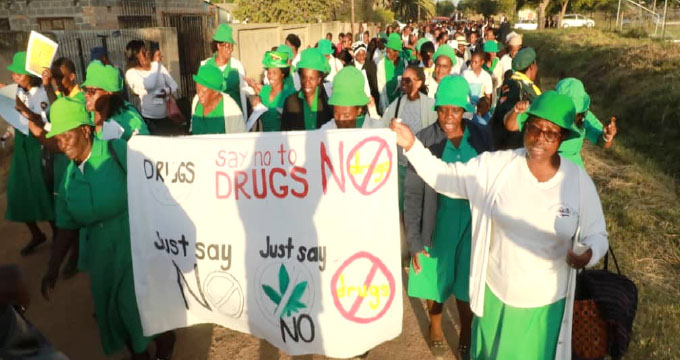
Trish Mukwazo, [email protected]
THE Luveve Seventh-day Adventist (SDA) Church on Saturday led a drug and substance abuse awareness march, aimed at educating the community on the devastating effects of drug use, particularly among young people. The awareness campaign drew support from church members, local leaders and residents, who joined the march carrying posters and placards denouncing drug and substance abuse.
Luveve SDA Church head elder, Mr Daniel Mpofu, said the initiative was inspired by findings from a community-based research exercise, which revealed that most youth deaths in the area were linked to drug and substance abuse.
“As a church, we saw it fit to take action, after discovering that drug and substance abuse is not only claiming the lives of young people, but is also destroying marriages and family structures,” he said.
Mr Mpofu warned that the country’s future is at risk if young boys continue to fall victim to drug abuse before reaching adulthood.
He said the church is working closely with the community to empower youths and raise awareness, adding that substance abuse is both a spiritual and social issue.
“We believe that the human body is the temple of God, and we are encouraging responsible behaviour, especially among household heads, to help fight this scourge,” he said.
Also present during the march was Emakhandeni-Luveve legislator, Mr Descent Bajila, who described the drug crisis as a serious and growing concern in the constituency.
“We’re seeing the effects of substance abuse daily. Many funerals we attend reveal that the cause of death is drug-related,” he said.
Mr Bajila called for a united front, involving Government, churches, traditional leaders, businesses and individuals to combat the crisis.
“We need a whole-of-society approach. Institutions must join forces to resist and eliminate drug and substance abuse in our communities,” he said.
He commended churches, particularly the SDA Church, for taking a strong stance on mental health and substance abuse.
“The church has been very vocal and proactive, especially in addressing mental health and drug-related issues,” he said.
Child President, Mr Pious Nleya, who also participated in the march, said the prevalence of drug and substance abuse, among young people threatens the nation’s future.
“Many of those engaging in illicit substance use are children, who could otherwise become future leaders. I lost a close relative to drug abuse. This is a painful reality that many families are dealing with, and we must take action now.”
As part of its intervention strategy, the SDA Church has partnered with Black Canine Dog Training Services, to help detect drugs within the community.
Mr Marvel Mhlanga, a representative from the organisation, said they train dogs to sniff out and detect harmful substances.
“Our canine units are deployed in communities to assist with drug detection and prevention efforts,” he said.
The drug menace has prompted broader national efforts, with new rehabilitation centres being established in cities and towns to alleviate pressure on existing facilities. Authorities are also mobilising various community stakeholders — including families, traditional leaders, schools, law enforcement, and healthcare providers — to mount a co-ordinated response. Concerns have been raised that 90 percent of patients admitted to Ingutsheni Central Hospital’s acute ward are suffering from alcohol and substance abuse-related conditions.
The hospital, which has a capacity of 708 beds, has been attending to over 2 000 outpatients each month, most of whom present with substance abuse issues.
The Government is moving to establish three new rehabilitation centres in Victoria Falls, Harare and Kwekwe. Meanwhile, the Ministry of Health and Child Care, Zimbabwe Prisons and Correctional Services and their partners, have enhanced rehabilitation programmes, including those targeting inmates.
As part of the national drug and substance abuse response strategy, the Government has also integrated drug and substance abuse mitigation into the Primary and Secondary Education Curriculum, as the country implements multiple strategies to address the scourge threatening national security and the social fabric.
Drug and substance abuse has become a major concern, with police intensifying efforts to dismantle drug networks.
Between September last year and January this year, 9 527 drug-related offenders were arrested and 79 illegal drug bases were destroyed.
Zimbabwe is also partnering with international law enforcement agencies to contain the drug scourge.