

 Online Reporter
Tichaona Zindoga
Analysis
A charter governing the conduct of senior Chinese officials has once again gained prominence — highlighting how China’s leadership model could influence global approaches to party and state governance.
Three months ago, in February, Chinese Premier Li Qiang reaffirmed the importance of the Eight-Point Regulation — first introduced in 2012 — during the Third Session of the 14th National People’s Congress, emphasising its role in promoting “full and rigorous self-governance.”
Following the Two Sessions, the CPC Central Committee launched a Party-wide study campaign to institutionalise the regulation, signalling a long-term commitment to ethical governance.
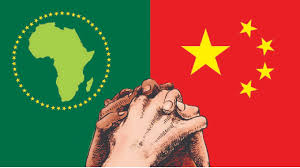
For political parties in Africa and the Global South, many of which look to China for inspiration, the Eight-Point Regulation presents a valuable case study.
In the region, Zimbabwe’s ruling party Zanu-PF, South Africa’s African National Congress, Mozambique’s Frelimo, Tanzania’s Chama Cha Mapinduzi, Namibia’s Swapo and Angola’s MPLA all share strong historical and ideological ties with the Communist Party of China (CPC).
These parties have deepened their ideological connections with China through mutual learning initiatives. Institutions such as the China Executive Leadership Academy in Pudong (Celap) and the China Academy of Governance regularly host African party officials for training in party-building, economic management, governance and ideology. These programmes often highlight the CPC’s developmental leadership, governance practices and the perceived advantages of a one-party political system.
Additionally, the CPC International Department frequently invites African party delegations for study visits and high-level exchanges. These include joint seminars on governance, development and security, as well as party-to-party summits with long-standing liberation movements.
Among these engagements, the China-Africa Political Parties Seminar is a recurring platform for discussions on ideological alignment, development strategies and regional peace. The Belt and Road Political Parties Co-operation initiative also brings together political elites from Africa and beyond, to align development visions under China’s Belt and Road Initiative.
Understanding the Eight-Point Regulation
The Eight-Point Regulation is poised to become a key component of this collaborative framework. This article outlines the regulation’s core principles and how they have been implemented in China — offering insights that may benefit political parties and organisations across Africa.
The regulation comprises eight directives aimed at improving governance and official conduct. These include promoting grassroots research, reducing unnecessary meetings, cutting redundant documentation and streamlining official overseas visits. Other directives focus on minimising public disruption during security operations, shifting media coverage towards substantive policy issues, limiting ceremonial messages, and enforcing frugality in public resource use.
Officials are encouraged to conduct thorough grassroots research, engage with the public and address practical issues. They are expected to travel with smaller entourages and avoid elaborate receptions. For instance, when visiting rural areas, officials focus on understanding the real conditions and needs of farmers without fanfare.
The regulation calls for a reduction in unnecessary meetings and events. When meetings are held, they should be “short and practical, with concise speeches” rather than lengthy formalities — emphasising efficiency and results.
Only documents with meaningful content should be issued, avoiding redundant paperwork. This not only conserves resources but also ensures that critical information is easily understood.
Overseas visits must be based on genuine diplomatic needs, with limited personnel and adherence to transport regulations — making such trips more purposeful and cost-effective.
Unlike the lockdown-style security often seen with official motorcades globally, China is shifting towards “people-friendly” security measures. Leaders aim to minimise traffic disruptions during visits, maintaining public convenience.
The regulation also seeks to optimise news reporting, by focusing on the substance of policies and government work rather than ceremonial events. Media coverage is expected to reflect the real impact of governance.
Furthermore, the regulation discourages unnecessary congratulatory messages, such as letters and inscriptions, for events and occasions.
Finally, the CPC is instructed to “practise thrift and oppose waste,” strictly adhering to clean governance rules, including those governing housing and vehicle use. The aim is to promote a frugal work ethic and curb the misuse of public resources.
Lessons from the Eight-Point Regulation
In many respects, the regulation serves as a critique of governance practices observed in several African countries, including those led by liberation movements.
Rather than viewing it through a narrow lens, one could argue that the issues identified and addressed by the CPC are universal, reflecting broader challenges in governance.
China’s leadership, as a major developing nation, and its scientific approach to governance — combined with its openness to sharing experiences — offer a model worth adapting to local contexts.
The regulation’s broad scope makes it essential to resist simplistic interpretations, such as those found in some Western media, which recently characterised China’s anti-corruption efforts as President Xi Jinping’s “fight without end.”
The implementation of the Eight-Point Regulation has been widely praised both within China and internationally.
Since its adoption, the regulation has significantly improved governance and public perception. It has reduced bureaucracy and waste, enhanced administrative efficiency, and strengthened the Party’s connection with the public. Surveys in China show increased citizen satisfaction, with many viewing officials as more approachable and responsive.
An expert from Pakistan, Mushahid Hussain Sayed, chairman of Pakistan’s Senate Defense Committee, who is also chairman of the Pakistan-China Institute, commented in the media in February saying, “The CPC and the people of China are now more closely united, with people having greater confidence in their leadership, which has succeeded in promoting substance over semantics, eliminating extravagance, promoting efficiency and slashing formalism and bureaucratic behaviour of officials.”
He added: “Most importantly, the credibility of such governance is enhanced when the world realises that China means what it says, as decisions are implemented in a timely manner.”
This pragmatism should be a key motivation for stakeholders to draw lessons from CPC and China.
Leaders in Africa must find the missing ingredient, to ensure that they match up to the standard set by China, which, in the view of the author, is political willpower and a commitment to administrative rigour and prudence.
Fighting corruption and running clean, efficient bureaucracies are not alien concepts to Africa and Zimbabwe in particular, and corruption is often denounced at various forums.
At the same time, given the evolving state of circumstances, and drawing lessons from China, the ruling party should reconsider a new “Leadership Code” blueprint to tackle issues such as “formalism, bureaucratism, hedonism, and extravagance… privilege thinking… and shocking corruption issues,” which are being addressed in China through the Eight-Point Regulation.
Other key lessons include upgrading political standards and political requirements, cadre management, review of bureaucratic/administrative practices, eliminating waste during events and travel, enforcement of rules and punishment for offenders, practicing economic rationalisation and fiscal prudence and lastly, be poised for continuous cultural and ideological renewal.
These imperatives must be a challenge for the parties in Africa and Zimbabwe.
The party’s ideological schools should be critical and well-equipped to be a vital cog in assisting the ruling party to localise some of these lessons from China and assist the country to raise a new crop of leadership, to ensure that the future is in safe hands.
λ To Page 9



 Bongani Ndlovu