Online Reporter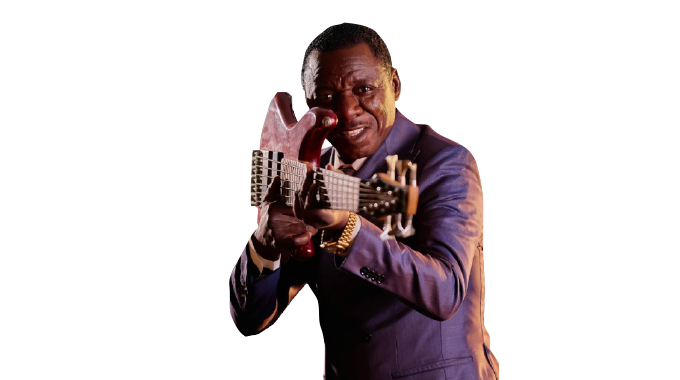
Trust Khosa
Zimpapers Arts and Entertainment Hub
Legendary sungura musician Alick Macheso has made a bold statement, proclaiming that the sincerity and originality of his music outweigh any perceived mediocrity by his critics.
In a candid reflection as he celebrates his 57th birthday, which fell on June 10, Macheso boldly stated: “It is better for people to consider my work mediocre as long as it is new.”
His fearless declaration is likely to ignite conversation and debate about the state of sungura music and its trajectory on the contemporary Zimbabwean music scene.
Macheso has in the past faced criticism from some quarters, who view his music as falling in standards by each new production.
In an exclusive interview with Zimpapers Arts and Entertainment Hub, Macheso, a torchbearer in sungura music, shared how the entire genre has suffered stunted growth over the years.
“I am sorry to say this, but as an elder in this game, I should not hide the truth; sungura music is dying and not growing,” he said. “Gone are the days when authenticity was the norm; nowadays, we sound the same due to laziness among artistes.
“If you look back, artistes like Leonard Dembo, Madzibaba (Nicholas Zakaria), John Chibadura, Pengaudzoke, Ngwenya Brothers, Simon Chimbetu, System Tazvida, Paul Matavire and many others played sungura, but they were authentic in their creations.”
Macheso said nowadays, sungura musicians wait for big names to release new music for them to get an idea of what to record.
“It is a shame that some of these artistes are equally talented, but they end up losing the plot by copying,” he said.
“With such a scenario, we are not only harming ourselves, but also killing sungura. I say this because sungura is one of the genres I have known and loved for years. In my case, I try to come up with new creations in every album. It is better for people to consider my work mediocre as long as it is new.”
Illnesses
Macheso says members of his ensemble, Orchestra Mberikwazvo, have been plagued by various illnesses over the years, and he has consistently shown love and support to them.
One of those receiving help is Lucky Mumiriki, who suffered a stroke in 2011.
“I always prioritise the welfare of my band members because they represent Orchestra Mberikwazvo wherever they are,” Macheso said.
“For instance, we still assist Lucky Mumiriki with what we can afford as a band. Of late, we have been doing our best to ensure that Taffy Nyamunda, who is now blind, receives treatment from experts.
“One of my long-serving members, Elton Muropa, was discharged from hospital yesterday (last Monday) after being unwell for some months. Muropa’s condition really pains me because we need him back once he recovers.”
The latest victim of illness is star dancer Selamane “Majuice” Mpochi, who ended up with ruptured ligaments after his ankle twisted on stage.
He has been receiving physiotherapy with help from Macheso’s management team, led by Tichaona Makahamadze and Lucky Nyandimu.
Macheso, who has been at the helm after leaving Khiama Boys, narrated how it feels to have ruled the roost in sungura for close to three decades.
“It takes a lot of hard work and teamwork to be in the limelight for such a long period. In my case, it was a matter of hard work and sticking to what I love the most,” he said.
“A lot has been said about my days at Khiama Boys and how it ended, but for now, we are focusing on the positives because I am ageing gracefully.”
For all his dominance, he owes his success to his fans.
“I am humbled by the support I have been receiving from fans, and to me, it means a lot in my life. This shows how loyal my fans have been to me and I will always cherish this kind of love. I have been resilient for all these years while fronting my own band — Orchestra Mberikwazvo,” he said.
Caring for band members
With 36 employees at Orchestra Mberikwazvo, Macheso, better known as Baba Sharo, has used his influence to ensure that most of his band members have permanent shelter.
“The majority of my band members have residential stands that I acquired because I know the challenges of being a tenant. If you are not strong, you will end up hurting landlords when they demand rent, but they worked for that property,” he said.
“I even gifted Jonas Kasamba my house where he stays with his family because I have my own houses.”
The singer has in the past lost one of his residential stands, measuring 700 square metres, under unclear circumstances, which has given him more zeal to provide shelter for his band members.
“I am one of the people who do not love drama and I acted like a mature person when I lost one of my residential stands in Chitungwiza. I tried to engage the authorities, but realised that it was a lost battle,” he said.
“It gave me the strength to look for new stands that have full approval from the authorities. This is the kind of life I have been going through, but it is now water under the bridge.”
Resilience
As Macheso approaches his diamond jubilee — 60 years — he also reflected on the challenging journey he has traversed.
“It has not been an easy journey for me to make a breakthrough on the music scene; I encountered a lot.
“I had to make a bold decision in my life when I left Shamva for Harare to find work as a guitarist. I stayed in Dzivaresekwa, Epworth, Chitungwiza and now Waterfalls as part of my journey,” he recalled.
“I can safely say that the person who cared for me a lot was Madzibaba (Nicholas Zakaria) and his wife, who provided me with shelter in Chitungwiza since they felt I was still too young to stay alone.
“Cephas Karushanga taught me a lot of things when he took me from Madzibaba’s place to stay with him at a plot called KwaMuza in Epworth.
“I fell in love with Epworth, where I used to do fishing in my spare time when we were not touring or holding shows. I am actually a great fisherman to this day, but I no longer have time for that due to my demanding schedule.”
Determined to move on and take responsibility, Macheso left Karushanga’s home and found a new place to stay alone.
“As you know, I wanted my freedom, and I found myself a bachelor living alone in Epworth,” he said.
“I then married my beautiful wife, Nyadzisai Butau, and we were blessed with our firstborn child, Sharon, in 1988.
“Reality dawned that I needed to work hard and I then moved to Chitungwiza, which has become my favourite suburb.”
Kindness
Macheso firmly believes in the power of sharing and kindness, finding it painful to witness neighbours going hungry when he has the means to help them.
This culture of generosity was instilled in him during his childhood at Hereford Farm in Shamva, where he lived with his uncles five decades ago.
Macheso fondly recalls how their homestead would become a gathering place for children from the neighbourhood, who frequently visited for meals and playing games. To him, being surrounded by large crowds and sharing with others is now a fundamental part of his identity.
He attributes this sense of kindness and generosity to his maternal uncle, who provided him with strength and warmth after his father, Hudson Chisale, deserted the family.
As he celebrates his 57th birthday, Macheso has chosen to stress the importance of kindness, believing it can make the world a better place.
Known for his philanthropic efforts, Macheso emphasised that one does not need to be wealthy to help a neighbour.
Feeding on goat milk
Reflecting on his upbringing, Macheso said: “This year, I am preaching the gospel of sharing and kindness, which I learnt from my uncles. I grew up at Hereford Farm in Shamva, but my uncle, Sekuru John Nyandimu, and Gogo Junior Bandera, made me feel at home despite the challenges I faced.
“I was surrounded by loving people who ensured that I remained focused on my future. Even now, I wonder why they were so generous, showering me with extra love.”
Macheso further said he was weaned off at just eight months when his mother, Emilia, found work at a citrus farm in Mazowe to support him and the rest of the family.
“My uncles provided me with goat milk, rich in nutrients, and other available supplements when I was weaned off. Their kindness is something I strive to pass on to others today,” he said.
Narrating life in the compound, he highlighted how it became a hub of activity.
“There was a time when my uncles’ homestead was the talk of the neighbourhood, as children flocked there,” he said.
“They made sure everyone present was fed, and now, as an adult, I realise I am doing the same for my band members, community and even strangers.
“It pains me to hear that a neighbour has gone to bed hungry when we have leftovers at home. Sharing is caring and I simply follow that motto.”
Fallback plan
Baba Sharo does not solely rely on music for survival, as he has invested in farming.
“I have a plot in Chivhu, where I farm, specialising in various crops. I also do pen fattening. I now have over 120 beasts on my farm.
“ I learnt this from Shamva, where I was raised on a farm. I strongly believe that a real man should also invest in livestock, as was the case with our elders,” said the veteran singer.
As the sungura ace celebrates his 57th birthday, he has decided to share the gospel of love, generosity, kindness and authenticity in 2025.