Gibson Nyikadzino
Zimpapers Politics Hub
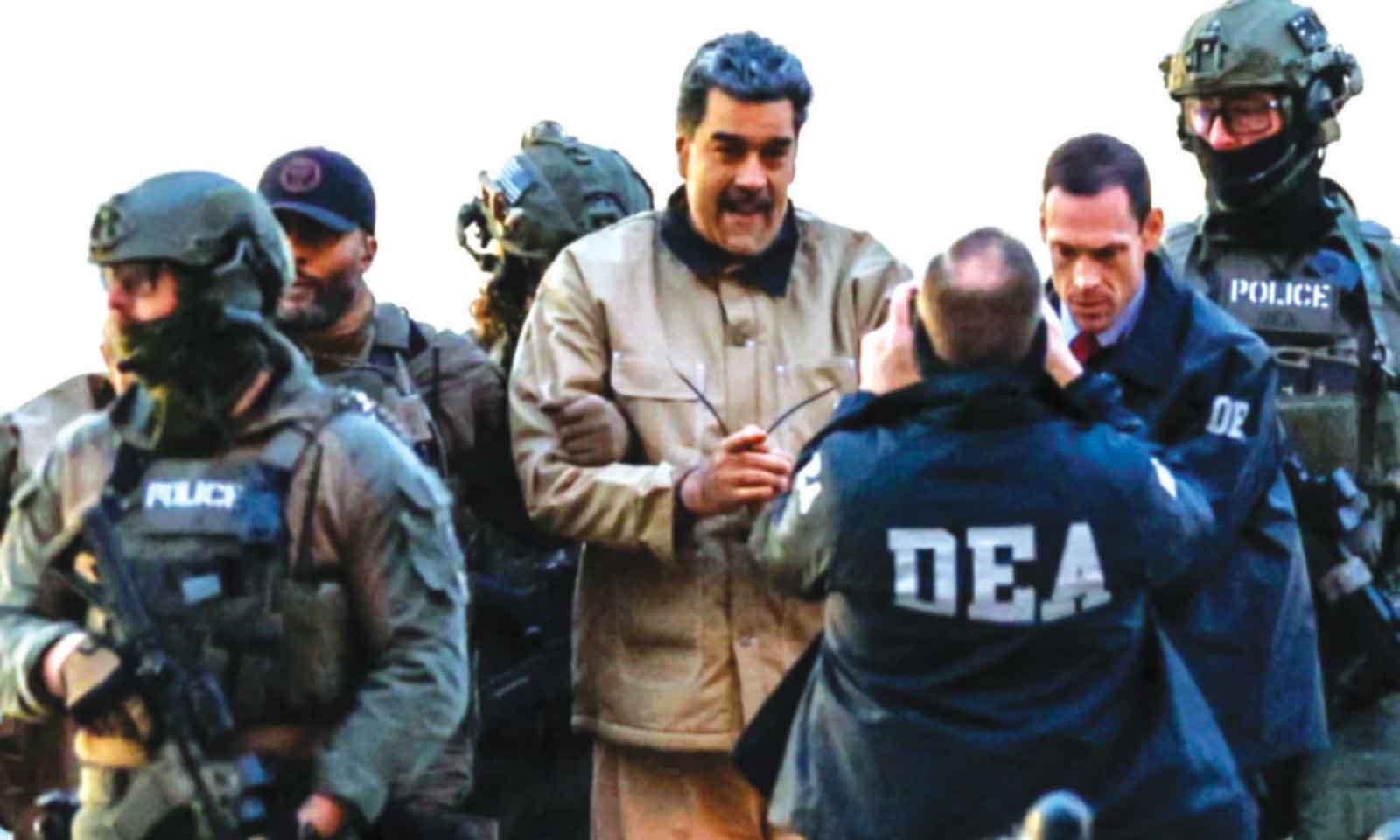
THE abduction of Venezuelan President Nicolas Maduro and his wife, Cilia, by the United States Delta Force on January 3 has ignited fresh debate regarding the application and continued relevance of international law.
According to Article 9 of the International Covenant on Civil and Political Rights, taking someone from another country without adhering to legal protocols is simply an unlawful and unjust violation of their freedom.
In view of this, further discussions have raised angrily crafted questions that try to trace the owners and authors of international law.
As long as nations are part of the international system, they also have commitments to live within the confines of the law they adopt, even when they did not author it.
The answers on whether the US acted legally or illegally on January 3 in Venezuela are found in the United Nations Charter, especially looking at Article 2(4); Article 2(7); and Article 51.
However, when laws are bent, broken, breached or infringed, that does not mean the same laws cease to exist.
To those who query international law and at times consider it useless or dead, to put it bluntly, international law still exists, and countries are obliged to comply.
International law does not lose relevance because it has been broken, or because a country acted illegally.
Just as national laws remain in place for all citizens, one cannot commit murder or robbery, hoping to get away with it because they know someone, somewhere, who got away with murder.
Were US strikes in Venezuela legal?
The arbitrary use of force is prohibited under international law, except within the two narrow applications as enunciated in Article 51, which relates to self-defence, or when there is an authorisation granted by the UN Security Council (UNSC).
Article 51 of the Charter grants member states the right to use lawful force as an exercise of self-defence.
Also, the other route to the legal use of force is when the UNSC authorises such action.
In the case of Venezuela, the US’ unilateral use of force was neither an act of self-defence, nor was it authorised by the UNSC.
Venezuela did not pose a military threat to the US, neither did it attack nor attempt to attack the sovereignty of the US.
The presidency in Venezuela, since the 2024 elections, was contested. This raised legitimacy issues for President Maduro and the Venezuelan government.
Some countries recognised President Maduro’s victory, while others recognised his main challenger, Edmundo Gonzalez.
The fact that the opposition holds no territory within Venezuela means any potential US intervention would require a Security Council resolution that grants consent.
Hence, US actions in Venezuela, according to Article 51, were both illegal and unlawful.
Can the US run Venezuela?
After President Maduro was taken into US custody, President Donald Trump highlighted that the US will “run the country” until there is a “proper” transition of power.
This also raises questions on whether it is possible for one country to administratively “run” another country.
This only passed during colonial times, yet Venezuela defeated colonialism on July 5, 1811.
The question of whether the US can run Venezuela or not is answered in Article 2(7) of the UN Charter.
The clause states that: “Nothing contained in the present Charter shall authorise the United Nations to intervene in matters which are essentially within the domestic jurisdiction of any state or shall require the members to submit such matters to settlement under the present Charter.”
International law thus prohibits any form of intervention in the internal or domestic affairs of another state, including deciding who governs in that country.
This is despite attempts by the US in 2019 to recognise Juan Guaido as Venezuela’s interim president then.
According to the 2024 election results that were announced in Venezuela, President Maduro was declared the official and legitimate leader of that country.
Whether President Maduro, according to the US and the collective West, was “unpopular, oppressive, or illegitimate”, there is no legal basis or premise for the US to commit such an action.
There is no law that gives another state the right to impose regime change by force or without force in a sovereign country.
Only citizens of a country are allowed to effect a change of administration through constitutionally mandated means, which include use of the ballot.
Additionally, Article 2(4) of the UN Charter says: “All members shall refrain in their international relations from the threat or use of force against the territorial integrity or political independence of any state, or in any other manner inconsistent with the purposes of the United Nations.”
In this view, one may believe that President Maduro should not be Venezuela’s leader and still reckon the illegality or unlawfulness of the January 3 attacks by the US.
Therefore, according to Articles 2(4) and 2(7) of the UN Charter, the US cannot “run” Venezuela, and has no right to violate the latter’s independence, sovereignty and integrity.
Does the US have good intentions?
There are weird and awkward thought patterns now dominating the discourse on the lawfulness or unlawfulness of US actions in Venezuela.
These thought patterns have sought, without any legal claim, to cleanse the breaking of international law by the US in Venezuela.
The arguments that have been peddled by the political establishment in the West and the corporate media have no capacity to either change or amend international law.
It has been argued that President Maduro is “authoritarian and illegitimate” and that he was “leader of drug cartels”.
Even if the allegations were proven, they do not form a basis that legalises the invasion of a sovereign state.
It has also been alleged or argued that President Maduro was committing human rights violations, hence the military intervention was humanitarian or enclosed in the responsibility to protect (R2P) doctrine.
The R2P or humanitarian intervention here does not apply; it can only be necessitated when states fail to halt the mass atrocity crimes of genocide in their countries.
There is no genocide in Venezuela. Where there are reports of genocide, in Sudan, the R2P has not been used. In the end, it should be known that one cannot attempt to uphold international law by violating it.
If the pretext of drugs is used to justify the use of force in Venezuela, under international law there is nothing such as a lawful “war on drugs” across borders that would justify killing traffickers. These were extraterritorial acts executed in contravention of international law.
There is no overarching exception that permits states to use force for the purpose of enforcing human rights in another nation.
In fact, such actions can exacerbate violations rather than resolve them. Neither strategic interests nor economic motives can ever legitimise the use of force.
As it stands, international law still exists; it is not dead. It is being breached for great power interests. Iraq in 2003 and Libya in 2011 are recent examples of what has not changed.
There still exist imbalances that need to be addressed in international politics, as it is being proven that the strong do what they can and the weak suffer what they must.
For feedback: [email protected]