Sundaymail Editor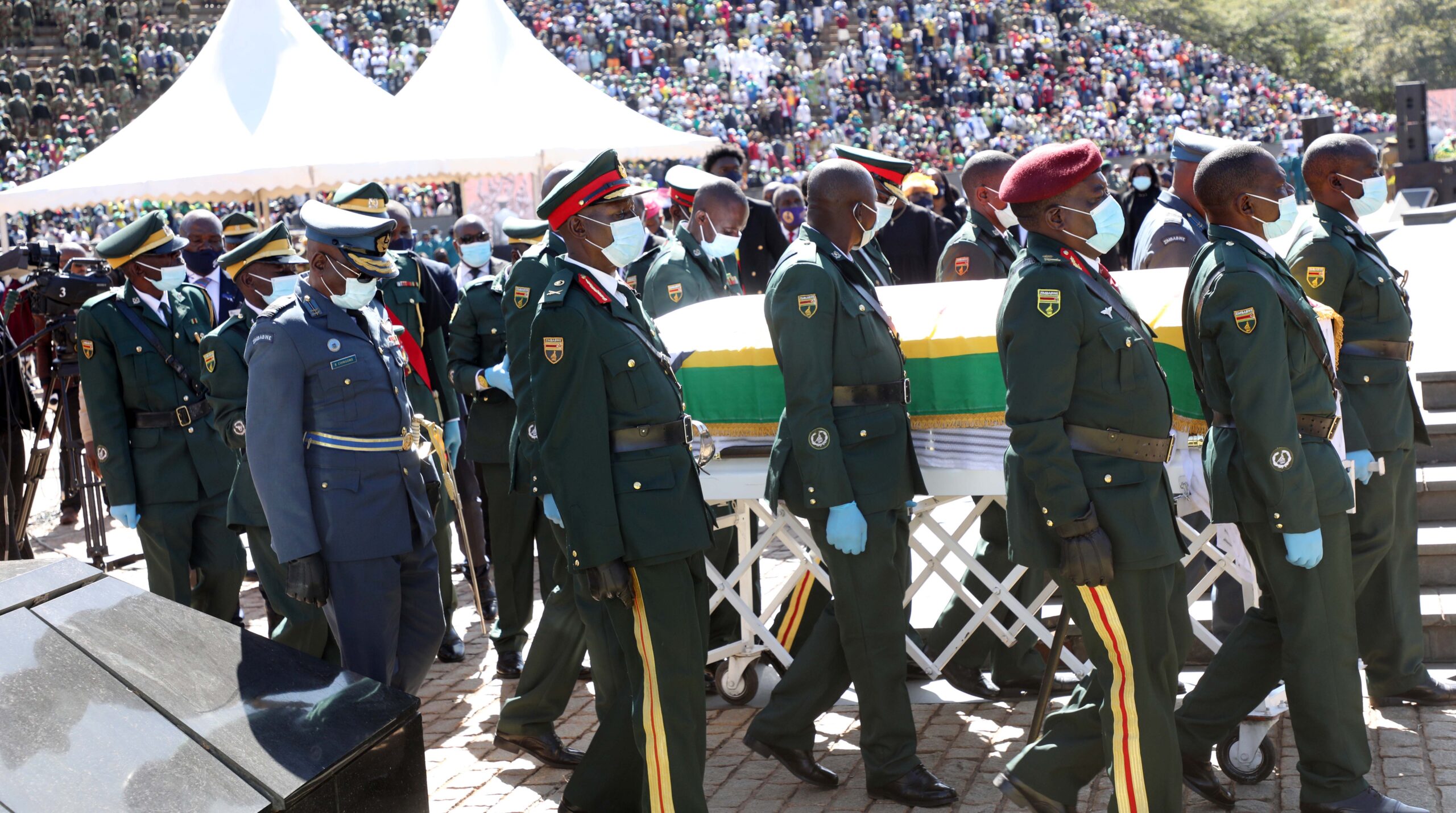
Sunday Mail Reporter
President Mnangagwa has described the late national hero Major-General (Rtd) Sydney Vulindlela Bhebe as a true patriot and fearless officer of the Zimbabwe Defence Forces.
Addressing mourners at the burial of Maj-Gen (Rtd) Bhebe at the National Heroes Acre in Harare, President Mnangagwa said the country was losing cadres from a generation of freedom fighters who gallantly fought in the armed struggle during the Second Chimurenga.
In the past four weeks, the country lost two other decorated General Officers that include Major-General Godfrey (Rtd) Chanakira and Major-General (Rtd) Sikhulile Simpson Nyathi.
“He served his country with unflinching loyalty, always guided by the national interest and selfless patriotism. The late Major-General Bhebe was a humble, honest, reserved and unassuming man, yet an astute, fearless, and reliable military officer. He consistently and persistently fought for his country, before and after independence, rising to the rank of Major-General, in the Zimbabwe Defence Forces,” President Mnangagwa said.
The history of the liberation struggle, he said, cannot be left to the authorship of those who seek to belittle it and efforts by various stakeholders, including the Museum of African Liberation, must be scaled up and accelerated towards documenting, archiving and exhibiting the true story of our liberation struggle.
Born on December 30, 1960, to Reverend Lika Mukhuwa Bhebe and Mrs Bongani Bhebe in Mberengwa District, under Chief Mtevaidze in the Midlands Province, Maj-Gen (Rtd) Bhebe underwent primary education in his home area and secondary education at Masase Secondary School from 1974 to 1977.
Riled by the racist and brutal Rhodesian system, the late Major-General, like many of his contemporaries, abandoned his studies and left to join the liberation struggle in Zambia via Botswana.
On arrival in Zambia, the late Maj-Gen (Rtd) Bhebe, whose nom de guerre was Cde “Yengani Dhlodhlo”, stayed briefly at Nampundwe Transit Camp until December 1977 when their group became the second to be flown to Angola for initial military training at Boma Training Camp.
Owing to his mastery of military concepts, his Cuban and Soviet Specialist trainers selected him to become one of the instructors at the same Training Camp which was eventually bombed by the enemy, resulting in the death of 190 cadres and injuries to over 500 others including him.
He was evacuated to Luwena and later transferred to Luanda for further medical assistance due to the severity of his injuries before being taken to a recuperation centre.
Upon his full recovery, the late Major-General remained unwavering in his conviction to fight for the liberation of his country and that saw him returning to Boma Training Camp to resume duties as commissar and instructor for the training units.
He was part of a group of instructors that accompanied 1 800 trained fighters to Zambia on their way to the front.
On return from the assignment to Zambia, he was deployed to Malanje Camp, which comprised other trainees from Umkhonto we-Sizwe, the armed wing of the African National Congress, where he trained more recruits.
At independence, the late General Officer was attested into the Zimbabwe National Army on April 1, 1980.
He had a distinguished and illustrious career in the Zimbabwe Defence Forces serving in various general duty command appointments, in administration and as a Defence Attaché to Ethiopia.
Due to his selfless sacrifices, loyalty, patriotism and associated achievements, the late national hero was awarded the Liberation Medal; Independence Medal; Ten Years’ Service Medal; Long and Exemplary Service Medal; Mozambican Campaign Medal; Democratic Republic of Congo Campaign Medal and the Grand Officer of the Zimbabwe Order of Merit Award.


 Online Reporter