Richard Muponde
Zimpapers Politics Hub
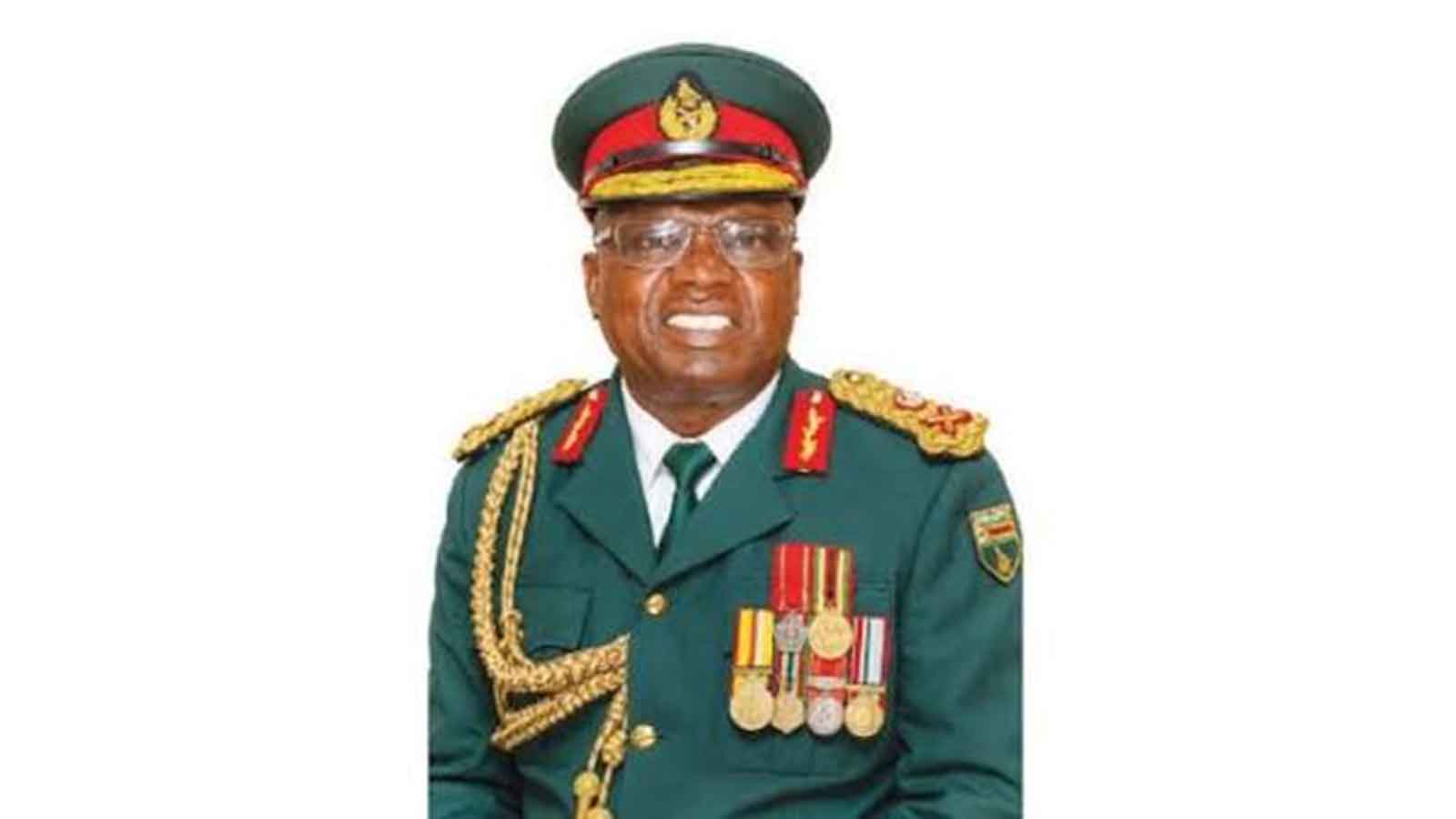
The death of Major-General (Retired) Richard Ruwodo at the age of 72 marks the end of an era for one of Zimbabwe’s distinguished military commanders, whose service to the nation extended far beyond the battlefield.
The former army commander died at the Avenues Clinic on Tuesday after a short illness.
During the liberation struggle, he was a revered fighter.
He was attested in the Zimbabwe National Army (ZNA) after the attainment of Independence.
While his military exploits earned him recognition as one of the ZNA’s most decorated officers, perhaps the defining feature of his later years was his unwavering commitment to safeguarding the welfare of liberation war veterans and defending Zimbabwe’s sovereignty despite years of international targeted sanctions imposed against him.
For Maj-Gen (Retd) Ruwodo, the attainment of independence in 1980 did not mark the conclusion of his national duty.
Rather, it represented the beginning of another chapter in which the struggle shifted from armed liberation to defending the gains of independence, preserving national sovereignty and ensuring that those who fought for Zimbabwe’s freedom were not forgotten.
His death comes at a time when Zimbabwe has witnessed significant changes in its international standing.
The United States, for example, revised its Zimbabwe-specific sanctions programme in March 2024, while the United Kingdom removed its remaining sanctions on Zimbabwe in 2025.
Further, the European union had progressively reduced its restrictive measures over previous years.
Yet, throughout the years when sanctions remained firmly in place, Maj-Gen (Retd) Ruwodo continued serving Zimbabwe without wavering, despite also being on the list of sanctioned individuals.
A lifetime of service
Like many liberation fighters, Maj-Gen (Retd) Ruwodo viewed independence not as the end of the struggle but as the beginning of nation-building.
After retiring from active military service in August 2008, he seamlessly transitioned into public administration, where he served as Acting Permanent Secretary in the Ministry of Defence before becoming Chief Director and later Director responsible for War Veterans’ Affairs. In these roles, he became one of Government’s principal architects in shaping policies aimed at improving the welfare of liberation war fighters.
Rather than seeking personal comfort after decades in uniform, he chose to devote his retirement years to advocating for improved pensions, healthcare, housing, educational support and economic empowerment programmes for former combatants.
Parliamentary records show that he frequently appeared before portfolio committees defending the rights of veterans while explaining the Government’s legislative framework governing benefits and pensions.
His work reflected a deeply held conviction that those who sacrificed for Zimbabwe’s independence deserved dignity in old age.
The ‘war’ for war vets’ welfare
Maj-Gen (Retd) Ruwodo increasingly became identified with one mission — ensuring that liberation fighters remained central to Zimbabwe’s national development agenda.
He chaired and served on several boards associated with the Zimbabwe National Liberation War Veterans Association (ZNLWVA) while helping oversee programmes intended to improve veterans’ livelihoods through economic projects and empowerment initiatives.
His responsibilities extended beyond administration.
He consistently advocated for reforms to legislation governing liberation fighters so that broader categories of those who contributed to independence, including collaborators, nationalists and other cadres, could receive formal recognition and benefits.
Speaking during discussions around the proposed War Veterans of the Liberation Struggle (Rights and Benefits) Bill in 2018, Maj-Gen (Retd) Ruwodo explained that Government was harmonising existing legislation with Zimbabwe’s Constitution to ensure more comprehensive recognition of liberation participants.
That initiative demonstrated his determination to modernise Zimbabwe’s legislative framework while preserving the historical integrity of the liberation struggle.
Enduring sanctions
Perhaps one of the most remarkable aspects of Maj-Gen (Retd) Ruwodo’s public life was that, for the greater part of his life in service, he remained under sanctions imposed from Western governments.
Throughout those years, however, he remained firmly embedded within Zimbabwe’s State institutions.
Rather than withdrawing from public life, he continued implementing Government programmes, overseeing war veterans’ affairs and participating in national policy processes.
His career, therefore, illustrates how many senior officials continued performing public responsibilities despite sanctions targeted at them.
One lesser-known aspect of Maj-Gen (Retd) Ruwodo’s public service was his insistence on maintaining the credibility of institutions responsible for war veterans.
In 2014, his office publicly confirmed the removal of an individual found to have fraudulently claimed liberation war veteran status and improperly benefitted from veterans’ funds.
That decision demonstrated his commitment to protecting resources intended for genuine liberation fighters and preserving public confidence in institutions responsible for veterans’ affairs.
Such administrative actions reflected an understanding that honouring the liberation legacy also required safeguarding its integrity.
Throughout his career, he also consistently argued that Zimbabwe’s liberation struggle should remain central to national identity.
His interventions before Parliament repeatedly highlighted shortcomings within existing legislation affecting families of liberation heroes.
During evidence presented to the Parliamentary Portfolio Committee on Defence and Home Affairs in June 2012, he observed that the existing War Veterans Act contained discrepancies because it did not adequately recognise liberation fighters who had died before the 1997 vetting exercise, noting that this excluded some prominent heroes from the Act’s benefits framework.
Those remarks reflected not opposition to supporting veterans but an acknowledgement that legislative reforms were necessary to address historical gaps.
They would later inform broader Government efforts to review legislation governing liberation fighters.
Athough officially retired from military service, Maj-Gen (Retd) Ruwodo never appeared to embrace retirement in the conventional sense.
His later career demonstrated that national service extends beyond wearing a military uniform.
Instead, he became an administrator, policy adviser, parliamentary witness, board chairperson and advocate for thousands of former combatants whose welfare depended on effective Government programmes.
This continuity of service distinguished him from many contemporaries.
His life’s trajectory reflected an enduring commitment to ensuring that Zimbabwe’s liberation history remained connected to contemporary governance and national development.
Legacy
The announcement of his death by ZNA Commander Lieutenant-General Asher Walter Tapfumaneyi underscored the high regard with which he was held within military circles.
His legacy, however, reaches beyond military rank.
It encompasses decades devoted to strengthening institutions supporting liberation veterans, contributing to defence administration and participating in policy reforms affecting those who secured Zimbabwe’s independence.
His story also mirrors a broader chapter in Zimbabwe’s post-independence history in which many former liberation commanders transitioned into civilian leadership while navigating complex international political pressures.
Whether serving as Brigadier-General, Acting Permanent Secretary, Chief Director or Director for War Veterans’ Affairs, he remained committed to Zimbabwe’s national cause.
History is therefore likely to remember him not merely as a decorated soldier, but as a patriot whose service continued long after the guns of liberation had fallen silent, remaining steadfast in the service of Zimbabwe and its people even while enduring decades under sanctions.