admin
admin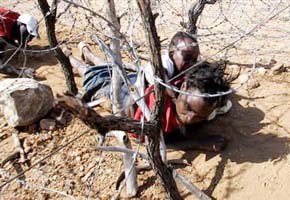
In the past, only a minority accepted assistance with the majority shunning the humanitarian assistance and opting to illegally cross back into the neighbouring country through undesignated entry points along the Limpopo River.
According to IOM statistics, 21 912 deportees offered to be assisted at the IOM Beitbridge Reception and Support Centre (BRSC) between 7 October and 31 May out of 25 827 deported during the same period.
At the centre, deportees are offered food, temporary shelter, medication and free transport to proceed to their homes. Those who shun the assistance normally resort to finding other means of crossing back illegally.
IOM spokesperson Mr Knowledge Mareyanadzo said a majority of those assisted were males.
“IOM handled 21 912 returnees from South Africa since the resumption of the deportations on 7 October last year, a clear indication that a majority of deported Zimbabweans are now willing to be offered humanitarian assistance unlike in the past when most of them would shun that assistance.
“We assisted 18 876 males, 3 036 females and 1 193 children of which 364 of them were unaccompanied between 7 October and 31 May, he said.
The IOM BRSC has a capacity to handle between 2 000 and 3 000 returnees per day while the onsite temporary shelter can accommodate at least 20 people at a given time. The organisation has contracted local bus companies to take the returnees to their homes.
IOM has since 2005 been providing deportees from South Africa and Botswana with assistance in the form of food, medication, overnight accommodation, transport to travel to their homes as well as information on safe migration procedures.
The organisation has opened two reception and support centres in Beitbridge and Plumtree to cater for deportees from South Africa and Botswana.
The assistant regional immigration manager in charge of Beitbridge Border Post, Mr Charles Gwede, said most of the migrants deported through Beitbridge were people from Chipinge, Bulawayo, Chiredzi and Masvingo, adding that a majority of the deportees were males.
“The number of male deportees is higher than that of females and our records indicate that most of the returnees are from Chipinge, Bulawayo, Masvingo and Chiredzi, which are the major receiving areas,” he said.
Since the deportations resumed, the Department of Immigration at Beitbridge Border Post has been receiving about 80 people a day on less busy days, with the number increasing to more than 500 mostly on Tuesdays and Thursdays when those from Lindela Detention Centre in Johannesburg would have been cleared for new arrivals.
Deportations are only conducted between Monday and Friday.
Mr Gwede said most deportees were those repatriated from Lindela Holding Centre.
More than 275 000 applications from Zimbabweans wishing to regularise their stay in the neighbouring country have been processed while several others were turned down and some are pending.


 Online Reporter