Sundaymail Editor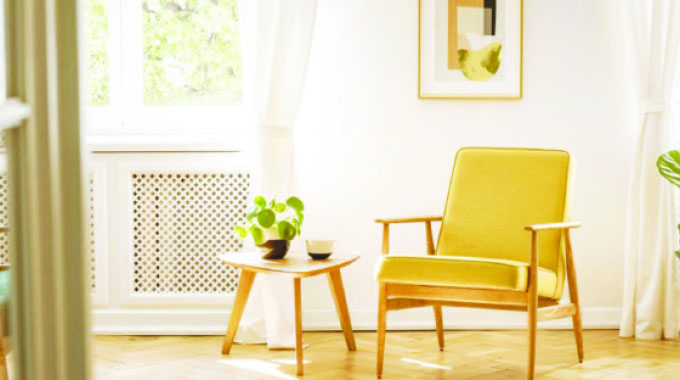
Thanks to nationwide stay-at-home orders, we are all suddenly spending a lot of time in the same small spaces.
To combat the coronavirus cabin fever, we have talked to professional organisers, interior designers and organisational psychologists about ways to make your home feel more spacious.
Before you begin, think about spaces that have made you feel calmed and how they were arranged.
Shalae Price, an international professional organiser, gives hotel rooms as an example, “Most hotel rooms are designed to feel much bigger than they actually are. The furniture placement is well thought-out and the decor (in most cases) would be considered minimalist.”
Declutter
Decluttering is an obvious first step to clearing up your space. Walk from room-to-room and put things away, clear up random papers or cardboard boxes and collect together small things that do not have a home.
If an item is not for decor and is not used on a regular basis, consider storing it out of sight or donating it. Having unused surfaces (desks, tables, counters) makes a room feel much larger.
A good way to get into the habit of regular decluttering, according to Amy Bloomer, a professional organiser, is a bin dedicated to clutter. This becomes the “catch-all” for things that have migrated downstairs and/or out of place.
Once a day, make it a habit to put back everything you have accumulated in the basket. It will not take long and it will help to maintain clear, calm spaces before retiring for the night.
Clear the floors and the walls
The more floor space, the bigger the room will feel.
“The floor is not a storage space but we often create piles in corners that grow and expand over time. These piles tend to be delayed decisions, items that have no home so they get set aside on the floor. As these piles encroach on our living space we feel weighed down. Our actual physical living space shrinks.
Tackling these piles and freeing up floor space will immediately create lighter, brighter spaces. In our experience, if you have not looked at items in these piles for a long time they are often items that can be let go,” reckons Andrea Walker. This applies to the floor space between furniture and walls, too.
When all your furniture is set against the walls, it really outlines the boundaries of your room and highlights how small that space is. By making sure some of your furniture has a little air between the wall, it creates a better sense of roominess.
Store smartly
Get creative with the way you store things and be more critical with what you choose to have out. You can keep it simple by folding blankets into a chest or basket, having a dedicated basket for pet toys, and hanging photos instead of resting them on furniture.
Multi-functional furniture that doubles as storage is a great way to optimise your space. Seats, coffee tables and ottomans with hidden storage can help keep blankets, movies, games or clutter off furniture and the floors. You can also install floating shelves to elongate the walls and store things away from the floor.
Be deliberate with your decor
Decorate your space with intention and do not be afraid of some dead space. A bunch of small things scattered around can feel more like clutter than a few larger statement pieces.
Walls, shelves, dressers, countertops and computer desks can all benefit from a critical “do I need this?” scan.
Pick one room at a time, then look at your walls and surfaces. Do you really love everything you see? Remove the items that you do not love.
Keep the furniture low
If you are in a position to buy new furniture — keep it low. Furniture that is generally lower can help an area feel much bigger simply because it leaves more open space above.
This applies to the leg style of furniture too; open or post-style legs will show more space and appear to be floating, compared to large furniture that rests directly on the floor. No floating large furniture in the middle of the room.
Utilise lighting
Light is a simple and powerful tool that can completely transform a room.
Lighting up dark corners and having multiple sources around the room will create space.
Cultivate an atmosphere using two or three ambient lamps around your space. By literally spreading out the lighting, you will also be metaphorically stretching out the room. — freshome



 Online Reporter