

 admin
admin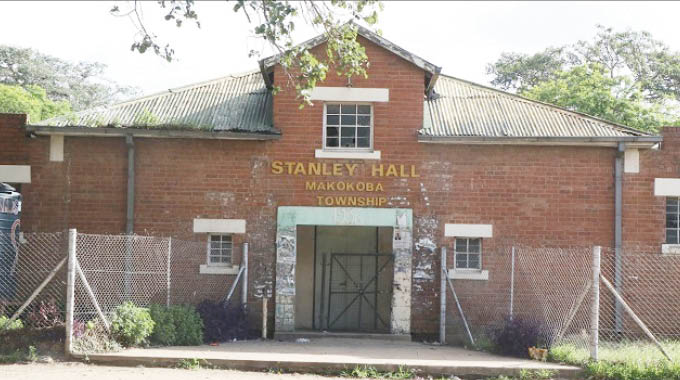
Gibson Mhaka
RESEARCH reveals that apart from being one of the first colonial cities, Bulawayo emerged as a rich mosaic of different ethnic groups. Its inhabitants also came from different countries with varied social and cultural backgrounds.
Because of its multi-ethnic composition, combined with identities such as trade unions, burial societies, sporting clubs, the city’s history illuminates the way in which one of these prominent identities, ethnicity, related with another rising identity of the mid-1950s, nationalism.
Economically, Bulawayo was a major employment centre, boasting the headquarters of the Rhodesian Railways, (now the National Railways of Zimbabwe) plus numerous but viable gold mines that attracted labourers beyond Southern Rhodesia.
Legend also has it that Bulawayo was a temporary stopover for Central African labourers trekking to the better paying industries in South Africa, though some of them never reached their intended destinations and settled permanently in Bulawayo.
It also prides itself as a relaxed, attractive city of wide streets, beautiful parks and an air of shabby gentility.
Besides consisting of a mixture of slowly fading colonial houses with wide verandas and many of its old public buildings including the City Hall, Bulawayo Club, the High Court and the Railway Station which are maintained as heritage sites and a mix of low-rise and high-rise buildings, it remains as one of the historically and culturally most important of Zimbabwe’s cities.
It also plays host to one of the historically and culturally important sites, Stanley Hall and Square in Makokoba, which were declared as national monuments in 2017 through a statutory instrument issued by the Rural Development, Promotion and Preservation of National Culture and Heritage ministry.
As this year’s 40th Independence Day celebrations will for the first time be held in Bulawayo, there is no doubt that Stanley Hall and Square which were constructed in 1935 should be remembered as the birthplace of nationalism which led to the ultimate goal — the emancipation of the black man in 1980.
This is because they are iconic and revered venues used by nationalists and late Vice-Presidents Joshua Nkomo, Joseph Msika and John Nkomo, among others, during the struggle for lndependence.
Historically, Makokoba — where Stanley Square and Stanley Hall are located, was the first black African township in the city and it has been termed the home of arts and culture, with the Amakhosi Cultural Centre located in the vicinity.
Prominent historian Pathisa Nyathi said Bulawayo was significant in many ways. He said it was a revered site for political struggle in Zimbabwe.
“When it comes to the war of liberation, Bulawayo is significant in many ways. It was an important distribution point of weapons.
“After the weapons have been smuggled into the country, they were kept in Bulawayo before they were distributed to different points.
“Both in Bulawayo and in the rural areas throughout Rhodesia there were men who formed links with those bringing in weapons. These men didn’t want to know each other. This was because once you were caught with those weapons you were going to be severely punished or killed.
“Bulawayo was also an important centre especially from the time the late Vice-President Joshua Nkomo was elected as the leader of the National Democratic Party (NDP). It (Bulawayo) was the first city to come up with the Sabotage Campaign like petrol bombing in order to beat the Rhodesian oppressive system,” said Nyathi.
Turning to Stanley Square and Stanley Hall he said they were important sites for political meetings. He said although McDonald Hall and Barbourfields were not declared national monuments they also played an important role as sites for political meetings which helped to beat an oppressive system and deliver independence to the black majority.
Mike Ncube (78) from Makokoba said the move by Government to hold the 40th Independence Day anniversary in Bulawayo for the first time in the history of the country was a welcome development considering the fact that the city was rich in “successful histories”.
“Bulawayo is a city not only known to be a royal city, a melting pot of arts and culture but it also has a successful political history. It was a centre of potential for radical oppositional politics and also an important base for the emergence of new and different political polarities during the struggle for lndependence,” said Ncube.
Briefing the media on the preparations for the celebrations, Permanent Secretary in the Ministry of Information, Publicity and Broadcasting Services, Nick Mangwana, also hailed Bulawayo as a cultural and historical city.
“Preparations for the Independence Day celebrations are at an advanced stage. As you are aware for the first time in 40 years, Independence Day celebrations are being held outside Harare. Bulawayo is going to host the first (main) celebrations out of Harare.
“Bulawayo is big on culture and the celebrations are going to be big on culture. As this is a Ruby Jubilee, we are going to use it to rally the nation together. These Ruby Jubilee celebrations are not a once-off event. They are expected to last for the whole of 2020,” he said.
Bulawayo is also famed for being home to a cosmopolitan suburb and the oldest residential area- Makokoba, renowned for setting trends and a diversity of cultural treasures among other things.
The suburb is well-known for producing great football players like the Ndlovu brothers, Adam, Peter and Madinda.
The late Zimbabwean music legend Dorothy Masuka, grand daddies of jazz music, the Cool Crooners and Lovemore Majaivana are all products of this great suburb.


 Bongani Ndlovu
 Online Reporter