admin
admin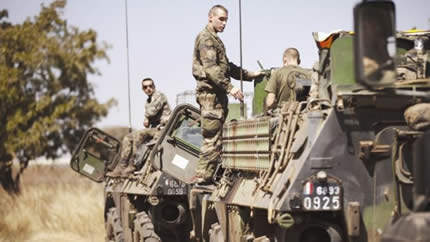
regarding the relevance, focus, and expediency of the African Standby Force and Africa’s wisdom on traditional peacekeeping and peace enforcing of complex peace operations have came under the spotlight.
The crisis in Mali, which has been popularised by the international media as “Africa’s Afghanistan” and which has received calls for an inexorable international military intervention, has exposed and suggested that the African Union and sub-regional organisations such as the Economic Community of West African States are continuously failing to discern the root cause of African problems and are less prepared to deploy their military on potentially complex peace enforcement operations.
While the media have provided abundant descriptive coverage of the course of events and atrocities committed in Azawad since the outbreak of the conflict in January 2012, of what was ostensibly just another Tuareg rebellion, some pretty basic questions have not been addressed.
No journalist has asked or at least attempted to answer why France failed to pressurise Ecowas to rapidly deploy, opting instead, to deploy herself, first?
No journalist again has asked how this latest Tuareg rebellion was hijacked, almost as soon as it started, by a few hundred Islamist extremists? In short, the world media have failed to explain the situation in Azawad, according to one journalist, Jeremy Keenan.
The reason for this failure to explain the situation in Azawad is because the real story of what has been going on there borders on the incredible murky waters of Western intelligence, its hook up with Algeria’s secret service and the inadequacy of energy, resources and the drive and the operational incapability of the African regional peacekeeping and enforcement framework and mechanism.
The point is that the AU and African sub-regional organisations like Ecowas and Sadc have neither the resources nor mandate to undertake extensive and multi-dimensional peace enforcement operations without seeking help from their erstwhile colonisers and masters.
This is the major weakness that has bedevilled the AU and its sub-regional peace mechanisms and frameworks. The UN is the only institution that has the authority and is capable of undertaking complex multi-dimensional operations because it has the departments, offices, funds and agencies that span the peace, security, humanitarian and development continuum.
Hence the African Union, unlike its counterpart the European Union, is so disenfranchised as a result of its failure to critically nip the bud of its problems and strategically invest in its intelligence services.
A repeat of the Libyan experience is now feared in Mali. That is why the United Nations Secretary-General Ban Ki Moon, when he realised that France had deployed in Mali, remarked on January 12 this year that he hoped that the French government’s decision would be consistent with the spirit of UN Security Council resolution.
Operation Serval has been received and viewed as a matrix of the legacy of colonialism. It was intended to be led by Africans and not the French. It has been seen as a noble and nightmare of the outcome of the Western-engineered overthrow of Libya’s Muammar Gaddafi.
France vehemently supported the Nato invasion of Libya through the “No Fly Zone” resolution 1973 in 2011. The French involvement in Mali coincides, therefore, with the reality that the support it rendered to Nato and the overthrow of Gaddafi was orchestrated to pave way for the destabilisation of the Sahel (Niger and Mali). The fall of Gaddafi precipitated the return to the Sahel of thousands of angry, disillusioned and well-armed Tuareg fighters who had gone to seek their metaphorical fortunes by serving Gaddafi.
According to a British social anthropologist Jeremy Keenan, this was merely the last straw in a decade of the increasing exploitation, repression and marginalisation that has underpinned an ongoing cycle of Tuareg protest, unrest and rebellion. In that respect, Libya was the catalyst for the Azawad rebellion and ultimately its underlying cause. The Malian Tuareg combatants fled back home after the fall of Gaddafi with “a weapon bazaar” and formed the most powerful Tuareg-led rebel group the region has known — the Azawad National Liberation Movement.
The African Union, together with its regional security segments like Ecowas, failed to discern the scheme of problems in Africa and the resources and financial handicaps forestall and disallow African security mechanism to sieve through the European schemes.
Algeria and the US needed and continue to require the presence of terrorism in Sahara, Maghreb and Sahel for their survival.
The Algerian terrorism scheme came when Abdelaziz Bouteflika took over as president of Algeria in 1999, according to the BBC, Thomas Fessy. This assessment was and is necessitated by the changing significance of states within regions and includes threats to and survival mechanisms and stability of fragile democratic regimes. Among these challenges are what have come to be termed by some, variously as, “transitional problems” or “gray area phenomena”.
Algeria was faced with two major problems when Bouteflika took over. One was its standing in the world and the other one was the role of the army and the DRS — the Algeria Intelligence Services. The army had made Algeria a pariah state, and the army, which remains the core institution of the state, was lacking modern high-tech weaponry as a result of international sanctions and embargoes.
The solution to these problems, observed Keenan, lay in Washington and during the Clinton era, relation between US and Algeria had fallen to a particularly low level.
However, with a Republican victory in the November 2000 election, Algeria’s President Bouteflika quickly made his sentiments known to the US administration and was invited in July 2001 to a summit in Washington with then president Bush.
Bush listened sympathetically to Bouteflika’s account of how his country had dealt with the fight against terrorism and for his request for specific military equipment that would allow his country to maintain peace, security and stability in Algeria.
The 9/11 attacks precipitated a whole new era in US-Algeria relations and for the next four years, Bush and Bouteflika met six more times to develop a large covert and high duplicitous alliance. The legislative elections of January 1992 in Algeria were on the point of being won by the Front Islamique du Salut, which would have resulted in the world’s first democratically elected Islamist government.
With a green light from US and France, Algeria’s generals annulled the elections in what was effectively a military coup d’état and led almost to a civil war known as the Dirty War.
By 1994, the Algerian government’s secret intelligence service, the Department du Reuseignement et de la Securite (DRS) had succeeded in infiltrating the main armed Islamist groups, the Groupes Islamiques Armees (GIA), to the extent that even the GIA leader Djamel Zitouni, was a DRS agent. Indeed many of the killings and civilian massacres were either undertaken by the DRS masquerading as Islamists or by GIA elements.
John Schindler, a former high ranking US intelligence officer and a member of the National Security Council and now the Professor of National Security Affairs at the US Naval College, recently blew the whistle on Algeria’s creation of terrorists and use of “state terrorism”. By 1998, the killing had become so bad that many Islamists abandoned the GIA to form the Groupe Salafiste pour le Prédication et le combat (GSPC) but it soon became evident that it too had been infiltrated by the DRS.
Although the “Dirty War” began winding down after 1998, it has never really ended. The GSPC, which changed its name to Al Qaeda in the Islamic Maghreb in 2006, is still operative both in northern Algeria and the Sahara-Sahel.
Keenan goes on to note that the catastrophe now being played out in Mali is the inevitable outcome of the way in which the Global war on Terrorism has been inserted into the Sahel-Sahara by the United States of America and its European allies, in concert with other African states like Algeria since 2002.
In his book, “Global War On Terror in the Sahara, The Dark Sahara”, Jeremy Keenan describes and explains the development of this extraordinary relationship. The book reveals why it was that the Bush administration and the regime in Algiers both needed a “little more terrorism” in the region. The Algerians wanted more terrorism to legitimise their need for more high-tech and up-to-date weaponry.
The Bush administration, meanwhile, saw the development of such terrorism as providing the justification for launching a new Saharan front in the Global War on Terror. Such a “front” would legitimise America’s increased militarisation of Africa so as to secure the continent’s natural resources, notably oil. This, in turn, was soon to lead to the creation in 2008 of a new US combat command for Africa, Africom.
The writer Special Matarirano is political and social commentator based in Harare.


 Online Reporter