Online Reporter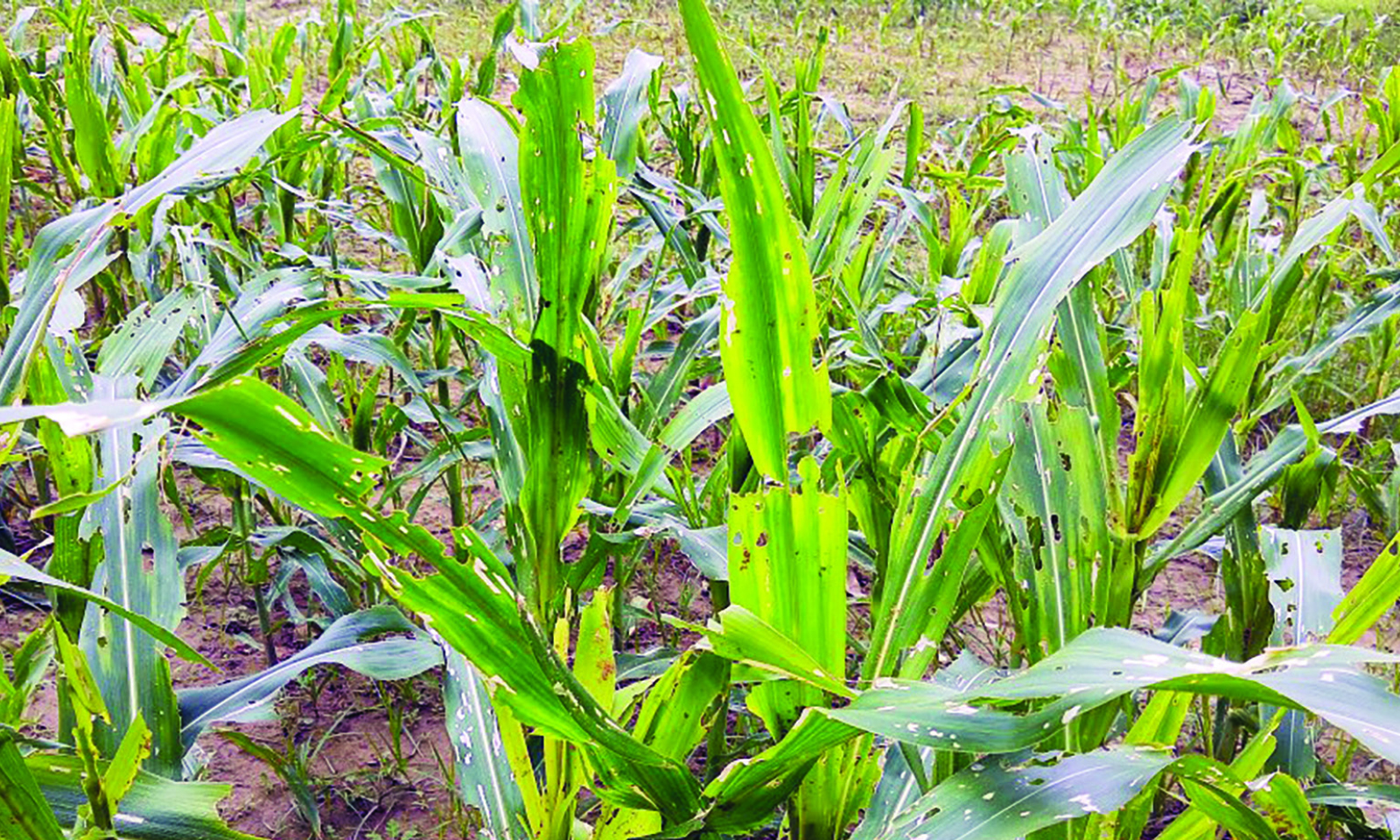
Business Reporter
GOVERNMENT has introduced fresh regulations compelling seed houses in Zimbabwe to enhance their certification processes by mandating the treatment of all certified maize seed with chemicals proven to control fall armyworm.
The new provisions, issued under Statutory Instrument 5 of 2025, amend the Seeds (Certification Scheme) Notice, 2000, and form part of wider efforts to bolster national food security by improving seed quality and pest resilience.
“It is hereby notified that the Minister of Lands, Agriculture, Fisheries, Water and Rural Development has, in terms of section 28j of the Seed Act [Chapter 19:13], made the following regulations,” the notice reads in part.
The key amendment, now enshrined under paragraph 11 of the Third Schedule, stipulates that: “All certified maize seed shall be treated with a recommended and effective seed dressing chemical for the control of fall armyworm.
“The chemical must contain a combination of a diamide and a neonicotinoid in flowable solution or an equivalent chemical with proven efficacy.”
It further mandates that all such chemicals be registered and approved by the Ministry of Lands, Agriculture, Fisheries, Water and Rural Development.
Any seed lots that fail to meet this requirement “may not be authorised for sale or distribution as certified maize seed,” the regulation warns, marking a significant compliance shift for seed producers.
“The seed dressing chemical in subparagraphs (1) and (2) must be registered with the Ministry of Lands, Agriculture, Fisheries, Water and Rural Development and approved for use in the control of fall armyworm in Zimbabwe.
“Any seed lots failing to comply with these regulations may not be authorised for sale or distribution as certified maize seed.”
Industry players said the regulation places the onus on seed producers to upgrade their seed treatment infrastructure and supply chain logistics to ensure treated seed reaches markets in time for the next planting season.
Agronomist Ms Monica Maseko noted that the move would likely reduce the prevalence of the pest in the early crop stages and ease the burden on farmers who often cannot afford expensive post-emergence pesticides.
“It is a long-overdue step that brings science into the certification framework. We expect to see better germination success and higher early-season yields,” said Ms Maseko.
She noted that the amendments were crafted in response to growing farmer concerns about the economic toll of fall armyworm infestations and the need for proactive, science-based mitigation strategies.
“We are moving from a reactive to a preventive approach in pest control. This regulation ensures that farmers are equipped with seed already primed to resist fall armyworm. It reduces their early-stage vulnerability and cuts chemical input costs,” she said.
“Zimbabwe must build resilience into the seed itself, and this is how we do it through robust certification anchored on integrated pest management principles. This will not only protect the farmer’s investment but also restore confidence in certified seed,” she added.
Fall armyworm is a migratory pest which attacks maize and has the potential to cause yield losses ranging from 8,3 million to 20,6 million tonnes a year across Africa if not controlled.
It is an invasive moth which is difficult to detect and control. It was first noticed in Africa in January 2016, causing massive damage to crops in several West African countries, according to the International Institute of Tropical Agriculture.
They can also cause indirect losses to livestock if an outbreak occurs in pastures, which can cause starvation and severe poisoning when cattle graze on pastures recently infested by the armyworm. Armyworms march along the ground and attack crops as they search for food.
Fall armyworm is a new pest in Zimbabwe and causes extensive damage to maize if not controlled properly and on time.
The pest has 10 to 12 breeding cycles in a season and can continue recurring after the first spray.
Its larvae feed voraciously on plant leaves and reproductive tissues, causing yield losses of up to 30 percent in unmanaged fields.