Siphakeme .Mnindwa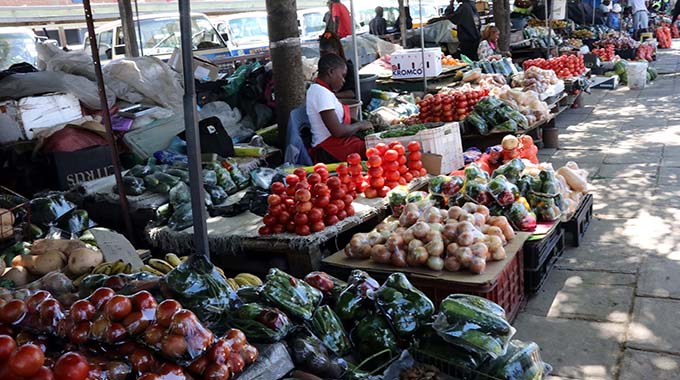
Raymond Jaravaza, [email protected]
VENDORS in Bulawayo will now be required to sign lease agreements with the Bulawayo City Council (BCC), a move aimed at formalising the operations of one of the city’s largest economic sectors, which has often been plagued by illegality and lawlessness.
Thousands of vendors operate in the city, some legally, while many others conduct business illegally, frequently engaging in cat-and-mouse chases with municipal police for violating city by-laws.

According to Bulawayo Vendors and Traders Association (BVTA) executive director Mr Michael Ndiweni, his organisation has 10 000 registered members, while thousands more operate illegally or belong to other associations.
Late last year, BCC issued a circular informing vendors that, starting at the end of January, all traders would be required to sign lease agreements with the municipality.
“We have observed that some traders have been neglecting their monthly financial obligations and, in some cases, have failed to renew their licenses for 2024. To address these concerns, council officials will be conducting regular enforcement visits starting immediately,” said BCC.
“We expect all traders to fulfil their monthly payment obligations promptly and to ensure that any outstanding arrears are cleared by December 31, 2024. Furthermore, from January 2025, all traders will be required to sign a lease agreement with the local authority. This can only be done once all outstanding arrears have been settled.”

The council warned that it would not hesitate to forfeit vending bays from traders who fail to meet their financial obligations.
Mr Ndiweni noted that the requirement for lease agreements is not new, citing the Egodini terminus, where vendors were required to sign similar agreements. However, he urged BCC to introduce flexible payment plans to prevent vendors from losing their trading spaces.
“When Egodini terminus was re-opened vendors and traders operating there were asked to sign lease agreements, so it’s not something new. We, however, hope that the council will come up with a mechanism that will allow for payment plans so that vendors can settle outstanding obligations over a period of time and sign their lease agreements with BCC,” said Mr Ndiweni.
He said in the event a majority of vendors lose their vending bays, they will turn to illegal vending, something that the council and his organisation are trying to eradicate.
At the moment, vendors pay US$11,50 per month to BCC, while the lease agreement will require an additional US$23.
“In 2022, vendors and traders negotiated with BCC to maintain the monthly fee, provided payments were made in US dollars. This agreement benefitted both parties. With 10 000 members, we hope to engage the council further to ensure vendors do not lose their trading spaces,” said Mr Ndiweni.
Mrs Caroline Machache, a vendor operating at TM/Pick and Pay Hyper, said many traders welcome the lease agreements, provided they help eliminate illegal vendors.

“As long as the council removes illegal vendors who are killing our businesses, we have no problem signing lease agreements.
I’m the chairperson of an association of vendors who operate here at TM/Pick and Pay and I can tell you that all our members are not against signing the lease agreements,” she said.
Illegal vending remains a significant issue, particularly at night when streets and pavements become overcrowded with traders selling groceries, second-hand clothes, cooked food, meat and vegetables.
Bulawayo Streetwise Informal Traders Association director Mr Percy Mcijo said his organisation does not support illegal vending, whether during the day or night.

“We don’t believe that vendors that are registered with any association operate during the night so we urge police to arrest these people to bring back sanity into the streets of Bulawayo,” he said.
“We urge citizens and specifically our members to be law-abiding and follow the city’s by-laws, which allow them to operate formally and in an organised manner.”
Ward 1 Councillor Josiah Mutangi echoed these sentiments, saying: “We seek to bring an end to illegal vending and provide designated vending bays for fruit and vegetables, new and used clothing in various points in and around the CBD.”
Meanwhile, organisations such as BVTA continue to advocate for the establishment of a micro-finance bank specifically for vendors.
This initiative would allow them to access credit without the need for collateral, which is often required by traditional financial institutions.



 Online Reporter