admin
admin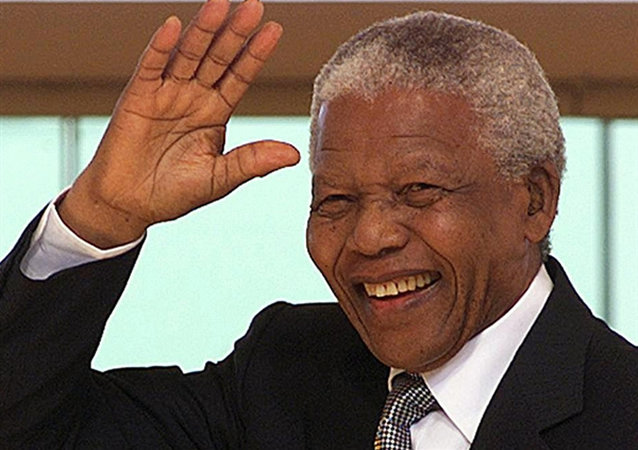
Cuthbert Mavheko
When former South African President Nelson Mandela passed on last year, a wave of grief swept across the entire world. World leaders eulogised Mandela, describing him as an international icon worthy of legendary status. He was also portrayed as a sanctified image — a saintly figure and faultless father of the Rainbow Nation.
It is an incontestable fact that Mandela played a pivotal role in building a non-racial and non-sexist South Africa. However, it is the strong contention of this writer that he was a big let-down to the cause of Pan-Africanism. When Mandela was incarcerated on Robin Island on June 12, 1964, he was a stalwart freedom fighter who campaigned vigorously for the eradication of apartheid and the emancipation of black South Africans from the death trap of economic enslavement. However, the 27 years he spent in prison broke his fighting spirit. Battered by the rigors of prison life and declining health, Mandela settled his people’s long standing dispute with the white apartheid oppressors by making a compromise, upon being released from prison.
After winning South Africa’s first post-apartheid elections in 1994, and becoming the country’s first black President, Mandela spent most of his time promulgating the gospel of reconciliation and holding out an olive branch to his erstwhile white enemies while doing very little, if anything, to improve the economic health of his own black people.
If indeed the truth be told without fear or favour, Mandela was too trusting, too honest and conciliatory in a political game where chicanery and deceit ruled the roost. The white apartheid oppressors accepted reconciliation with one hand and used the other hand to tighten their grip on economic power. Resultantly, when Mandela exited the political arena in 1999, he left the white community in South Africa better off (economically) than the blacks they had oppressed for five centuries. Black South Africans are still suffering in their land. Mandela failed to address this injustice during his tenure of office as President of the Republic of South Africa.
Nelson Mandela has been portrayed as a bastion of black people’s rights and symbol of their fight against racial segregation but the shocking paradox is that he sacrificed black South Africans on the altar of reconciliation. This is the bitter truth that those who hero-worshipped Mandela have vainly tried to sweep under the carpet.
It’s an act of extreme hypocrisy for the international community to immortalise Mandela and elevate him to a demi-god status when he left his own people, whose cause he purported to champion, sweltering in the unbearable heat of poverty and repression. When we examine Mandela’s achievements within the context of the African fight against colonial domination, we notice that they do not go beyond the attainment of political independence in South Africa. But political independence without economic independence is inconsequential.
This was highlighted by Kwame Nkrumah in his epoch-defining speech at the founding of the Organisation of African Unity, now the African Union, on May 24, 1963 when he said: “On this continent it has not taken us long to discover that the struggle against colonialism does not end with the attainment of national independence. Independence is a prelude to a new and more involved struggle for the right to conduct our aspirations, unhampered by crushing and humiliating neo-colonialist controls and interference”.
Placing events in Africa in their proper historical context, one notices how Western imperialists have fought vigorously to destroy progressive thinking African leaders, by hook or by crook, as well as their legacy. Patrice Lumumba was assassinated on January 17, 1961 by forces aligned to the US, Britain, France and Belgium. Laurent Kabila was also slain by what are generally believed to be the same forces that killed Lumumba. The same forces incited uprisings in Libya and went on to wage the war that claimed the life of Muammar Gaddafi. The reason for all these killings is pure greed on the part of the imperialists.
Any leader who has the audacity and political clout to stand up to the shenanigans of the West by, among other things, economically empowering his/her people becomes any enemy of the imperialists. It is instructive to note that President Mugabe has survived the Western onslaught longer than anyone could have imagined. I personally know of no other leaders, except Fidel Castro, who has rubbished Western machinations for so many years and lived to tell the tale.
The West demonised President Mugabe and imposed illegal sanctions on Zimbabwe in response to the government’s decision to democratise landholding by redistributing land from minority white farmers to the black majority. Sight should not be lost of the fact that before land reforms were effected in Zimbabwe, Cde Mugabe was hailed as an icon — a great African leader by the same hypocritical Western and European countries that now fervently seek his political demise. Whenever he (Cde Mugabe) travelled to these countries, a red carpet was rolled out for him and he was showered with a plethora of gifts and honorary university degrees. His feud with the West only started when he embarked on the land reform programme.
The land reform programme and various other economic empowerment initiatives that the Government has effected in the country resonate with the aspirations of the overwhelming majority of Zimbabwean people. Furthermore, these policies are a fulfilment of the dictates of the Pan-African agenda as was espoused by the founding fathers like Nkrumah, Nyerere, Kenyatta etc.
Sadly though, there are some Zimbabweans who have been brainwashed by Western propaganda into believing that their saviour is the enemy. Cde Mugabe is a true African hero in the mould of Kwame Nkrumah, Jomo Kenyatta, Patrice Lumumba and Julius Nyerere. He is a voice for the voiceless and a symbol of hope to all down-trodden people the world over. When he finally bows out of politics, his legacy will remain inscribed in indelible ink.


 Online Reporter