admin
admin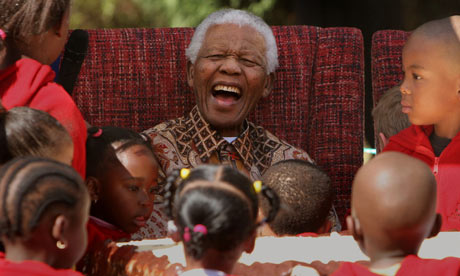
 CAPE TOWN — Former South African President Nelson Mandela’s dream of building unity, democracy, non-racialism and non-sexism has not been fulfilled, Deputy President Kgalema Motlanthe said yesterday.“Nelson Mandela’s dream did not end with the 1994 democratic breakthrough in our country. Nor has it ended with his passing. His dream of building unity, democracy, non-racialism and non-sexism only started to gain traction when for the first time all South Africans exercised the right to vote for the government based on their will,” Motlanthe said at a joint sitting of Parliament.
The litmus test, however, is whether inheritors of his dream, heirs to his vision and adherents of his philosophy, will be able to make the dream for which he lived come to pass in the fullness of time, Motlanthe said.
After the outpouring of grief, the celebration of and reflection on Mandela’s life, the question as to how to ealize his dream has to be answered, said Motlanthe.
“If we succeed in bringing his dream to fruition as we should, that will inspire the rest of the world along the same path. A legitimate expectation that the world has of us is that if we can produce a Nelson Mandela we can bring about a progressive historical period where all the ills of the past recede into distant memory,” Motlanthe noted.
The joint sitting of Parliament was held to honor and commemorate Mandela, who died of a long standing lung disease on December 5 at the age of 95.
As Parliament is already in recess, MPs were travelling back from their constituencies to take part in the joint sitting. The Parliament hall was packed to its full capacity, with the attendance of members of Parliament and the public. Additional spaces were added within Parliament to accommodate members of the public who took part in this extraordinary session of Parliament.
Books of condolences were opened at various venues within the precinct and all flags within Parliament were flying at half mast.
A special exhibition showing the life of Mandela was mounted across Parliament.
“Ultimately, as we move forward to the future the most enduring monument we can build to his memory is to strive for unity and human solidarity, to conquer the hidebound thought systems such as racism and sexism, to eradicate social inequalities, educate the masses, make health accessible to all, and uphold a human rights culture,” Motlanthe said to the laud applause of the audience.
“For us in South Africa the challenge looms even larger when one considers the inevitable possibility that posterity will always look at us in the light of the Mandela experience,” said Motlanthe.
Failure to fuilfil Mandela’s dream, Motlanthe said, will not make sense to future generations.
“A post-Mandela South Africa will be looked at in terms of how it fares in uprooting the legacy of apartheid system at both the material and metaphysical level, while mindful of the symbiotic relationship between the historical material underpinnings of the apartheid legacy and correspondingly, its ideological justification,” said Motlanthe.
“History will impose judgement on us in terms of whether we uphold the laws of the land, fight scourges that rob the masses of our country to whose socio-political freedom Nelson Mandela had committed his life.”
This means showing intolerance to pathological conditions such as theft of public resources through corruption, abuse of political power and a host of other underhand means that rob everyday people of the meaning of freedom.
Motlanthe also raised the question why many across the globe continue to wallow in conditions of immiseration. After multinational companies have made stupendous profits from their commercial effort on the African continent, a legitimate question arises as to why Africans remain sweated labor, pedestrians on matters of global commerce and frozen outside the global business meanstream, when their continent bears countless minerals beneath its soil, said Motlanthe.
“This may be the moment to rethink our ways as well as the nature of the challenges we face. It may well be so, if humanity is to take Nelson Mandela’s journey a step further.”
The joint sitting was part of Parliament commemorating services in honor of Mandela. — Xinhua.


 derick.khumalo